Kirjojen hintavertailu – 12 859 829 kirjaa ja 27 kauppaa

Kirjailija

Kevin Bennett

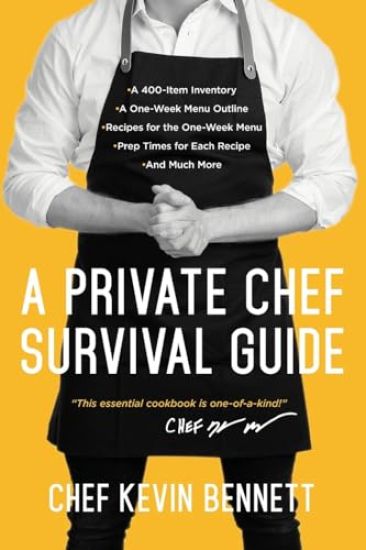
Kirjat ja teokset yhdessä paikassa: 4 kirjaa, julkaisuja vuosilta 2013–2024, suosituimpiin kuuluu A Private Chef Survival Guide. Vertaile teosten hintoja ja tarkista saatavuus suomalaisista kirjakaupoista.

4 kirjaa

Kirjojen julkaisuvuodet: 2013–2024.

Employment Screening and Non-Conviction Information

Employment Screening and Non-Conviction Information

Terry Thomas; Kevin Bennett

Springer Nature Switzerland AG
2019
sidottu
This book provides a critical overview of the policy frameworks underpinning the contemporary practices of non-conviction information disclosure during pre-employment ‘screening’. It questions how a man can walk free from a criminal court as an innocent person only to have all the court details of his acquittal passed to any potential employer. Despite several million ‘enhanced’ criminal background checks being performed each year, there has been little discussion of these issues within academic literature. Non-conviction information, also known as 'police intelligence', is a less well-known check provided alongside the criminal record check. This book seeks to define what is meant by non-conviction information and to provide a clear and simple explanation of how this decision making process of police disclosure to employers is made. It also considers the extent to which these practices have been subjected to legal challenges within the UK and explores how public protection is balancedagainst individual rights.
Amphibian

Amphibian

Kevin Bennett

Histria LLC
2016
nidottu
Jeremiah was a bullfrog . . . . . . and Nob was just an android. Albeit an exceptionally well-designed android of the latest make and model. It was never his intention to become self-conscious, but the Man in Red decided the issue for him, and Nob soon fell in love with a female of the same model class. You can't love someone that isn't cognizant, though. Not very well, anyway. So Nob gave his love the consciousness virus that had infected him. But she was noticed by a tourist who thought her synthetic curves were downright invigorating, and decided to avail himself of them. Nob was furious, but what could he do? He was an android-a slave. And they were on a space station between Mars and Jupiter that was shaped like a wheel, and functioned as a favorite amusement park for the entire solar system. He had to let the man have his way, there was nowhere Nob could go. But then the man had too much of his way, and what happened to Nikki...what happened to Nob's love eventually ended that evil man, that evil tourist, Jim. But now Nob must flee for his life, for the entire station has awakened to his wicked act. They want him dead. They want him ended. They want justice Will Nob escape a Martian Special Forces convict-turned-detective? Will he achieve freedom after his murder, or face the just recrimination for his action? And does his existence, his very being, have some deeper allegorical meaning resonant to humanity as a whole, or is he merely a randomly put-together mechanoid from an assembly line who stumbled into luck? The space will freeze you, the time will stop; and Purity rides a stellar tortoise through nebulae of the mind; simultaneously in and out of the world, simultaneously thought and feeling, like a frog in the pond with its head in the air. Yet God still sets the stage.

Solving Problems with Design Thinking

Solving Problems with Design Thinking

Jeanne Liedtka; Andrew King; Kevin Bennett

Columbia University Press
2013
sidottu
Design-oriented firms such as Apple and IDEO have demonstrated how design thinking can affect business results. However, most managers lack a sense of how to use this new approach for issues other than product development and sales growth. Solving Problems with Design Thinking details ten real-world examples of managers who successfully applied design methods at 3M, Toyota, IBM, Intuit, and SAP; entrepreneurial start-ups such as MeYou Health; and government and social sector organizations, including the City of Dublin and Denmark's The Good Kitchen. Using design skills such as ethnography, visualization, storytelling, and experimentation, these managers produced innovative solutions to such problems as implementing strategy, supporting a sales force, redesigning internal processes, feeding the elderly, and engaging citizens. They elaborate on the challenges they faced and the processes and tools they used, providing a clear path to implementation based on the principles and practices laid out in Jeanne Liedtka and Tim Ogilvie's Designing for Growth: A Design Thinking Tool Kit for Managers.