Kirjojen hintavertailu – 12 903 724 kirjaa ja 27 kauppaa

Kirjailija

Kevin Brownlow

Kirjat ja teokset yhdessä paikassa: 10 kirjaa, julkaisuja vuosilta 1976–2018, suosituimpiin kuuluu Douglas Fairbanks and the American Century. Vertaile teosten hintoja ja tarkista saatavuus suomalaisista kirjakaupoista.

10 kirjaa

Kirjojen julkaisuvuodet: 1976–2018.

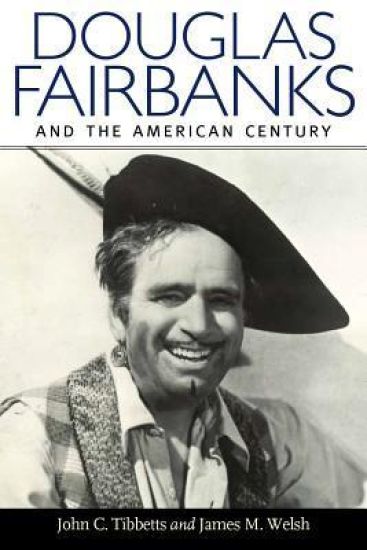
Douglas Fairbanks and the American Century

Douglas Fairbanks and the American Century

John C. Tibbetts; James M. Welsh; Kevin Brownlow

University Press of Mississippi
2014
sidottu
Douglas Fairbanks and the American Century brings to life the most popular movie star of his day, the personification of the Golden Age of Hollywood. At his peak, in the teens and twenties, the swashbuckling adventurer embodied the new American Century of speed, opportunity, and aggressive optimism. The essays and interviews in this volume bring fresh perspectives to his life and work, including analyses of films never before examined. Also published here for the first time in English is a first-hand production account of the making of Fairbanks's last silent film, The Iron Mask. Fairbanks (1883-1939) was the most vivid and strenuous exponent of the American Century, whose dominant mode after 1900 was the mass marketing of a burgeoning democratic optimism, at home and abroad. During those first decades of the twentieth century, his satiric comedy adventures shadow-boxed with the illusions of class and custom. His characters managed to combine the American Easterner's experience and pretension and the Westerner's promise and expansion. As the masculine personification of the Old World aristocrat and the New World self-made man--tied to tradition yet emancipated from history--he constructed a uniquely American aristocrat striding into a new age and sensibility. This is the most complete account yet written of the film career of Douglas Fairbanks, one of the first great stars of the silent American cinema and one of the original United Artists (comprising Fairbanks, Mary Pickford, Charles Chaplin, and D. W. Griffith). John C. Tibbetts and James M. Welsh's text is especially rich in its coverage of the early years of the star's career from 1915 to 1920 and covers in detail several films previously considered lost.
Mae Murray

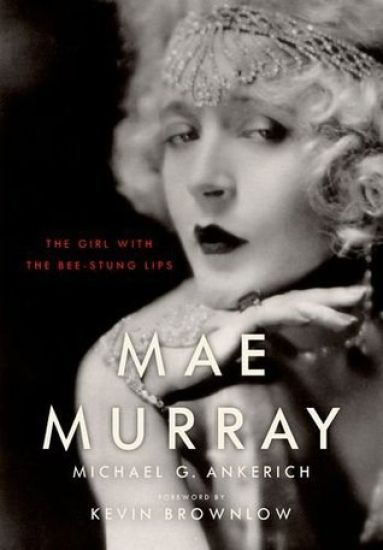
Mae Murray

Michael G. Ankerich; Kevin Brownlow

The University Press of Kentucky
2013
sidottu

Halvin toimitettuna 44,50 €

Mae Murray (1885--1965), popularly known as "the girl with the bee-stung lips," was a fiery presence in silent-era Hollywood. Renowned for her classic beauty and charismatic presence, she rocketed to stardom as a dancer in the Ziegfeld Follies, moving across the country to star in her first film, To Have and to Hold, in 1916. An instant hit with audiences, Murray soon became one of the most famous names in Tinseltown. However, Murray's moment in the spotlight was fleeting. The introduction of talkies, a string of failed marriages, a serious career blunder, and a number of bitter legal battles left the former star in a state of poverty and mental instability that she would never overcome. In this intriguing biography, Michael G. Ankerich traces Murray's career from the footlights of Broadway to the klieg lights of Hollywood, recounting her impressive body of work on the stage and screen and charting her rapid ascent to fame and decline into obscurity. Featuring exclusive interviews with Murray's only son, Daniel, and with actor George Hamilton, whom the actress closely befriended at the end of her life, Ankerich restores this important figure in early film to the limelight.
Clarence Brown

Clarence Brown

Gwenda Young; Kevin Brownlow

The University Press of Kentucky
2018
sidottu
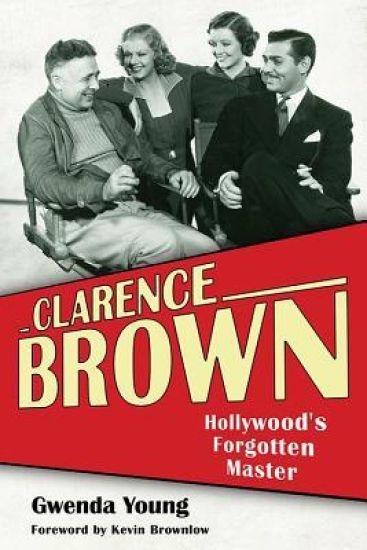
Greta Garbo proclaimed him as her favorite director. Actors, actresses, and even child stars were so at ease under his direction that they were able to deliver inspired and powerful performances. Academy--Award--nominated director Clarence Brown (1890--1987) worked with some of Hollywood's greatest stars, such as Clark Gable, Joan Crawford, Mickey Rooney, Katharine Hepburn, and Spencer Tracy. Known as the "star maker," he helped guide the acting career of child sensation Elizabeth Taylor (of whom he once said, "she has a face that is an act of God") and discovered Academy--Award--winning child star Claude Jarman Jr. for The Yearling (1946). He directed more than fifty films, including Possessed (1931), Anna Karenina (1935), National Velvet (1944), and Intruder in the Dust (1949), winning his audiences over with glamorous star vehicles, tales of families, communities, and slices of Americana, as well as hard-hitting dramas. Although Brown was admired by peers like Jean Renoir, Frank Capra, and John Ford, his illuminating work and contributions to classic cinema are rarely mentioned in the same breath as those of Hollywood's great directors. In this first full-length account of the life and career of the pioneering filmmaker, Gwenda Young discusses Brown's background to show how his hardworking parents and resilient grandparents inspired his entrepreneurial spirit. She reveals how the one--time engineer and World War I aviator established a thriving car dealership, the Brown Motor Car Company, in Alabama -- only to give it all up to follow his dream of making movies. He would not only become a brilliant director but also a craftsman who was known for his innovative use of lighting and composition. In a career spanning five decades, Brown was nominated for five Academy Awards and directed ten different actors in Oscar-nominated performances. Despite his achievements and influence, however, Brown has been largely overlooked by film scholars. Clarence Brown: Hollywood's Forgotten Master explores the forces that shaped a complex man -- part--dreamer, part--pragmatist -- who left an indelible mark on cinema.
Herbert Marshall

Herbert Marshall

Scott O'Brien; Kevin Brownlow

BearManor Media
2018
pokkari
Whether embracing the silky essence of Kay Francis in Trouble in Paradise (1932), or enduring the machinations of Bette Davis in The Little Foxes (1941), Herbert Marshall was the essence of smooth, masculine sensitivity. Dietrich, Garbo, Shearer, Stanwyck, and Hepburn eagerly awaited to be, as Shearer put it, "so thoroughly and convincingly loved" on screen. While many knew that Marshall had lost a leg in WWI, he preferred audiences to concentrate on his acting. Even so, he volunteered hundreds of hours to hospitals encouraging amputees during WWII. His legacy as a versatile actor, and morale booster is as compelling, as it is complicated. "Marshall's personal story," noted the late Robert Osborne, "is a fascinating one." Herbert Marshall is Scott O'Brien's seventh biography of classic cinema legends. His books received positive reviews in such publications as Sight & Sound, SF Gate, and Classic Images. Three of O'Brien's books have made the Huffington Post's "Best Cinema Books of the Year."
Herbert Marshall

Herbert Marshall

Scott O'Brien; Kevin Brownlow

BearManor Media
2018
sidottu
Whether embracing the silky essence of Kay Francis in Trouble in Paradise (1932), or enduring the machinations of Bette Davis in The Little Foxes (1941), Herbert Marshall was the essence of smooth, masculine sensitivity. Dietrich, Garbo, Shearer, Stanwyck, and Hepburn eagerly awaited to be, as Shearer put it, "so thoroughly and convincingly loved" on screen. While many knew that Marshall had lost a leg in WWI, he preferred audiences to concentrate on his acting. Even so, he volunteered hundreds of hours to hospitals encouraging amputees during WWII. His legacy as a versatile actor, and morale booster is as compelling, as it is complicated. "Marshall's personal story," noted the late Robert Osborne, "is a fascinating one." Herbert Marshall is Scott O'Brien's seventh biography of classic cinema legends. His books received positive reviews in such publications as Sight & Sound, SF Gate, and Classic Images. Three of O'Brien's books have made the Huffington Post's "Best Cinema Books of the Year."
Albert Capellani

Albert Capellani

Christine Leteux; Kevin Brownlow

The University Press of Kentucky
2015
sidottu
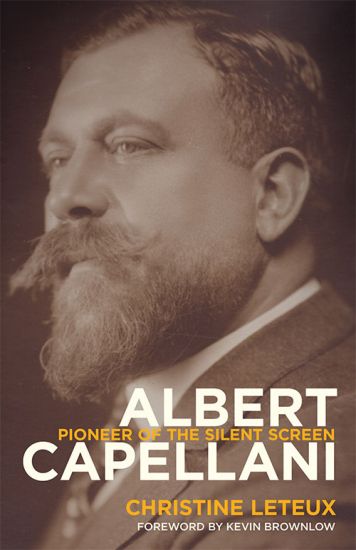
In recent years, technology has given films of the silent era and their creators a second life as new processes have eased their restoration and distribution. Among the films benefitting from these developments are the works of director Albert Capellani (1874--1931), whose oeuvre was instrumental in the development of cinema in the early 1900s and whose contributions rival those of D. W. Griffith. For the first time in English, Christine Leteux's essential biography of Capellani offers a detailed assessment of the groundbreaking director. Capellani began his career in France at what was, at the time, the biggest film company in the world: Pathé. There, he directed the first multireel version of Les Miserables in 1912 as well as his masterpiece, Germinal (1913). After immigrating to the United States, Capellani worked at a number of production houses, including Metro Pictures Corporation, where he produced his two best-known films, The House of Mirth (1918) and The Red Lantern (1919). He was well known for making stage actors into movie stars, and Mistinguett, Stacia Napierkowska, and Alla Nazimova all rose to prominence under his direction. The ups and downs of Capellani's career paralleled the evolution of the film industry and demonstrated the fickle nature of success. His technical and aesthetic achievements, however, paved the way for future filmmakers. Featuring a foreword by Academy Award--winning film historian Kevin Brownlow, Leteux's intimate biography paints a fascinating portrait of one of the leading pioneers of early cinema and provides a new window into the origins of the moving picture.
Great Britons of Stage and Screen

Great Britons of Stage and Screen

Barbara Roisman Cooper; Robert Osborne; Kevin Brownlow

Rowman Littlefield
2015
sidottu
Although there are encyclopedias and biographical dictionaries of contemporary British film and theatre actors, most lack the intimacy of face-to-face interviews. Typically drawn from secondary sources, collections of interviews often repeat tired anecdotes about an actor’s film or stage roles, with very little nuance or fresh insights. Great Britons of Stage and Screen: In Conversation features interviews with some of the leading actors of the last fifty years and more. In this collection, Barbara Roisman Cooper presents interviews she personally conducted with more than twenty stars of film, television, and theatre. Held in intimate surroundings—including the actors’ private homes and theatre dressing rooms between performances—these interviews provide readers with a rounded understanding of the creative process and the dedication required to develop a performance. Including many well-known Oscar, Tony, Olivier, and BAFTA winners, each interview is preceded by a short introduction and followed by the performer’s most significant credits, both on the stage and screen. The actors and actresses who shared their stories in this volume include ·Dame Eileen Atkins ·Isla Blair ·Simon Callow ·Dame Joan Collins ·Peggy Cummins ·Sinéad Cusack ·Samantha Eggar ·Stephen Fry ·Julian Glover ·Stephen Greif ·Jeremy Irons ·Sir Derek Jacobi ·Felicity Kendal ·Sir Ben Kingsley ·Dame Angela Lansbury ·Sir John Mills ·Alfred Molina ·Lynn Redgrave ·Jean Simmons ·David Suchet ·Richard Todd ·Michael York Designed to serve as a resource for those studying or writing about the worlds of theatre and film in general—and the art and craft of acting, specifically—Great Britons of Stage and Screen will also appeal to the many fans of the artists who have entertained audiences for decades.
American Classic Screen Interviews

American Classic Screen Interviews

Kevin Brownlow

Scarecrow Press
2010
nidottu
First appearing in 1976, American Classic Screen was the publishing arm of The National Film Society. Intended for scholars and general readers interested in films from the golden age of cinema and beyond, the magazine ran for a decade and included original interviews, profiles, and articles that delved deep into the rich history of Hollywood. Contributors to the magazine included noted academics in the area of film studies, as well as independent scholars and authors eager to expand the world of cinema. Since the periodical's demise, however, many of the essays and articles have been difficult to find—at best—and in some cases, entirely unavailable. In American Classic Screen Interviews, editors John C. Tibbetts and James M. Welsh have assembled some of the most significant and memorable interviews conducted for the magazine over its ten-year history. This collection contains rare conversations with some of the brightest stars of yesteryear, as well as gifted filmmakers, celebrated animators, and highly revered historians, including Fred Astaire, Kevin Brownlow, Frank Capra, Stanley Donen, Olivia DeHavilland, Irene Dunne, Joan Fontaine, Friz Freleng, Margaret Hamilton, Winton C. Hoch, Henry King, Mervyn Le Roy, Fred MacMurray, Glen MacWilliams, Rouben Mamoulian, Clarence "Ducky" Nash, Paul Newman, Hermes Pan, Robert Preston, and Jane Withers. This compendium of interviews recaptures the spirit and scholarship of that time and will appeal to both scholars and fans who have an abiding interest in the American motion picture industry.
Filming Pancho

Filming Pancho

Margarita De Orellana; Kevin Brownlow

Verso Books
2009
nidottu
On January 3, 1914 Pancho Villa became Hollywood's first Mexican superstar. In signing an exclusive movie contract, Villa agreed to keep other film companies from his battlefield, to fight in daylight wherever possible, and to reconstruct battles if the footage needed reshooting. Through memoir and newspaper reports, Margarita De Orellana looks at the documentary film-makers who went down to cover events in Mexico. Feature film-makers in Hollywood portrayed the border as the dividing line between order and chaos, in the process developing a series of lasting Mexican stereotypes-the greaser, the bandit, the beautiful señorita, the exotic Aztec. Filming Pancho reveals how Mexico was constructed in the American imagination and how movies reinforced and justified both American expansionism and racial and social prejudice.