Kirjojen hintavertailu – 12 859 818 kirjaa ja 27 kauppaa

Kirjailija

Kevin Dougherty

Kirjat ja teokset yhdessä paikassa: 12 kirjaa, julkaisuja vuosilta 2010–2025, suosituimpiin kuuluu The Revolutionary War in South Carolina. Vertaile teosten hintoja ja tarkista saatavuus suomalaisista kirjakaupoista.

12 kirjaa

Kirjojen julkaisuvuodet: 2010–2025.

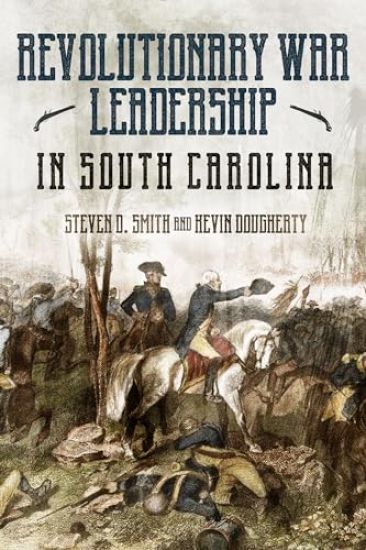
The Revolutionary War in South Carolina

The Revolutionary War in South Carolina

Steven D Smith; Kevin Dougherty

Casemate Publishers
2025
sidottu
An examination of the panorama of individuals whose leadership helped make the Patriot cause successful in South Carolina. Historians Steven D. Smith and Kevin Dougherty look beyond the towering figure of Francis Marion to profile significant personalities and actions both on and off the battlefield in this innovative approach to the Revolutionary War in South Carolina. The book profiles a range of individuals: Henry Laurens was the President of the Council of Safety. Richard Furman was the pastor of a church; John Rutledge was the Governor of South Carolina; and Rebecca Motte was a plantation owner. William Moultrie and Andrew Pickens—perhaps most familiar as soldiers—are discussed in their noncombatant roles: Moultrie as a prisoner of war and Pickens as a postwar civic leader. Military leaders William Jasper, Thomas Sumter, Francis Marion, Isaac Shelby, Nathanael Greene, Daniel Morgan, Tadeusz Kosciuszko, Hezekiah Maham, and Henry Lee round out the selection of profiles. The profiles are preceded by a historical overview of the Southern Campaign and the Revolutionary War in South Carolina, in order to provide the reader the background necessary to understand the leadership profiles in context. The book’s conclusion highlights that the Revolutionary War was a landmark in the “democratization” of war and that the choices made by these leaders and their followers reflect the same element of choice inherent in the democratic process.
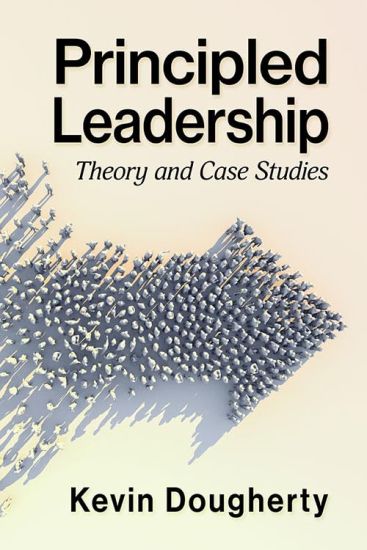
Principled Leadership

Principled Leadership

Kevin Dougherty

MCFARLAND CO INC
2024
pokkari
Among dozens of leadership theories, types, and styles, "principled leadership," is increasingly in demand as ethical crises plague more and more organizations and individuals. But despite strong consensus surrounding the need for principled leadership, there is little common understanding of it as an art and science. What exactly is principled leadership? How does it work? How does a leader practice it? What distinguishes it from other leadership types? What does it look like in action? How is principled leadership more than just individual principled behavior? This book answers these and more questions, introducing principled leadership theory and illustrating it through practical case studies. Principled leadership holds powerful, positive effects for leaders who practice its concepts.
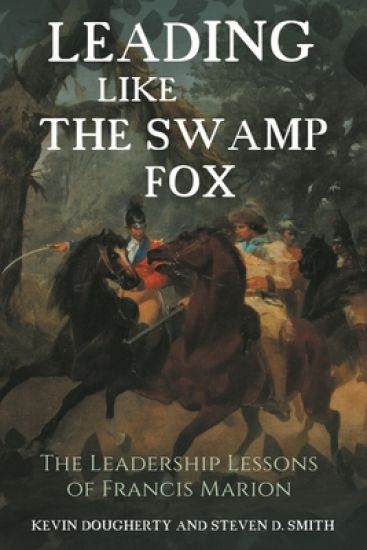
Leading Like the Swamp Fox

Leading Like the Swamp Fox

Kevin Dougherty; Steven D Smith

Casemate Publishers
2022
sidottu
Francis Marion is certainly the stuff of which legends are made. His nickname “The Swamp Fox,” bestowed upon him by one of his fiercest enemies, captures his wily approach to battle. The embellishment of his exploits in Parson Weems’ early biography make separation of fact from fiction difficult, but certainly represents the awe, loyalty, and attraction he produced in those around him. His legacy is enshrined in the fact that more places in the United States have been named after him than any other soldier of the American Revolution, with the sole exception of George Washington. Even today’s U. S. Army Rangers include Marion as one of their formative heroes. Surely much about leadership can be learned from such an intriguing personality. Leading like the Swamp Fox: The Leadership Lessons of Francis Marion unlocks those lessons. Divided into three parts, the book first presents the historical background and context necessary to appreciate Marion’s situation. The main body of the book then examines Marion’s leadership across eight categories, with a number of vignettes demonstrating Marion’s competency. The summary then captures some conclusions about how leadership impacted the American Revolution in the South Carolina Lowcountry. An appendix provides some information about how the reader might explore those physical reminders of Marion and his exploits that exist today. Readers interested in history or leadership, or both, will all find something for them in Leading like the Swamp Fox.
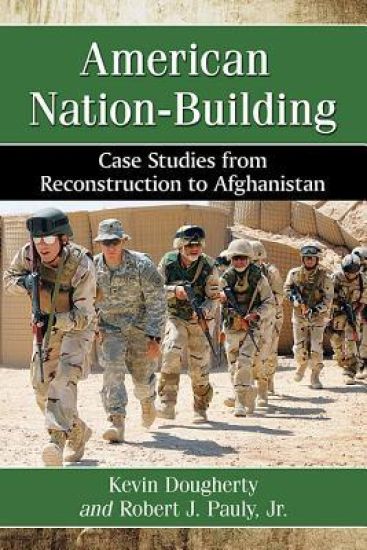
American Nation-Building

American Nation-Building

Kevin Dougherty; Jr. Pauly

McFarland Co Inc
2017
pokkari
Nation-building efforts by the United States and the international community have led to both success and failure, overwhelming support and debilitating controversy. Some are motivated by national security interests; others by humanitarian concerns. They seem to have exploded since the end of the Cold War but in fact have long been used as a foreign policy tool. What they all have in common is a substantial investment of troops, treasure and time. There is no formula--each operation is unique, with lessons to be learned and trends noted. Examining the history of America's experience, this book describes the mechanisms behind what often appears to be a haphazard enterprise.
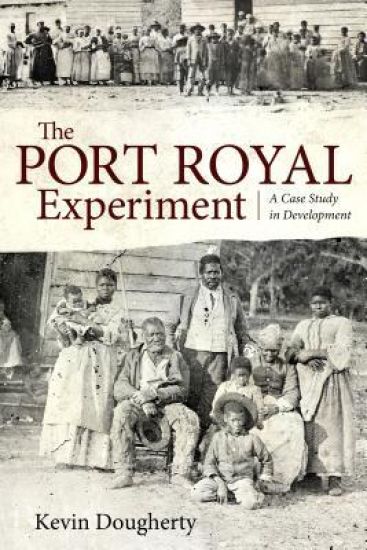
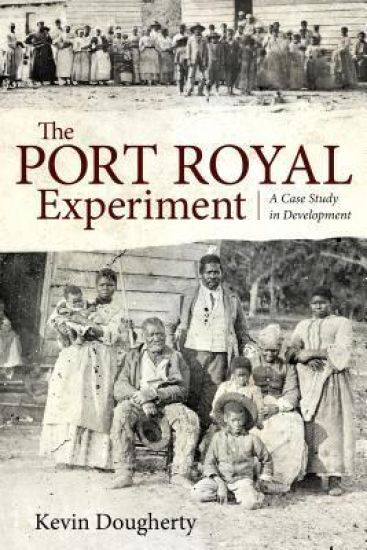
The Port Royal Experiment

The Port Royal Experiment

Kevin Dougherty

University Press of Mississippi
2016
nidottu
The Port Royal Experiment builds on classic scholarship to present not a historical narrative but a study of what is now called development and nation building. The Port Royal Experiment was a joint governmental and private effort begun during the Civil War to transition former slaves to freedom and self-sufficiency. Port Royal Harbor and the Sea Islands off the coast of South Carolina were liberated by Union Troops in 1861. As the Federal advance began, the white plantation owners and residents fled, abandoning approximately 10,000 black slaves. Several private northern charity organizations stepped in to help the former slaves become self-sufficient. Nonetheless, the Port Royal Experiment was only a mixed success and was contested by efforts to restore the status quo of white dominance. Return to home rule then undid much of what the experiment accomplished. The Port Royal Experiment divides into ten chapters, each of which is designed to treat a particular aspect of the experience. Topics include planning considerations, philanthropic society activity, civil society, economic development, political development, and resistance. Each chapter presents the case study in the context of more recent developmental and nation-building efforts in such places as Bosnia, Somalia, Kosovo, Iraq, and Afghanistan. Modern readers will see that the challenges that faced the Port Royal Experiment remain relevant, even as their solutions remain elusive.
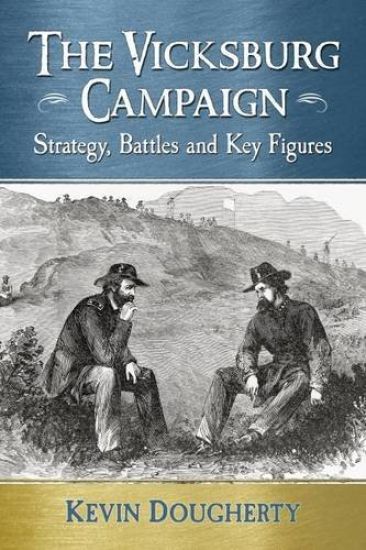
The Vicksburg Campaign

The Vicksburg Campaign

Kevin Dougherty

McFarland Co Inc
2015
pokkari
The Union victory at Gettysburg is widely considered the turning point of the Civil War but many scholars consider the capture of Vicksburg the decisive action. Building on a well-established body of literature--including the author's previous work--this book provides a comprehensive narrative and single-volume reference work on the Vicksburg Campaign. The action is traced from Farragut's failed navy-only efforts to bypass the city, through Grant's botched series of canal schemes, to his brilliant series of maneuvers that left Pemberton and his garrison besieged for more than 40 days. Key Union and Confederate players are identified and the strategic circumstances that made Vicksburg the lynchpin of the Western Theater are described. Appendices include information about Vicksburg National Military Park, the Federal and Confederate Orders of Battle and the Medal of Honor at Vicksburg.
The Port Royal Experiment

The Port Royal Experiment

Kevin Dougherty

University Press of Mississippi
2014
sidottu
The Port Royal Experiment builds on classic scholarship to present not a historical narrative but a study of what is now called development and nation-building. The Port Royal Experiment was a joint governmental and private effort begun during the Civil War to transition former slaves to freedom and self-sufficiency. Port Royal Harbor and the Sea Islands off the coast of South Carolina were liberated by Union Troops in 1861. As the Federal advance began, the white plantation owners and residents fled, abandoning approximately 10,000 black slaves. Several private northern charity organizations stepped in to help the former slaves become self-sufficient. Nonetheless, the Port Royal Experiment was only a mixed success and was contested by efforts to restore the status quo of white dominance. Return to home rule then undid much of what the experiment accomplished. While the concept of development is subject to a range of interpretations, in this context it means positive, continuously improving, and sustained change across a variety of human social conditions. Clearly such an effort was at the heart of the Port Royal Experiment. While the term ""nation-building"" may seem misplaced given that no ""nation"" was the beneficiary of these efforts, the requirement to build institutions critical to nation-building operations was certainly a large part of the Port Royal Experiment and offers many lessons for modern efforts at nation building. The Port Royal Experiment divides into ten chapters, each of which is designed to treat a particular aspect of the experience. Topics include planning considerations, philanthropic society activity, civil society, economic development, political development, and resistance. Each chapter presents the case study in the context of more recent developmental and nation-building efforts in such places as Bosnia, Somalia, Kosovo, Iraq, and Afghanistan and incorporates recent scholarship in the field. Modern readers will see that the challenges that faced the Port Royal Experiment remain relevant, even as their solutions remain elusive.
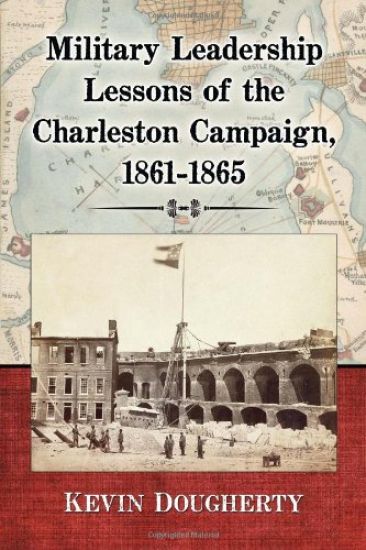
Military Leadership Lessons of the Charleston Campaign, 1861-1865
This is an exploration of the Charleston Campaign in the Civil War through the lens of leadership. Part One, "Understanding Charleston," contains a discussion of leadership, a campaign overview, and a brief introduction to the key participants. Part Two, "Leadership Vignettes," includes 21 scenarios that span the actions of the most senior leaders down to those of individual soldiers. Each scenario provides the context, explains the action in the terms of leadership lessons learned, and concludes with a list of "take-aways" to crystallize the lessons for the reader. The book ends with summary information and a set of conclusions about leadership during the Charleston Campaign. Although it featured some of the era's most advanced military technology, the Charleston Campaign was decided by more than just shot and shell, and this book offers a perspective of the campaign as a leadership laboratory.
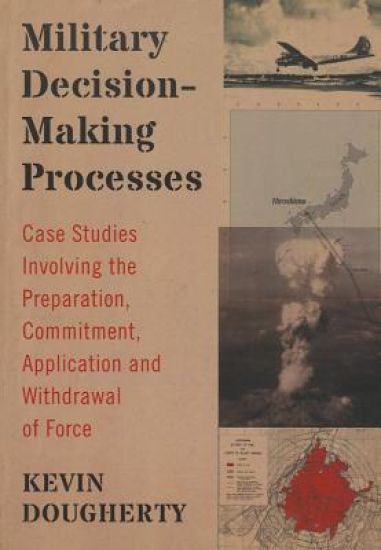
Military Decision-Making Processes

Military Decision-Making Processes

Kevin Dougherty

McFarland Co Inc
2013
pokkari
President Bill Clinton, speaking as might any commander-in-chief, on the eve of his decision to deploy ground troops to Bosnia in 1995, declared he had "no responsibility more grave than putting soldiers in harm's way." Such a statement suggests that a study of the decision-making process associated with the weighty matters of using force would be enlightening. Indeed, it is. The decision-making process is far from standardized nor is it simple. While all individuals associated with important decisions about national security and the lives of America's service members take their responsibilities seriously, the processes by which they reach their conclusions are varied and complicated. The book traces eight traditional and emerging theories or models of decision-making by first explaining the components of each model and then by analyzing its practical application through three case studies. Each chapter concludes with a discussion of the utility and explanatory power of the particular model. Instructors considering this book for use in a course may request an examination copy here.
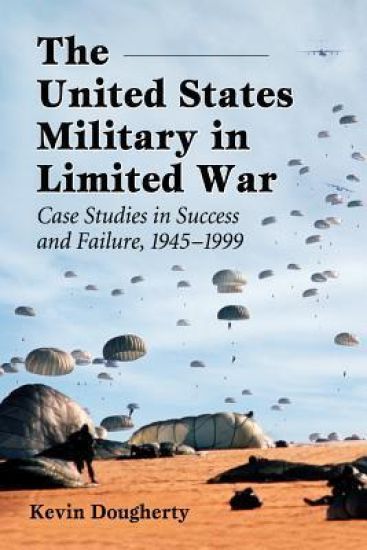
The United States Military in Limited War

The United States Military in Limited War

Kevin Dougherty

McFarland Co Inc
2012
pokkari
After World War II, the United States military increasingly found itself involved in operations that have been described variously as limited wars, small wars, low intensity conflicts, operations other than war, support and stability operations, and the like. The most common name throughout much of the 1990s was "operations other than war" (OOTW). During this period there was an explosion of doctrinal material on the subject, including a 1993 official field manual listing six principles of OOTW: objective, unity of effort, legitimacy, perseverance, restraint and security. The author of the present work examines four successful OOTWs (the Greek Civil War, Lebanon, the Dominican Republic, and Nicaragua/Honduras) and four failed ones (Vietnam, Beirut, Somalia, and Haiti) and concludes there is a positive correlation between adherence to the principles and an operation's outcome.
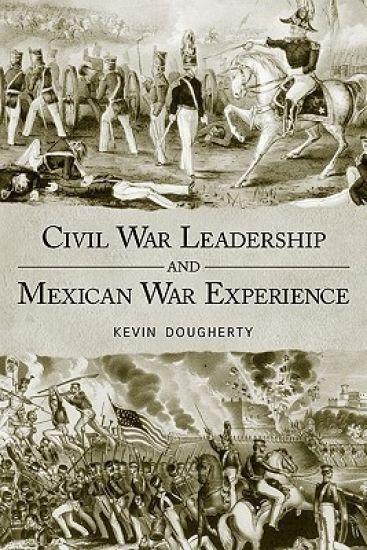
Civil War Leadership and Mexican War Experience

Civil War Leadership and Mexican War Experience

Kevin Dougherty

University Press of Mississippi
2011
nidottu
A great many commanders in the American Civil War (1861-1865) served in the Mexican War (1846-1848). Civil War Leadership and Mexican War Experience explores the influence of the earlier war on those men who would become leaders of Federal and Confederate forces. Military historian Kevin Dougherty sets the context with a discussion of professional soldiering before both wars. He then depicts the unique experiences of twenty-six men in Mexico, thirteen who would later serve the Confederacy and thirteen who would remain with the Union. He traces how tactics they used and reactions they had to Civil War combat reveal a remarkable connection to what they learned campaigning against Santa Anna and other Mexican generals. Personalities discussed range from well-known leaders such as Ulysses S. Grant to lesser-known figures such as John Winder; from geniuses such as Robert E. Lee to mediocrities such as Gideon Pillow; and from aged heroes such as Winfield Scott to developing practitioners such as William Sherman. No other volume so exclusively and thoroughly focuses on connections of service in both wars. Two appendixes in the book list 194 Federal generals and 142 Confederate generals who served in Mexico. The impact of these experiences on major tactical decisions in the Civil War is far-reaching.
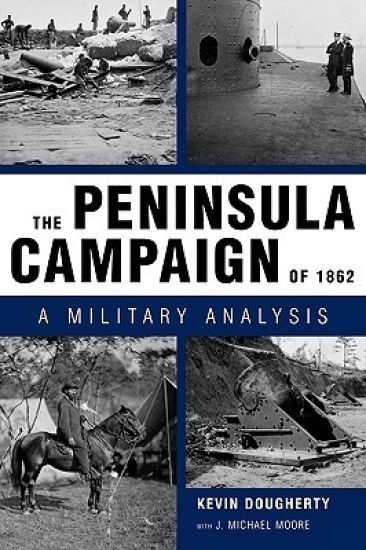
The Peninsula Campaign of 1862

The Peninsula Campaign of 1862

Kevin Dougherty; J. Michael Moore

University Press of Mississippi
2010
nidottu
The largest offensive of the Civil War, involving army, navy, and marine forces, the Peninsula Campaign has inspired many history books. No previous work, however, analyzes Union general George B. McClellan's massive assault toward Richmond in the context of current and enduring military doctrine. The Peninsula Campaign of 1862: A Military Analysis fills this void. Background history is provided for continuity, but the heart of this book is military analysis and the astonishing extent to which the personality traits of generals often overwhelm even the best efforts of their armies. The Peninsula Campaign lends itself to such a study. Lessons for those studying the art of war are many. On water, the first ironclads forever changed naval warfare. At the strategic level, McClellan's inability to grasp Lincoln's grand objective becomes evident. At the operational level, Robert E. Lee's difficulty in synchronizing his attacks deepens the mystique of how he achieved so much with so little. At the tactical level, the Confederate use of terrain to trade space for time allows for a classic study in tactics. Moreover, the campaign is full of lessons about the personal dimension of war. McClellan's overcaution, Lee's audacity, and Jackson's personal exhaustion all provide valuable insights for today's commanders and for Civil War enthusiasts still debating this tremendous struggle. Historic photos and detailed battle maps make this study an invaluable resource for those touring the many battlegrounds from Young's Mill and Yorktown through Fair Oaks to the final throes of the Seven Days' Battles.