Kirjojen hintavertailu – 12 859 824 kirjaa ja 27 kauppaa
Kirjailija
Kevin F. McCarthy
Kirjat ja teokset yhdessä paikassa: 12 kirjaa, julkaisuja vuosilta 2001–2017, suosituimpiin kuuluu Tales From Where The Road Ends. Vertaile teosten hintoja ja tarkista saatavuus suomalaisista kirjakaupoista.
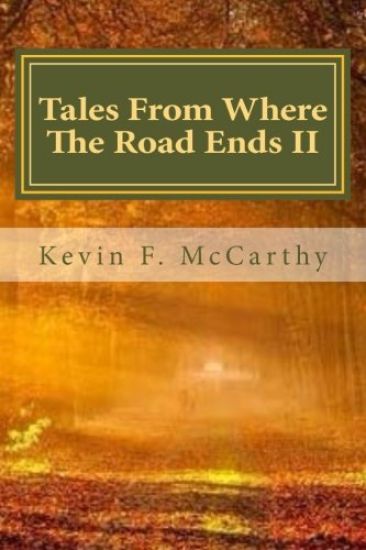
This second collection of short stories once again takes the reader beyond the paths we all walk in our everyday life, to where that thin veil of civilization is torn aside revealing worlds in which the strange and impossible do happen, for better and for worse. *** In the nine tales here we meet; a man who buys a classic car that can do incredible things, things that could change his life forever, even if he'd rather it didn't (The Song Remains the Same). *** A brilliant and nasty research scientist who is hell bent on unlocking the key to immortality both for herself and for mankind, even if it means destroying a few of her colleagues along the way. In the end all she succeeds in doing is to push the boundaries of science too far and create a terrible moral dilemma for those that come after her (Revenge is a Dish Best Served Cold). *** A couple who run out of gas in the desert and stumble across a secret that will change their perception of reality and render obsolete everything they thought they knew about the world they live in (The Grass is Always Greener). *** A group of scientists, politicians and military personnel who must decide, quickly, if first contact with an alien race is something to be welcomed, or avoided at all costs (But We Want to be Alone). *** A mysterious man who brings together a group of brilliant researchers, each with their own special skills, and tasks them with solving some of the most enduring mysteries of our world (Hidden Places). *** A bitter unsuccessful old man who breaks into a long abandoned bar from his past to have a last drink and recall his misspent youth. He's about to discover that the bar isn't as empty as it seems and that he's let himself in for more than just a walk down memory lane (Last Call at JJ's). *** These are just some of the stories in volume two of Tales From Where the Road Ends. Stories that will take you to places you've never been, some wonderful, some frightening, some you may never be able to forget.

In response to the current situation in New Orleans in the aftermath of Hurricane Katrina, this report provides recommendations regarding effective organizational and strategic approaches to revitalizing the city's economy, identifies the best practices that other cities have used to foster economic development, describes how these practices might be applied to New Orleans, and considers historical trends and past development missteps.
What is the potential for a divergence in views among civilian and military elites (sometimes referred to as the civil-military gap) to undermine military effectiveness? Although a variety of differences were found among the views of military and civilian survey respondents, these differences mostly disappeared when the authors focused on the attitudes that are pertinent to civilian control of the military and military effectiveness.
The nonprofit arts currently face an environment that challenges the way they have grown and raises the prospect of future consolidation. The authors focus on the relationship among the components of local communities' arts ecology and develop a new framework for evaluating systems of support to the arts. They then use this framework to assess the strengths and weaknesses of Philadelphia's arts sector.
Providing information about developments in the visual arts world, this book promotes analysis of the sector, describing the characteristics of visual arts consumers (collectors and appreciators), artists, finances, and organizations. The third in a series that examines the state of the arts in America, this analysis shows, in addition to lines around the block for special exhibits, well-paid superstar artists, flourishing university visual arts programs, and a global expansion of collectors, developments in the visual arts also tell a story of rapid, even seismic change, systemic imbalances, and dislocation.
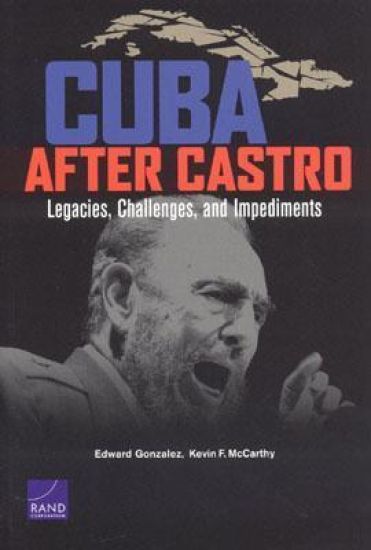
Examines the political, social, and economic challenges the Cuban government and people will likely face in a post-Castro Cuba; When the end of the Castro era arrives, the successor government and the Cuban people will need to answer certain questions: How is CastroOs more than four-decade rule likely to affect a post-Castro Cuba? What will be the political, social, and economic challenges Cuba will confront? What are the impediments to CubaOs economic development and democratic transition? The authors examine CastroOs political legacies, CubaOs generational and racial divisions, its demographic predicament, the legacy of a centralized economy, and the need for industrial restructuring.
Accompanies and supports the Cuba After Castro monograph report with more-detailed analyses of the political, social, demographic, and economic problems confronting Cuba; When the end of the Castro era arrives, the government that succeeds Fide! Castro and the Cuban people will need answers to certain questions: How is CastroOs four-decade-plus rule likely to affect a post-Castro Cuba? What are the political, social, and economic challenges Cuba will confront? What are the impediments to be surmounted if Cuba is to develop economically and embark on a democratic transition? The five appendices in this report constitute a companion volume to the RAND Corporation report Cuba After Castro: Legacies, Challenges, and Impediments (MG-111-RC, 2004).
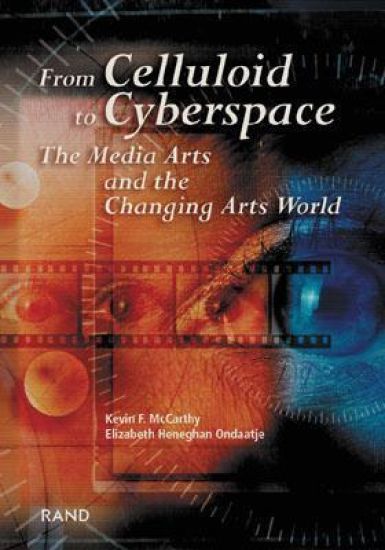
This book examines the organizational features of the media arts, placing them in the context of the broader arts environment and identifying the major challenges they face.
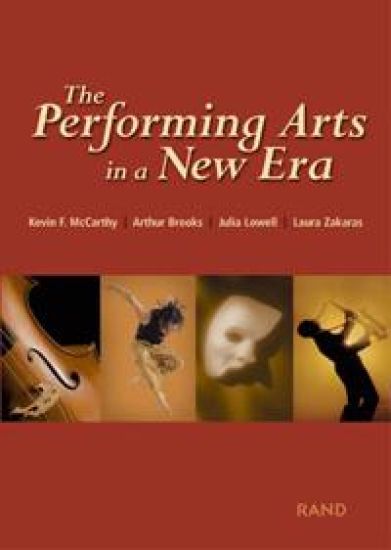
One liner: Examines the state of the performing arts in America: audiences, artists, and performing groups and their financial health. Abstract text: What is the state of the performing arts in America at the turn of the 21st century? After decades of expansion, how are performing arts organizations faring? Has demand for live performances been increasing or decreasing? Are more Americans choosing the performing arts as a profession? And what is the likely effect of the internet on the arts? The authors identify key trends affecting audiences, artists, arts organizations, and financing for all the performing arts. The most dramatic growth in demand for the performing arts has taken place in the market for recorded and broadcast performances. Live performances are increasingly provided by small performing groups at the community level--low-budget dance troupes, music groups, and theater ensembles that perform for little or no pay. In a few major cities, the largest and best-known organizations are growing even larger by focusing on star-studded productions that pull in the crowds. But conventional midsized arts organizations--once seen as the foremost purveyors of culture to middle America--are under significant financial stress. These and other trends suggest that policies that support artists and arts organizations may be less effective than strategies encouraging greater participation in the arts by a wider range of Americans in a wider range of art forms.
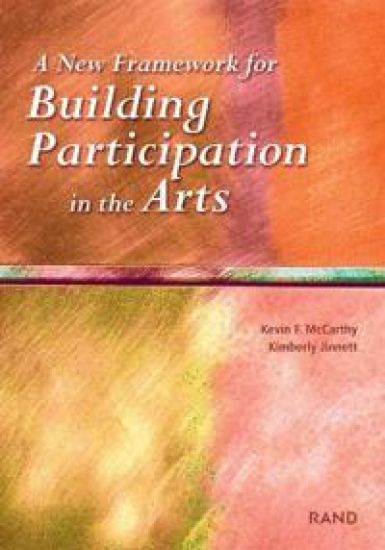
One-liner: An investigation into how individuals decide to become involved in the arts and recommendations for effective strategies that may encourage participation. ABSTRACT: Arts organizations across the country are actively expanding their efforts to increase public participation in their programs. This report presents the findings of a RAND study sponsored by the Wallace-Reader's Digest Funds that looks at the process by which individuals become involved in the arts and attempts to identify ways in which arts institutions can most effectively influence this process. The report presents a behavioral model that identifies the main factors influencing individual decisions about the arts, based on site visits to institutions that have been particularly successful in attracting participants to their programs and in-depth interviews with the directors of more than 100 institutions that have received grants from the Wallace-Reader's Digest Funds and the Knight Foundation to encourage greater involvement in the arts. The model and a set of guidelines to help institutions approach the task of participation building constitute a framework that can assist in devising participation-building approaches that fit with an institution's overall purpose and mission, its available resources, and the community environment in which it operates-in other words, a framework that will enable arts institutions to take an integrative approach to building participation in the arts. (JD)