Kirjojen hintavertailu – 12 859 829 kirjaa ja 27 kauppaa

Kirjailija

Kevin F. Steinmetz

Kirjat ja teokset yhdessä paikassa: 7 kirjaa, julkaisuja vuosilta 2016–2025, suosituimpiin kuuluu Policing the Digital Void. Vertaile teosten hintoja ja tarkista saatavuus suomalaisista kirjakaupoista.

7 kirjaa

Kirjojen julkaisuvuodet: 2016–2025.

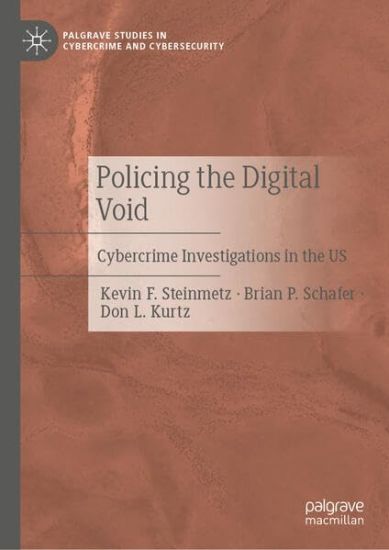
Policing the Digital Void

Policing the Digital Void

Kevin F. Steinmetz; Brian P. Schafer; Don L. Kurtz

Springer International Publishing AG
2025
sidottu
This accessible book examines American law enforcement cybercrime investigations. Through semi-structured interviews with forty-seven cybercrime law enforcement investigators, it explores the characteristics of investigators, the development of cybercrime units and task force programs in the US, the processes involved in these investigations, and the culture of American cybercrime investigations. This includes how cybercrime investigators relate to police occupational culture, their perceptions of offenders and victims, and use of humor. It also considers the technological, economic, political, and cultural contexts that shape and structure cybercrime investigations, units, and task forces. It adopts a sociological approach to the study of cybercrime policing by tracing connections between the individual and organizational levels of analysis to the macro-structural. In other words, it situates cybercrime policing in the “big picture” of technological change, the political economic of internet platforms, the transformation of “force” in the internet age, and related matters. Finally, this book builds from this comprehensive analysis of American policing to discuss pathways forward by curating institutional and organizational policy suggestions to promote both effective and just cybercrime policing.

Cybercrime and Society

Cybercrime and Society

Majid Yar; Kevin F. Steinmetz

SAGE PUBLICATIONS LTD
2023
nidottu

Halvin toimitettuna 42,80 €

Extensively updated and expanded to reflect the evolving landscape of online crime, this fourth edition of Cybercrime and Society is a comprehensive and accessible introduction to this complex and fascinating topic. But just what are cybercrimes? And who are the cybercriminals? You will learn how the internet and communication technologies present new challenges to individual and collective safety, social order and stability, economic prosperity and political liberty. From hacktivism and digital disobedience to online harassment and sexual exploitation, Cybercrime and Society is the definitive book for undergraduate and postgraduate students studying modules in cybercrime and cybersecurity. The fourth edition covers new and contemporary issues such as AI and preventative approaches to counter cybercrimes and also includes two new chapters: • Online Falsehoods provides coverage of fake news, disinformation, and conspiracies, each of which have rapidly become a major online problem with significant consequences • Illegal Goods and Illicit Markets combines discussion of issues such as the trade in prohibited goods online and via crypto-markets with discussion of piracy and copyright crime In addition to the extensive updating and expansion of the topics covered in the 2019 edition, all kinds of new developments are introduced and assessed. New case studies and examples are presented, and the international scope and coverage of the book has been further expanded, with treatment of the Canadian and Australian contexts being given greater consideration. Majid Yar is Professor Emeritus of Criminology at Lancaster University. Kevin F. Steinmetz is a Professor of Criminology at Kansas State University.
Cybercrime and Society

Cybercrime and Society

Majid Yar; Kevin F. Steinmetz

SAGE PUBLICATIONS LTD
2023
sidottu
Extensively updated and expanded to reflect the evolving landscape of online crime, this fourth edition of Cybercrime and Society is a comprehensive and accessible introduction to this complex and fascinating topic. But just what are cybercrimes? And who are the cybercriminals? You will learn how the internet and communication technologies present new challenges to individual and collective safety, social order and stability, economic prosperity and political liberty. From hacktivism and digital disobedience to online harassment and sexual exploitation, Cybercrime and Society is the definitive book for undergraduate and postgraduate students studying modules in cybercrime and cybersecurity. The fourth edition covers new and contemporary issues such as AI and preventative approaches to counter cybercrimes and also includes two new chapters: • Online Falsehoods provides coverage of fake news, disinformation, and conspiracies, each of which have rapidly become a major online problem with significant consequences • Illegal Goods and Illicit Markets combines discussion of issues such as the trade in prohibited goods online and via crypto-markets with discussion of piracy and copyright crime In addition to the extensive updating and expansion of the topics covered in the 2019 edition, all kinds of new developments are introduced and assessed. New case studies and examples are presented, and the international scope and coverage of the book has been further expanded, with treatment of the Canadian and Australian contexts being given greater consideration. Majid Yar is Professor Emeritus of Criminology at Lancaster University. Kevin F. Steinmetz is a Professor of Criminology at Kansas State University.
Against Cybercrime

Against Cybercrime

Kevin F. Steinmetz

TAYLOR FRANCIS LTD
2023
nidottu
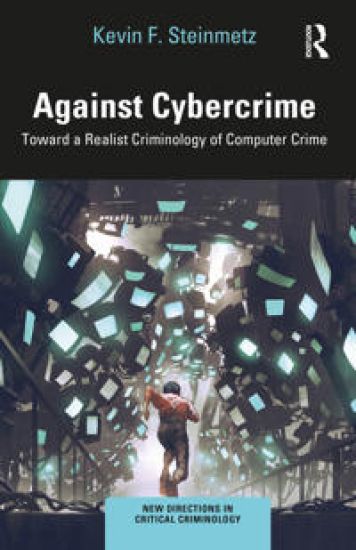
This book advances a theoretically informed realist criminology of computer crime. Looking beyond current strategies of online crime control, this book argues for a new sort of policy that addresses the root causes of computer crime and criminality, reduces the harms experienced by the victims of such crimes, and does not unduly contribute to state and corporate power and surveillance. Drawing both on the proponents of realist criminology and on those who have leveled critiques of the approach, Steinmetz illustrates the contours of a realist criminology of computer crime by considering definitions of harm with online crime, the idiosyncrasies of online locality and community, the social relations of computer crime, the tension between piecemeal reform and structural changes, and other matters. Furthermore, Steinmetz surveys the methodological dimensions of computer crime research, offers a critique of positivist “computational criminology,” and posits an agenda for computer crime policy. Against Cybercrime is an essential reading for all those engaged with cybercrime, realist criminology, criminological theory, and social harm online.
Against Cybercrime

Against Cybercrime

Kevin F. Steinmetz

TAYLOR FRANCIS LTD
2023
sidottu
This book advances a theoretically informed realist criminology of computer crime. Looking beyond current strategies of online crime control, this book argues for a new sort of policy that addresses the root causes of computer crime and criminality, reduces the harms experienced by the victims of such crimes, and does not unduly contribute to state and corporate power and surveillance. Drawing both on the proponents of realist criminology and on those who have leveled critiques of the approach, Steinmetz illustrates the contours of a realist criminology of computer crime by considering definitions of harm with online crime, the idiosyncrasies of online locality and community, the social relations of computer crime, the tension between piecemeal reform and structural changes, and other matters. Furthermore, Steinmetz surveys the methodological dimensions of computer crime research, offers a critique of positivist “computational criminology,” and posits an agenda for computer crime policy. Against Cybercrime is an essential reading for all those engaged with cybercrime, realist criminology, criminological theory, and social harm online.
Hacked

Hacked

Kevin F. Steinmetz

New York University Press
2016
sidottu
Inside the life of a hacker and cybercrime culture. Public discourse, from pop culture to political rhetoric, portrays hackers as deceptive, digital villains. But what do we actually know about them? In Hacked, Kevin F. Steinmetz explores what it means to be a hacker and the nuances of hacker culture. Through extensive interviews with hackers, observations of hacker communities, and analyses of hacker cultural products, Steinmetz demystifies the figure of the hacker and situates the practice of hacking within the larger political and economic structures of capitalism, crime, and control. This captivating book challenges many of the common narratives of hackers, suggesting that not all forms of hacking are criminal and, contrary to popular opinion, the broader hacker community actually plays a vital role in our information economy. Hacked thus explores how governments, corporations, and other institutions attempt to manage hacker culture through the creation of ideologies and laws that protect powerful economic interests. Not content to simply critique the situation, Steinmetz ends his work by providing actionable policy recommendations that aim to redirect the focus from the individual to corporations, governments, and broader social issues. A compelling study, Hacked helps us understand not just the figure of the hacker, but also digital crime and social control in our high-tech society.
Hacked

Hacked

Kevin F. Steinmetz

New York University Press
2016
pokkari
Inside the life of a hacker and cybercrime culture. Public discourse, from pop culture to political rhetoric, portrays hackers as deceptive, digital villains. But what do we actually know about them? In Hacked, Kevin F. Steinmetz explores what it means to be a hacker and the nuances of hacker culture. Through extensive interviews with hackers, observations of hacker communities, and analyses of hacker cultural products, Steinmetz demystifies the figure of the hacker and situates the practice of hacking within the larger political and economic structures of capitalism, crime, and control. This captivating book challenges many of the common narratives of hackers, suggesting that not all forms of hacking are criminal and, contrary to popular opinion, the broader hacker community actually plays a vital role in our information economy. Hacked thus explores how governments, corporations, and other institutions attempt to manage hacker culture through the creation of ideologies and laws that protect powerful economic interests. Not content to simply critique the situation, Steinmetz ends his work by providing actionable policy recommendations that aim to redirect the focus from the individual to corporations, governments, and broader social issues. A compelling study, Hacked helps us understand not just the figure of the hacker, but also digital crime and social control in our high-tech society.