Kirjojen hintavertailu – 12 903 725 kirjaa ja 27 kauppaa

Kirjailija

Kevin Featherstone

Kirjat ja teokset yhdessä paikassa: 4 kirjaa, julkaisuja vuosilta 1995–2025, suosituimpiin kuuluu The Road To Maastricht. Vertaile teosten hintoja ja tarkista saatavuus suomalaisista kirjakaupoista.

4 kirjaa

Kirjojen julkaisuvuodet: 1995–2025.

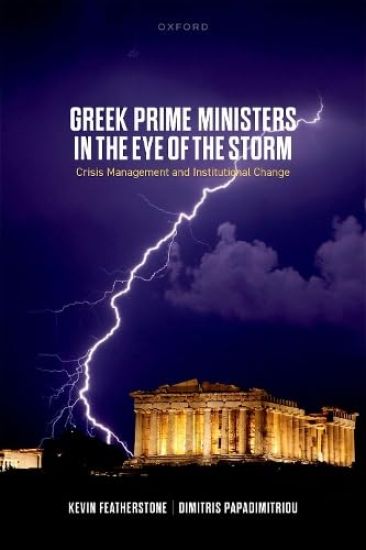
Greek Prime Ministers in the Eye of the Storm

Greek Prime Ministers in the Eye of the Storm

Kevin Featherstone; Dimitris Papadimitriou

Oxford University Press
2025
sidottu
When, and how, might crises force institutions to change? Crisis management prompts expectations of exceptional behaviour, leaders raising their 'game', and of being empowered. The Greek crisis of 2009-18 was severe: threatening bankruptcy and Greece's exit from the euro. Yet, in a previous study of 2015, Featherstone and Papadimitriou identified key institutional weaknesses embedded within Greek governments: of poor central control and coordination, the very qualities needed in a crisis. So, how far did the crisis in Greece enable actors to overcome these critical weaknesses? What lessons were drawn, and when? Exploring change in a crisis requires careful case study. Drawing on interviews with an extensive range of personnel, including each crisis Greek prime minister, the authors meticulously explore how the four prime ministers of the period handled the challenges of crisis management. In doing so, they apply an original analytical frame. They then place the Greek case in a wider, comparative perspective, contributing to studies of crisis leadership, crisis management, core executives, and the utility of external loan conditionality. There are implications for the capacity to reform in particular domestic settings and the ability of external actors like the European Union to leverage such reform. In a heterogeneous Europe, these are issues of likely continuing importance.
Prime Ministers in Greece

Prime Ministers in Greece

Kevin Featherstone; Dimitris Papadimitriou

Oxford University Press
2015
sidottu
This book is concerned with a large question in one small, but highly problematic case: how can a prime minister establish control and coordination across his or her government? The Greek system of government sustains a 'paradox of power' at its very core. The Constitution provides the prime minister with extensive and often unchecked powers. Yet, the operational structures, processes and resources around the prime minister undermine their power to manage the government. Through a study of all main premierships between 1974 and 2009, Prime Ministers in Greece argues that the Greek prime minister has been 'an emperor without clothes'. The costs of this paradox included the inability to achieve key policy objectives under successive governments and a fragmented system of governance that provided the backdrop to Greece's economic meltdown in 2010. Building on an unprecedented range of interviews and archival material, Featherstone and Papadimitriou set out to explore how this paradox has been sustained. They conclude with the Greek system meeting its 'nemesis': the arrival of the close supervision of its government by the 'Troika' - the representatives of Greece's creditors. The debt crisis challenged taboos and forced a self-reflection. It remains unclear, however, whether either the external strategy or the domestic response is likely to be sufficient to make the Greek system of governance 'fit for purpose'.
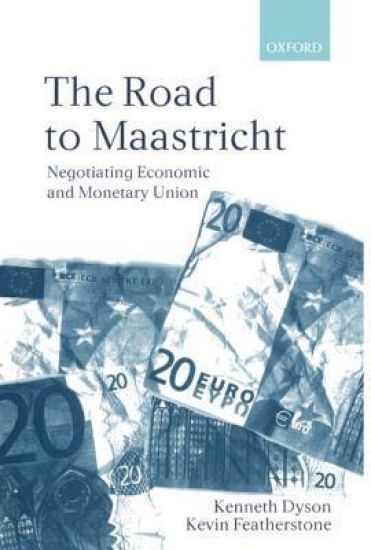
The Road To Maastricht

The Road To Maastricht

Kenneth Dyson; Kevin Featherstone

Oxford University Press
1999
nidottu
Economic and monetary union in the European Union represents a massive change for Europe and for the world. The Road to Maastricht identifies why the agreement was possible and how the agreement was made. The book examines the motives that inspired European political leaders, the strategies that they pursued, and the institutions that were used to achieve monetary union. Drawing on a wide range of sources and unprecedented research and interviews, the book combines careful political analysis with new information about the way in which European Monetary Union was negotiated. It delves into the complex forces at work in Europe, including the cross-national political interactions, to produce an authoritative account of the boldest and riskiest venture in the history of European integration.