Kirjojen hintavertailu – 12 903 725 kirjaa ja 27 kauppaa

Kirjailija

Kevin Kinghorn

Kirjat ja teokset yhdessä paikassa: 8 kirjaa, julkaisuja vuosilta 2005–2024, suosituimpiin kuuluu But What About God`s Wrath? – The Compelling Love Story of Divine Anger. Vertaile teosten hintoja ja tarkista saatavuus suomalaisista kirjakaupoista.

8 kirjaa

Kirjojen julkaisuvuodet: 2005–2024.

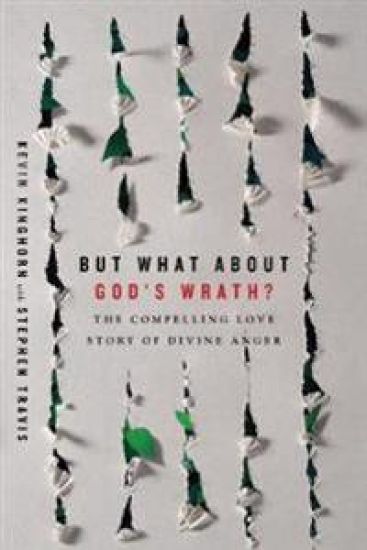
But What About God`s Wrath? – The Compelling Love Story of Divine Anger
How can a loving God also be a God of wrath? God's wrath stands out in the minds of many as the single most puzzling aspect of God's character. Often Christians who would like to reconcile divine love with divine wrath—while remaining faithful to the Bible—can't figure out how to do so. Kevin Kinghorn and Stephen Travis offer a way forward. Using a philosophically informed line of argument and a careful study of the relevant biblical texts, Kinghorn and Travis show how these two aspects of God's character can be reconciled. Often God's wrath is viewed as an expression of holiness or justice, with the implicit assumption that God's just response to people is incompatible with a loving response. The authors instead view God's love as a strictly essential divine attribute, with justice as a derivative of love. But What About God's Wrath? will appeal to Christians eager to engage this puzzle more deeply, more philosophically, and more biblically, beyond pat answers and devotional platitudes.
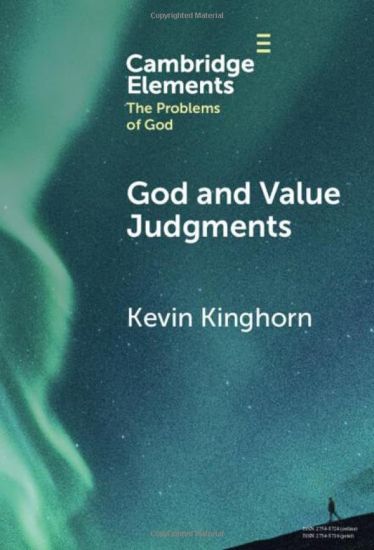
God and Value Judgments

God and Value Judgments

Kevin Kinghorn

Cambridge University Press
2024
sidottu
Humans continually make judgments that some things have more value than others. Plausibly, it is largely through our value judgments that God intends to guide us in setting priorities and goals. This Element surveys leading accounts of what value judgments are exactly. It then explores the particular values we are apparently sensitive to when making two judgments endemic to human life: about what makes a life good, and about who deserves a good life. Connections are made between differing analyses of human value judgments and views about God's character and the goals God is prompting us to pursue.
God and Value Judgments

God and Value Judgments

Kevin Kinghorn

Cambridge University Press
2024
pokkari
Humans continually make judgments that some things have more value than others. Plausibly, it is largely through our value judgments that God intends to guide us in setting priorities and goals. This Element surveys leading accounts of what value judgments are exactly. It then explores the particular values we are apparently sensitive to when making two judgments endemic to human life: about what makes a life good, and about who deserves a good life. Connections are made between differing analyses of human value judgments and views about God's character and the goals God is prompting us to pursue.
The Nature of Desert Claims

The Nature of Desert Claims

Kevin Kinghorn

Cambridge University Press
2023
pokkari
Our everyday conversations reveal the widespread assumption that positive and negative treatment of others can be justified on the grounds that 'they deserve it'. But what is it exactly to deserve something? In this book, Kevin Kinghorn explores how we came to have this concept and offers an explanation of why people feel so strongly that redress is needed when outcomes are undeserved. Kinghorn probes for that core concern which is common to the range of everyday desert claims people make, ultimately proposing an alternative model of desert which represents a fundamental challenge to the received wisdom on the structure of desert claims. In the end, he argues, our plea for deserved treatment ends up being linked to the universal human concern for a shared narrative, as we seek healthy relationships within a community.
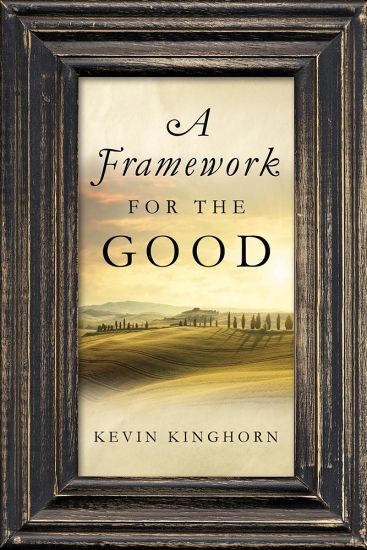
A Framework for the Good

A Framework for the Good

Kevin Kinghorn

UNIVERSITY OF NOTRE DAME PRESS
2021
sidottu
This book provides an ethical framework for understanding the good and how we can experience it in increasing measure. In Part 1, Kevin Kinghorn offers a formal analysis of the meaning of the term "good," the nature of goodness, and why we are motivated to pursue it. Setting this analysis within a larger ethical framework, Kinghorn proposes a way of understanding where noninstrumental value lies, the source of normativity, and the relationship between the good and the right. Kinghorn defends a welfarist conception of the good along with the view that mental states alone directly affect a person's well-being. He endorses a Humean account of motivation—in which desires alone motivate us, not moral beliefs—to explain the source of the normative pressure we feel to do the good and the right. Turning to the place of objectivity within ethics, he concludes that the concept of "objective wrongness" is a misguided one, although a robust account of "objective goodness" is still possible. In Part 2, Kinghorn shifts to a substantive, Christian account of what the good life consists in as well as how we can achieve it. Hume's emphasis of desire over reason is not challenged but rather endorsed as a way of understanding both the human capacity for choice and the means by which God prompts us to pursue relationships of benevolence, in which our ultimate flourishing consists.
The Nature of Desert Claims

The Nature of Desert Claims

Kevin Kinghorn

Cambridge University Press
2021
sidottu
Our everyday conversations reveal the widespread assumption that positive and negative treatment of others can be justified on the grounds that 'they deserve it'. But what is it exactly to deserve something? In this book, Kevin Kinghorn explores how we came to have this concept and offers an explanation of why people feel so strongly that redress is needed when outcomes are undeserved. Kinghorn probes for that core concern which is common to the range of everyday desert claims people make, ultimately proposing an alternative model of desert which represents a fundamental challenge to the received wisdom on the structure of desert claims. In the end, he argues, our plea for deserved treatment ends up being linked to the universal human concern for a shared narrative, as we seek healthy relationships within a community.
A Framework for the Good

A Framework for the Good

Kevin Kinghorn

University of Notre Dame Press
2016
nidottu
This book provides an ethical framework for understanding the good and how we can experience it in increasing measure. In Part 1, Kevin Kinghorn offers a formal analysis of the meaning of the term "good," the nature of goodness, and why we are motivated to pursue it. Setting this analysis within a larger ethical framework, Kinghorn proposes a way of understanding where noninstrumental value lies, the source of normativity, and the relationship between the good and the right. Kinghorn defends a welfarist conception of the good along with the view that mental states alone directly affect a person's well-being. He endorses a Humean account of motivation—in which desires alone motivate us, not moral beliefs—to explain the source of the normative pressure we feel to do the good and the right. Turning to the place of objectivity within ethics, he concludes that the concept of "objective wrongness" is a misguided one, although a robust account of "objective goodness" is still possible. In Part 2, Kinghorn shifts to a substantive, Christian account of what the good life consists in as well as how we can achieve it. Hume's emphasis of desire over reason is not challenged but rather endorsed as a way of understanding both the human capacity for choice and the means by which God prompts us to pursue relationships of benevolence, in which our ultimate flourishing consists.
The Decision of Faith

The Decision of Faith

Kevin Kinghorn

T. T.Clark Ltd
2005
nidottu
Christian theologians have historically described a 'saving faith in God' as containing a fundamental element of 'belief'. However, philosophers present strong arguments exist that we are not capable of freely deciding which beliefs we will hold. Rather, we simply find ourselves believing things as the evidence before us seems to dictate. So, if belief is indeed involuntary, and if certain beliefs are requisite for Christian faith, then how can the matter of one's salvation rest on whether one has freely put one's faith in God? After explaining this objection to the Christian affirmation that faith is a voluntary matter for which God will hold all people morally accountable, this study in philosophical theology explores how the Christian theist might respond to this objection. Kevin Kinghorn uses experimental studies within the psychological literature on self-deception to make sense of the Christian idea of 'spiritual blindness'; and argues that whether or not a person wilfully contributes to self-deception will hinge on decisions he or she makes either to embrace or avoid the truth as he or she sees it. Kinghorn then attempts to show that decisions of this type - more specifically, decisions to embrace or avoid the truth about God, wherever the truth lies - are ultimately more fundamental to the kind of relationship with God commended by the Christian religion than is the question of what a person believes. Kinghorn's conclusion is that the Christian theist can indeed rebut the objection pending against him or her, but only if he or she adopts Kinghorn's own account of the nature of faith, which provides a sharper distinction between faith and belief than is generally found in accounts of faith within the Christian tradition.