Kirjojen hintavertailu – 12 903 725 kirjaa ja 27 kauppaa

Kirjailija

Kevin Lynch

Kirjat ja teokset yhdessä paikassa: 24 kirjaa, julkaisuja vuosilta 1964–2021, suosituimpiin kuuluu The Best of Closet Cooking 2022. Vertaile teosten hintoja ja tarkista saatavuus suomalaisista kirjakaupoista.

24 kirjaa

Kirjojen julkaisuvuodet: 1964–2021.

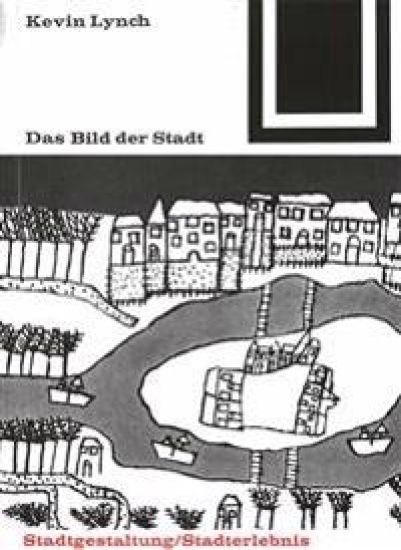
Das Bild der Stadt

Das Bild der Stadt

Kevin Lynch

Birkhauser
2001
isokokoinen pokkari
wie orientieren wir uns in einer Stadt? Was haftet im Gedächtnis? Woher rühren unsere ganz fest umrissenen visuellen Vorstellungen? Was bedeutet die sichtbare Gestalt der Stadt den Bewohnern? Um diese Fragen beantworten zu können, studierte Kevin Lynch Lynch - ehemaliger Professor für Stadtplanung am Massachusetts Institut of Technology und ein Schüler von Frank Lloyd Wright - die Erfahrungen von Menschen, die in Los Angeles, Boston und Jersey City wohnen. Aus einer Fülle von Daten bildet Lynch ein neues Kriterium: das der "Einprägsamkeit", "Lesbarkeit", "Vorstellbarkeit", dessen möglichen Wert für den Aufbau und Wiederaufbau von Städten er aufzeigt. Er zeigt damit, wie man das Bild der Stadt wieder lebendiger einprägsamer machen könnte.
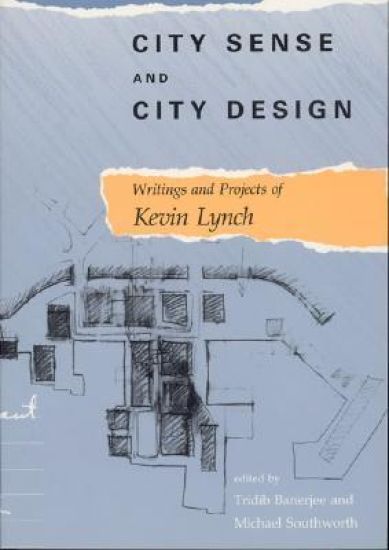
City Sense and City Design

City Sense and City Design

Kevin Lynch

MIT Press
1995
pokkari
Kevin Lynch's books are the classic underpinnings of modern urban planning and design, yet they are only a part of his rich legacy of ideas about human purposes and values in built form. City Sense and City Design brings together Lynch's remaining work, including professional design and planning projects that show how he translated many of his ideas and theories into practice. An invaluable sourcebook of design knowledge, City Sense and City Design completes the record of one of the foremost environmental design theorists of our time and leads to a deeper understanding of his distinctively humanistic philosophy. The editors, both former students of Lynch, provide a cogent summary of his career and of the role he played in shaping and transforming the American urban design profession during the 1950s, the 1960s, and the 1970s. Each of the seven thematic groupings of writings and projects that follow begins with a short introduction explaining their content and their background. The essays in part I focus on the premises of Lynch's work: his novel reading of large-scale built environments and the notion that the design of an urban landscape should be as meaningful and intimate as the natural landscape. In part II, excerpts from Lynch's travel journals reveal his early ideas on how people perceive and interpret their surroundings-ideas that culminated in his seminal work, The Image of the City. This part of the book also presents Lynch's experiments with children and his assessment of environmental-perception research. The examples of both small-scale and large-scale analysis of visual form in part III are followed by three parts on city design. These include Lynch's more theoretical works on complex planning decisions involving both functional (spatial and structural organization) and normative (how the city works in human terms) approaches, articles discussing the principles that guided Lynch's teaching and practice of city design, and descriptions of Lynch's own projects in the Boston area and elsewhere. The book concludes with essays written late in Lynch's career, fantasy pieces describing utopias and offering new design freedoms and scenarios warning of horrifying "cacotopias."

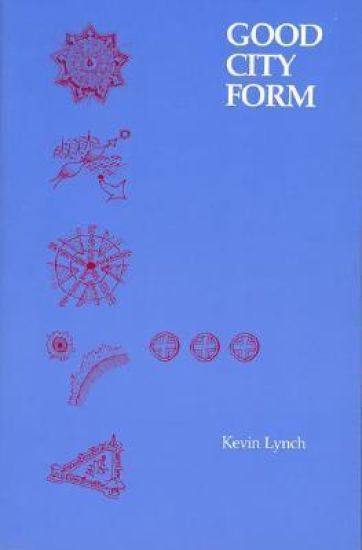
Good City Form

Good City Form

Kevin Lynch

MIT Press
1984
pokkari

Halvin toimitettuna 77,40 €

A summation and extension of Lynch's vision for the exploration of city form. With the publication of The Image of the City in 1959, Kevin Lynch embarked upon the process of exploring city form. Good City Form is both a summation and an extension of his vision, a high point from which he views cities past and possible. First published in hardcover under the title A Theory of Good City Form.
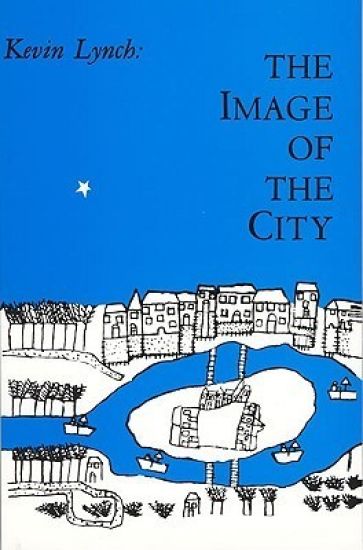
The Image of the City

The Image of the City

Kevin Lynch

MIT Press
1964
pokkari

Halvin toimitettuna 34,70 €

The classic work on the evaluation of city form. What does the city's form actually mean to the people who live there? What can the city planner do to make the city's image more vivid and memorable to the city dweller? To answer these questions, Mr. Lynch, supported by studies of Los Angeles, Boston, and Jersey City, formulates a new criterion-imageability-and shows its potential value as a guide for the building and rebuilding of cities. The wide scope of this study leads to an original and vital method for the evaluation of city form. The architect, the planner, and certainly the city dweller will all want to read this book.