Kirjojen hintavertailu – 12 903 725 kirjaa ja 27 kauppaa

Kirjailija

Kevin Murphy

Kirjat ja teokset yhdessä paikassa: 38 kirjaa, julkaisuja vuosilta 2005–2026, suosituimpiin kuuluu Ecosystems. Vertaile teosten hintoja ja tarkista saatavuus suomalaisista kirjakaupoista.

38 kirjaa

Kirjojen julkaisuvuodet: 2005–2026.

Concepts in Federal Taxation 2021 (with Intuit ProConnect Tax Online 2019 and RIA Checkpoint® 1 term (6 months) Printed Access Card)
Master the concepts behind today’s federal taxation using the balanced, conceptual approach in Murphy/Higgins/Skalberg's CONCEPTS IN FEDERAL TAXATION 2021. You examine the latest tax codes and most recent changes for the current tax year in a clear, straightforward approach that prepares you for success on the CPA Exam. You learn the unifying concepts behind the Internal Revenue Code rather than memorizing details of the Code. Concepts and applications appear in brief, comprehensible segments that are ideal for CPA Exam review. In addition, examples relate concepts to familiar business scenarios with more opportunities for practice than any other book of this kind. CNOWv2 online homework tool helps optimizes study. Intuit® ProConnect software and RIA Checkpoint® Student Edition from Thomson Reuters also provide practice working with professional tax tools as you strengthen your understanding of taxation.
Trial and Flame

Trial and Flame

Kevin Murphy

Independently Published
2018
pokkari
Games are an escape? The fickle whims of the gods force Dakkon to take that sentiment literally. The announcement of some grand tournament doesn't equate to glory when its thrust upon him and threatens the life of his best friend. In the virtual world called Chronicle anyone could be hunting them. To keep his unusual friend safe, Dakkon goes on the run. But-why not use laying low to your advantage? Staying off the grid might just beget opportunity with the right amount of luck. Avoiding well-traveled roads can certainly have its upsides. It's the trips to unusual places where parties can collect unlikely prizes. What secrets will Dakkon's group uncover when they, too, are trying not to be to be discovered? Just how worried should they be?
Heathers the Musical Vocal Selections

Heathers the Musical Vocal Selections

Laurence O'Keefe; Kevin Murphy

Samuel French Ltd
2017
pokkari

Halvin toimitettuna 34,50 €

Song List includes: Beautiful, Candy Store, Fight for Me, Freeze Your Brain, Dead Girl Walking, Our Love is God, My Dead Gay Son, Seventeen, Lifeboat, Kindergarten Boyfriend, Meant to Be Yours, and Seventeen Reprise
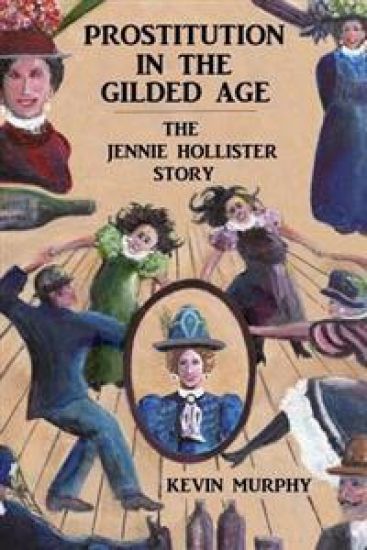
Prostitution in the Gilded Age: The Jennie Hollister Story
The Gilded Age is the only time in American history when prostitution was virtually legal. The Civil War proved such a grizzly affair that afterward, the average citizen was unmoved by a little vice. By the turn of the twentieth century, even small towns had dozens of bawdy houses, and countless saloons and cigar stores with backroom operations. Red light districts abounded and houses of ill fame operated freely. Jennie Hollister was one of the most successful madames of the Gilded Age. Every city in the land had a duplicate copy of Jennie. Fannie Porter's San Antonio, Texas, brothel was a frequent stop for outlaws, including Butch Cassidy and the Sundance Kid. In San Francisco, Sally Stanford outshone the other madames and eventually became the mayor of Sausalito. Josie Arlington, of New Orleans's "Storyville," opened her first bordello on Customhouse Street in 1895. Eleanora Dumont had bawdy houses in gold and silver boomtowns all over the Rockies. The differences between these madames, and their houses of ill fame, could be etched on a ladybug's nose. Jennie Hollister seemed the perfect madame-very attractive, stately, overflowing with personality, and possessed of a strong native intelligence. Jennie's parlor house-a seventeen-room Second French Empire home-rested elegantly on the east side of Bushnell Park in the center of Hartford, Connecticut. It was almost as roomy and comfortable as Governor Morgan Bulkeley's Italianate mansion on Washington Street or Mark Twain's huge "steamboat" manse-both just a few blocks away. Jennie entertained the finest collection of lawmakers and captains of industry extant. Men of the highest station, from all over the state, spent their spare time at Jennie Hollister's place. Without these houses of sin, streetwalkers would overrun the city, creating a terrible atmosphere for respectable women and businessmen alike. Elected officials, merchants, bankers, professional men, and even clerics, felt it best to allow the houses of ill fame to operate as long as they remained orderly. Throughout the 1890s, as wilder and more bizarre characters of the demimonde poured into the wide-open Capitol City of Connecticut, vice of all sorts ran on borrowed time. In 1895, the wooden covered bridge to East Hartford burned and a new bridge commission was formed with ex-Gov. Morgan Bulkeley at its head. When it came to individuals, Bulkeley had no prejudices of any kind, but he loathed the demimonde. At length, the overwhelming cost of the new bridge forced Bulkeley's hand. The bridge would be built, but the brothels had to go. Bulkeley bought up huge sections of the tenderloin, including vast stretches of the waterfront along the Connecticut River, and bulldozed old neighborhoods with abandon. Gone were the flophouses, flag taverns, and brothels that blighted the city from the earliest times. The toughs and the prostitutes had lost their homes and haunts. Meanwhile, just before traffic flowed over the new bridge in late 1907, Judge Edward Garvan of the city's police court sent ten madames to jail for three months. Up to that time, the madames had only paid fines. The demimonde was stunned. As their wide-open city closed down around them, they made plans to move on. America regained its social conscience and, almost overnight, vice disappeared. The luckiest madames were the ones who didn't live to see it all come crashing down. Jennie Hollister passed away in 1900, just a few years before the brothels closed. Though Jennie ran an elegant and orderly parlor house, it would never have survived society's return to righteousness.

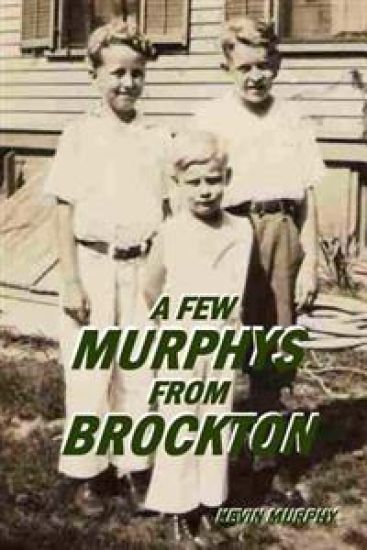
A Few Murphys from Brockton

A Few Murphys from Brockton

Kevin Murphy

Shining Tramp Press
2014
nidottu
This is the tale of a son and daughter of Ireland, who emigrated at the turn of the twentieth century. They met and married in Brockton, Massachusetts. The "shoe city" was at its peak with almost 100 shoe and boot factories. The average worker earned $3.75 a day, the highest wage in the world. Mary Ann Sullivan grew up in a dirt-floor, stone hut in Derrylea, County Mayo. One by one, Mary Ann's father put his seven children on Cunard liners bound for America. In 1908, it was Mary Ann's turn and, soon enough, she became a domestic servant in Brockton. Denis Murphy was from Killarney, County Kerry, and sailed to America in 1894 with his mother and three siblings. His father went on ahead to work at R. B. Grover Shoes in Brockton. Eventually, Denis Murphy became a hoseman with the Brockton Fire Department. In 1918, Mary Ann met Denis at a dance. Two years later, they married and birthed three boys-Thomas, Robert and Edward. By dint of native intelligence and hard work, the boys all became medical doctors. Brockton's shoe industry was a tree lying across a raging river that allowed a few Irish-Americans to reach higher ground. Soon enough, the water tore the tree away, just as Brockton's 100 chuffing, snorting shoe factories relocated or closed their doors. Today, every last one is gone.
In the Peanut Gallery with Mystery Science Theatre 3000

In the Peanut Gallery with Mystery Science Theatre 3000

Kevin Murphy; Michael Paul Schafale; Mary Jo Pehl

McFarland Co Inc
2011
nidottu
The award-winning television series Mystery Science Theater 3000 (1988-1999) has been described as ""the smartest, funniest show in America,"" and forever changed the way we watch movies. The series featured a human host and a pair of robotic puppets who, while being subjected to some of the worst films ever made, provided ongoing hilarious and insightful commentary in a style popularly known as ""riffing."" These essays represent the first full-length scholarly analysis of Mystery Science Theater 3000--MST3K--which blossomed from humble beginnings as a Minnesota public-access television into a cultural phenomenon on two major cable networks. Included are interviews with series creator Joel Hodgson and cast members Kevin Murphy and Trace Beaulieu.
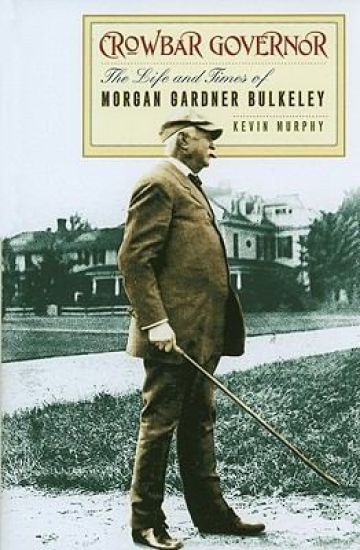
Crowbar Governor

Crowbar Governor

Kevin Murphy

Wesleyan University Press
2011
sidottu
While president of Aetna Life from 1879 to 1922, Morgan Bulkeley served four terms as mayor of Hartford, two terms as Connecticut's governor, and one term as a United States senator. His friends and business and political acquaintances were a who's who of the Gilded Age: Samuel Clemens, J. P. Morgan, Samuel and Elizabeth Colt, Harriet Beecher Stowe, Leland Stanford, Charles Crocker, Albert Spalding, General Sherman, Oliver Wendell Holmes, Katherine Hepburn, as well as every president from Ulysses Grant to Warren Harding. In 1874 Bulkeley formed the Hartford Dark Blues who soon joined the unruly National Association, antecedent of the National League. He served as the league's first president for a year, and was later elected to the Baseball Hall of Fame in Cooperstown. It was during Bulkeley's controversial "holdover" term as governor that he earned the nickname "Crowbar Governor." He used a crowbar to remove a lock that had been placed on his office door after refusing to vacate the governor's chambers on a technicality. Written in classic storyteller fashion, and augmented by copious research, Crowbar Governor offers readers a privileged glimpse into life and politics in Connecticut during the Gilded Age.
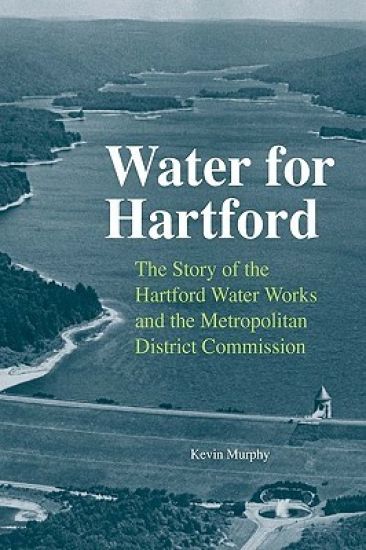
Water for Hartford

Water for Hartford

Kevin Murphy

Wesleyan University Press
2010
sidottu
As good health is inextricably wedded to pure drinking water-and this particular concern looms larger every day-understanding delivery systems is almost as important as the water itself. Water for Hartford chronicles the century-long effort, beginning in the 1850s, to construct a viable, efficient water system. The story of Hartford's water works is a fascinating one, for it recalls the hard work, great sacrifice, and extraordinary engineering feats necessary to deliver wholesome drinking water to a growing urban center. It also illuminates the ever-changing social, political, and economic milieu in which it was built. The story of its construction is also the story of three men-Hiram Bissell, Ezra Clark, and Caleb Saville. Readers are transported back in time and given a firsthand glimpse of what these champions of a water system faced on a daily basis: unforgiving geography, venal politicians, and an often-indifferent public. The book culminates in the exhilaration of having built a water works from scratch to deliver clean, safe drinking water to the masses. Water for Hartford is a human story, peopled by men of vision and achievement, who understood that their decisions and actions would affect millions of people for decades to come.
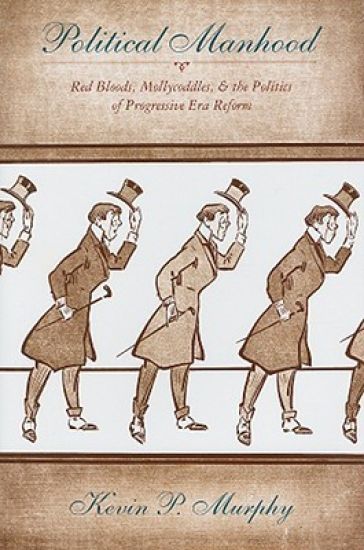
Political Manhood

Political Manhood

Kevin Murphy

Columbia University Press
2008
sidottu
In a 1907 lecture to Harvard undergraduates, Theodore Roosevelt warned against becoming "too fastidious, too sensitive to take part in the rough hurly-burly of the actual work of the world." Roosevelt asserted that colleges should never "turn out mollycoddles instead of vigorous men," and cautioned that "the weakling and the coward are out of place in a strong and free community." A paradigm of ineffectuality and weakness, the mollycoddle was "all inner life," whereas his opposite, the "red blood," was a man of action. Kevin P. Murphy reveals how the popular ideals of American masculinity coalesced around these two distinct categories. Because of its similarity to the emergent "homosexual" type, the mollycoddle became a powerful rhetorical figure, often used to marginalize and stigmatize certain political actors. Issues of masculinity not only penetrated the realm of the elite, however. Murphy's history follows the redefinition of manhood across a variety of classes, especially in the work of late nineteenth-century reformers, who trumpeted the virility of the laboring classes. By highlighting this cross-class appropriation, Murphy challenges the oppositional model commonly used to characterize the relationship between political "machines" and social and municipal reformers at the turn of the twentieth century. He also revolutionizes our understanding of the gendered and sexual meanings attached to political and ideological positions of the Progressive Era.
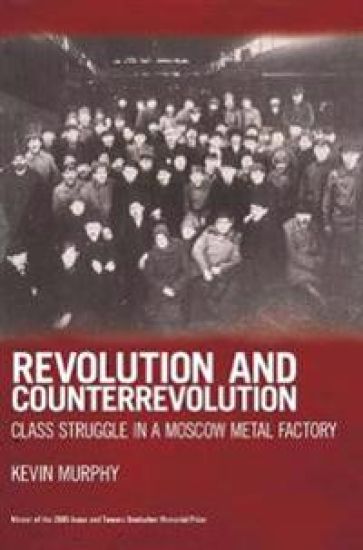
Revolution And Counterrevolution

Revolution And Counterrevolution

Kevin Murphy

Haymarket Books
2007
nidottu
Based on exhaustive research in four factory-specific archives, Murphy's Revolution and Counterrevolution is unquestionably the most thorough investigation to date on working-class life in Moscow during the revolutionary era. It is an exciting contribution to the discussion about class and the Russian revolution from Murphy, who is a history lecturer at the University of Massachusetts, Boston and specialist in the Russian Revolution and Soviet society.
Revolution and Counterrevolution

Revolution and Counterrevolution

Kevin Murphy

Berghahn Books, Incorporated
2005
sidottu
Why did the most unruly proletariat of the Twentieth Century come to tolerate the ascendancy of a political and economic system that, by every conceivable measure, proved antagonistic to working-class interests? Revolution and Counterrevolution is at the center of the ongoing discussion about class identities, the Russian Revolution, and early Soviet industrial relations. Based on exhaustive research in four factory-specific archives, it is unquestionably the most thorough investigation to date on working-class life during the revolutionary era. Focusing on class conflict and workers' frequently changing response to management and state labor policies, the study also meticulously reconstructs everyday life: from leisure activities to domestic issues, the changing role of women, and popular religious belief. Its unparalleled immersion in an exceptional variety of sources at the factory level and its direct engagement with the major interpretive questions about the formation of the Stalinist system will force scholars to re-evaluate long-held assumptions about early Soviet society.