Kirjojen hintavertailu – 12 859 828 kirjaa ja 27 kauppaa

Kirjailija

Kevin Sharp

Kirjat ja teokset yhdessä paikassa: 4 kirjaa, julkaisuja vuosilta 2006–2025, suosituimpiin kuuluu Black Artists in America. Vertaile teosten hintoja ja tarkista saatavuus suomalaisista kirjakaupoista.

4 kirjaa

Kirjojen julkaisuvuodet: 2006–2025.

Black Artists in America

Black Artists in America

Ellen Daugherty; Earnestine Lovelle Jenkins; Julie L. McGee; Kevin Sharp

YALE UNIVERSITY PRESS
2025
sidottu
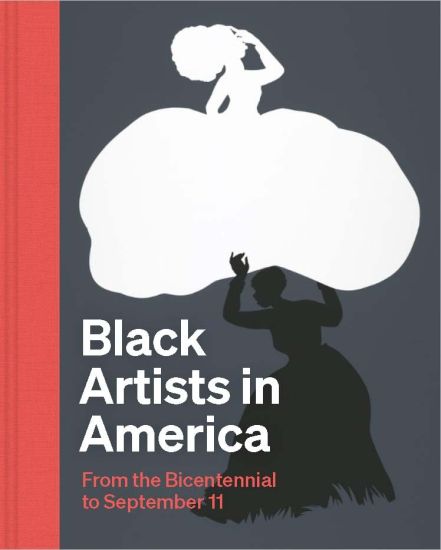
This third and final volume in the Black Artists in America series features work from the transitional moment of the late 1970s to the dawn of the twenty-first century In the 1980s and 1990s, Black artists in the United States who came of age during the civil rights activity of the preceding decades began experimenting with new media and innovative approaches to artmaking, often as a way of questioning long-held inequities in the art world and in American society. Artists such as Jean-Michel Basquiat, Romare Bearden, Elizabeth Catlett, Sam Gilliam, Glenn Ligon, Faith Ringgold, Kara Walker, Carrie Mae Weems, and many others created works that celebrated their racial identity and fought exclusion and prejudices in the establishment. This book considers the ways that the artists of this generation challenged cultural, environmental, political, racial, and social issues of the last decades of the twentieth century. Black Artists in America: From the Bicentennial to September 11 is the final volume in the three-volume series that traces how Black artists have responded to the social issues of their time. Beautifully illustrated with 150 paintings, sculptures, and works on paper, this volume completes the story of a century of artmaking. Published in association with the Dixon Gallery and Gardens Exhibition Schedule: Crocker Art Museum, Sacramento, CA (October 5, 2025–January 11, 2026) Dixon Gallery and Gardens, Memphis, TN (January 25–March 29, 2026)
All Aboard

All Aboard

Thomas Busciglio-Ritter; Ellen Daugherty; Thomas Denenberg; Julie Pierotti; Kevin Sharp; Jack Becker

D GILES LTD
2024
sidottu
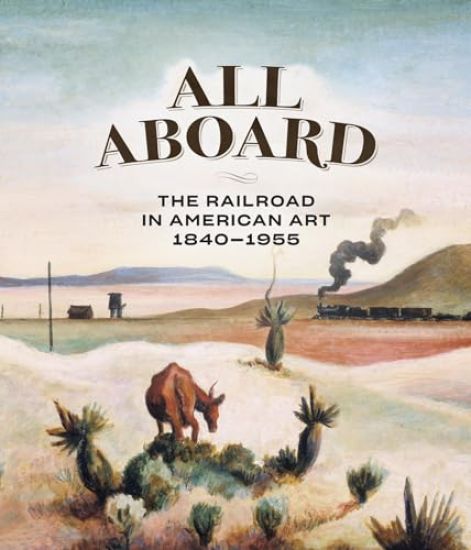
All Aboard is a ground-breaking book. Presented thematically the authors cover the environmental impact of the railroad both on the flora and fauna, and on the social landscape; the role of the railroad on the western expansion of the USA, and the lasting and hugely detrimental impact of this on Native American populations. A wide array of comparative images includes archival and historic views, other related artworks and ephemera, as well as a railroad map. In the early years of the nineteenth century artists including Thomas Cole and George Inness, of the Hudson River School, feared the impact of the railroad on the natural landscape; later artists were inspired by the newly opened-up landscapes of the West, including Albert Bierstadt and Theodore Kaufmann; others like Edward Hopper, Jacob Lawrence, Reginald Marsh, George Bellows, and John Sloan, were fascinated by movement of freight and people across the railroad network. Ben Shahn, Tomas Hart Benton, and Joe Jones's portrayals of railroad workers become emblems of the very backbone of America on which the country's social and industrial expansion was built. Such industrial expansion is captured in the dramatic views of Pittsburgh and mid-west industry in paintings by Otto Kuhler, George Luks, and Charles Sheeler. And finally, there are a raft of artists for whom the railroad was both at the heart of a great new machine age, celebrated in paintings by Georgia O'Keeffe, John Marin, Joseph Stella, and Charles Goeller, but also the creator of a more lonely and alienated urban industrial world, most strongly captured in Edward Hopper's railroad landscapes.
Scenic Impressions

Scenic Impressions

Estill Curtis Pennington; Martha R. Severens; Kevin Sharp

University of South Carolina Press
2015
sidottu
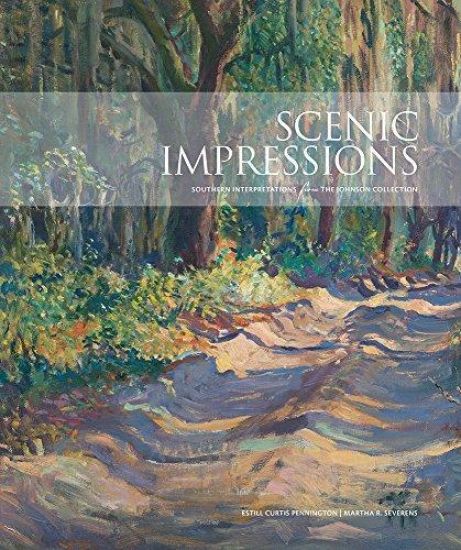
The radical changes wrought by the rise of the salon system in nineteenth-century Europe provoked an interesting response from painters in the American South. Painterly trends emanating from Barbizon and Giverny emphasized the subtle textures of nature through warm colour and broken brush stroke. Artists' subject matter tended to represent a prosperous middle class at play, with the subtle suggestion that painting was indeed art for art's sake and not an evocation of the heroic manner. Many painters in the South took up the stylistics of Tonalism, Impressionism, and naturalism to create works of a very evocative nature, works which celebrated the Southern scene as an exotic other, a locale offering refuge from an increasingly mechanized urban environment. Scenic Impressions offers an insight into a particular period of American art history as borne out in seminal paintings from the holdings of the Johnson Collection of Spartanburg, South Carolina. By consolidating academic information on a disparate group of objects under a common theme and important global artistic umbrella, Scenic Impressions will underscore the Johnsons' commitment to illuminating the rich cultural history of the American South and advancing scholarship in the field, specifically examining some forty paintings created between 1880 and 1940, including landscapes and genre scenes. A foreword, written by Kevin Sharp, director of the Dixon Gallery and Gardens in Memphis, Tennessee, introduces the topic. Two lead essays, written by noted art historians Pennington, Estill Curtisand Martha R. Severens, discuss the history and import of the Impressionist movement--abroad and domestically--and specifically address the school's influence on art created in and about the American South. The featured works of art are presented in full colour plates and delineated in complementary entries written by Pennington and Severens. Also included are detailed artist biographies illustrated by photographs of the artists, extensive documentation, and indices. Featured artists include Wayman Adams, Colin Campbell Cooper, Elliott Daingerfield, G. Ruger Donoho, Harvey Joiner, John Ross Key, Blondelle Malone, Lawrence Mazzanovich, Paul Plaschke, Hattie Saussy, Alice Ravenel, Huger Smith, Anthony Thieme, and Helen Turner.
Masters of Light

Masters of Light

Jennifer A. Bailey; Lucinda H. Gedeon; Kevin Sharp

Vero Beach Museum of Art
2006
pokkari
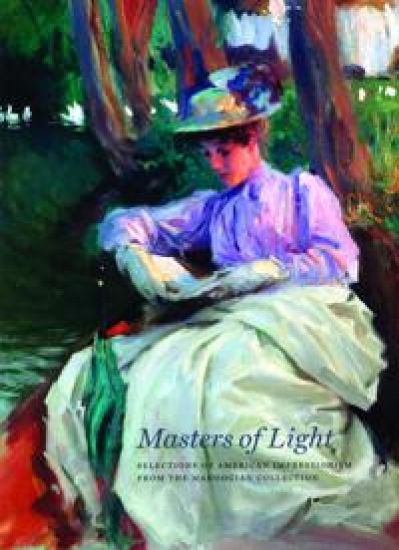
Americans were introduced to Impressionism by the French in the 1880s. They explored its expressive potential and debated its merits in the 1890s, and by the turn of the 20th century, American painters had seized the style for their own. Included here are thirty superb examples of American Impressionist painting by the seminal artists who redefined the movement for American audiences, including Frank W. Benson, Mary Cassatt, William Merritt Chase, Childe Hassam, John Singer Sargent, John Henry Twachtman, and others. Featuring contributions by some of the clearest voices and leading authorities on American Impressionism, Masters of Light brings into the spotlight brilliant and rarely seen paintings while illuminating their place in the larger currents of American art history. An essay by Kevin Sharp, "The Americanization of Impressionism," examines the unintentional circumstances and deliberate efforts that transformed Impressionism from an expression of the French vanguard into an international style, and eventually, into a peculiarly American enterprise. Long recognized as the premier private holding of nineteenth- and early twentieth-century American paintings in the world, the Manoogian Collection runs especially broad and deep in the area of American Impressionism, and includes many of the essential works produced by the painters who would become the "Masters of Light."