Kirjojen hintavertailu – 12 903 724 kirjaa ja 27 kauppaa

Kirjailija

Kevin Thwaites

Kirjat ja teokset yhdessä paikassa: 7 kirjaa, julkaisuja vuosilta 2006–2021, suosituimpiin kuuluu Chinese Urban Design. Vertaile teosten hintoja ja tarkista saatavuus suomalaisista kirjakaupoista.

7 kirjaa

Kirjojen julkaisuvuodet: 2006–2021.

Landscape Architecture Frontiers 046

Landscape Architecture Frontiers 046

Kongjian Yu; Noha Ahmed Abd El Aziz; Paolo Vincenzo Genovese; Kevin Thwaites; Zihao Zhang; Zhaowu Yu; Christian Nolf; Xiaoxuan Lu; Halina Steiner; Siu Man Kwok

Oro Editions
2021
nidottu
In its history of over a hundred of years, landscape architecture has developed many ideas, concepts, methods, and models. In this issue, LA Frontiers focuses on prototype studies by examining those traceable and repeatable landscape theories, methodologies, and pedagogies, and introducing the knowledge from allied disciplines to inspire knowledge innovation, with a particular highlight on the prototypes adaptive to future uncertainties. It hopes to extend the disciplinary horizon and enrich the fruition of disciplinary growth, and to provide designers and scholars with prospective design thoughts and more resilient working methods. This issue explores the following aspects: First, prototyping process, or test planning process, which is characterised for the test-planning-design process and has been widely applied in the fields of computer sciences and industrial design but still being less explored in landscape architecture. This process emphasises the multi-disciplinary collaboration and test procedure before design, which would improve the communication efficiency among professionals from different fields. Second, reflection and innovation on classic theories and models in landscape planning and design, such as Ian McHarg’s Map Overlay and Carl Steinitz’s Six Steps model. Third, research-based design, including design research or competitions with clear goals and boundary conditions which help designers comprehend the essence and implications of design and encourage disciplinary innovation. And fourth, inductive and empirical pedagogies to inspire forward-looking design ideas and working methods.
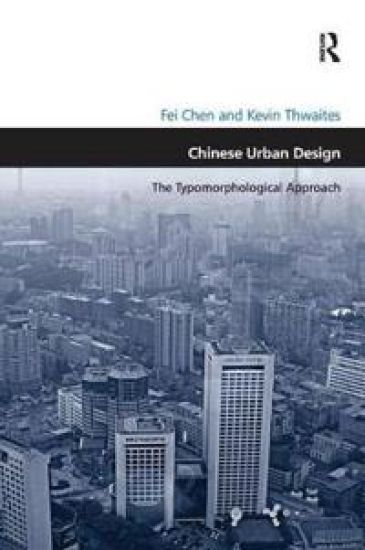
Chinese Urban Design

Chinese Urban Design

Fei Chen; Kevin Thwaites

Routledge
2016
nidottu
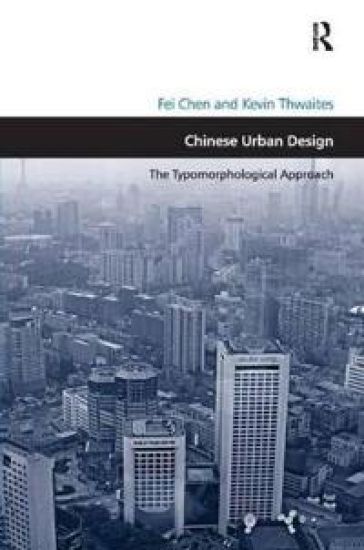
The traditional Chinese city is undergoing an identity crisis. With the rapid development taking place, there is growing conflict between this new building and the existing urban heritage. An appropriate approach, both in design and in legislation, is urgently needed to deal with this problem. Furthermore, although Chinese cities have a remarkably long history, existing methods of urban form study in China are either descriptive or loosely structured, whereas a comprehensive methodology is necessary to 'read' Chinese urban forms in a consistent way, and thus inform designers and policy-makers. Chinese Urban Design targets these problems and offers an analytic and conceptual framework for both urban investigation and consequent design. Firstly summarising traditional urban design principles and how Chinese cities have transformed over time, it then introduces and offers a theoretic ground and scientific methodology for understanding the evolution of urban forms, initially developed in western countries. It demonstrates the theoretic model via real cases - from the city of Nanjing - and establishes a direct link between understanding of urban forms and design development. By providing a cross-cultural investigation on the theories and methods of urban typology and morphology, this book aims to suggest best future practice for urban design in China. It explores how urban designers and local policy-makers can produce culturally responsive designs and how they might better understand the formation and transformation of the built environment in which their creations sit. It also looks at how local residents' lifestyle, culture and demands might be reflected and respected in design process.
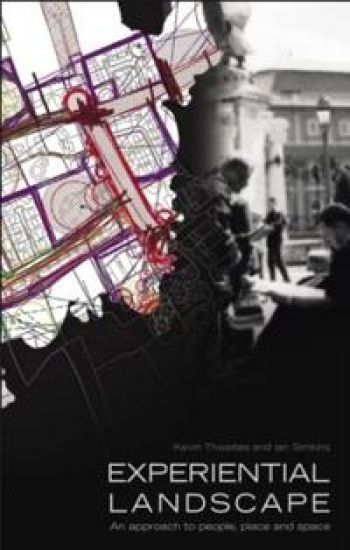
Experiential Landscape

Experiential Landscape

Kevin Thwaites; Ian Simkins

Routledge
2016
sidottu
Experiential Landscape offers new ways of looking at the relationship between people and the outdoor open spaces they use in their everyday lives. The book takes a holistic view of the relationship between humans and their environment, integrating experiential and spatial dimensions of the outdoors, and exploring the theory and application of environmental design disciplines, most notably landscape architecture and urban design. The book explores specific settings in which an experiential approach has been applied, setting out a vocabulary and methods of application, and offers new readings of experiential characteristics in site analysis and design. Offering readers a range of accessible mapping tools and details of what participative approaches mean in practice, this is a new, innovative and practical methodology. The book provides an invaluable resource for students, academics and practitioners and anyone seeking reflective but practical guidance on how to approach outdoor place-making or the analysis and design of everyday outdoor places.
Socially Restorative Urbanism

Socially Restorative Urbanism

Kevin Thwaites; Alice Mathers; Ian Simkins

Routledge
2013
sidottu
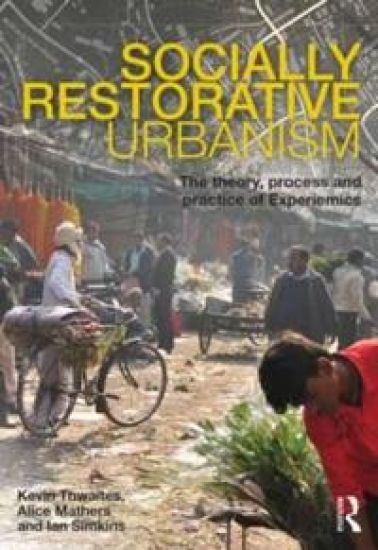
The need for a human-orientated approach to urbanism is well understood, and yet all too often this dimension remains lacking in urban design. In this book the authors argue for and develop socially restorative urbanism – a new conceptual framework laying the foundations for innovative ways of thinking about the relationship between the urban spatial structure and social processes to re-introduce a more explicit people-centred element into urban place-making and its adaptation. Focusing on this interplay between humans and the built environment, two new concepts are developed: the transitional edge – a socio-spatial concept of the urban realm; and Experiemics – a participative process that acts to redress imbalances in territorial relationships, defined in terms of the awareness of mine, theirs, ours and yours (MTOY). In this way, Socially Restorative Urbanism shows how professional practice and community understanding can be brought together in a mutually interdependent and practical way. Its theoretical and practical principles are applicable across a wide range of contexts concerning human benefit through urban environmental change and experience, and it will be of interest to readers in the social sciences and environmental psychology, as well as the spatial planning and design disciplines.
Socially Restorative Urbanism

Socially Restorative Urbanism

Kevin Thwaites; Alice Mathers; Ian Simkins

Routledge
2013
nidottu
The need for a human-orientated approach to urbanism is well understood, and yet all too often this dimension remains lacking in urban design. In this book the authors argue for and develop socially restorative urbanism – a new conceptual framework laying the foundations for innovative ways of thinking about the relationship between the urban spatial structure and social processes to re-introduce a more explicit people-centred element into urban place-making and its adaptation. Focusing on this interplay between humans and the built environment, two new concepts are developed: the transitional edge – a socio-spatial concept of the urban realm; and Experiemics – a participative process that acts to redress imbalances in territorial relationships, defined in terms of the awareness of mine, theirs, ours and yours (MTOY). In this way, Socially Restorative Urbanism shows how professional practice and community understanding can be brought together in a mutually interdependent and practical way. Its theoretical and practical principles are applicable across a wide range of contexts concerning human benefit through urban environmental change and experience, and it will be of interest to readers in the social sciences and environmental psychology, as well as the spatial planning and design disciplines.
Chinese Urban Design

Chinese Urban Design

Fei Chen; Kevin Thwaites

Ashgate Publishing Limited
2013
sidottu
The traditional Chinese city is undergoing an identity crisis. With the rapid development taking place, there is growing conflict between this new building and the existing urban heritage. An appropriate approach, both in design and in legislation, is urgently needed to deal with this problem. Furthermore, although Chinese cities have a remarkably long history, existing methods of urban form study in China are either descriptive or loosely structured, whereas a comprehensive methodology is necessary to 'read' Chinese urban forms in a consistent way, and thus inform designers and policy-makers. Chinese Urban Design targets these problems and offers an analytic and conceptual framework for both urban investigation and consequent design. Firstly summarising traditional urban design principles and how Chinese cities have transformed over time, it then introduces and offers a theoretic ground and scientific methodology for understanding the evolution of urban forms, initially developed in western countries. It demonstrates the theoretic model via real cases - from the city of Nanjing - and establishes a direct link between understanding of urban forms and design development. By providing a cross-cultural investigation on the theories and methods of urban typology and morphology, this book aims to suggest best future practice for urban design in China. It explores how urban designers and local policy-makers can produce culturally responsive designs and how they might better understand the formation and transformation of the built environment in which their creations sit. It also looks at how local residents' lifestyle, culture and demands might be reflected and respected in design process.
Experiential Landscape

Experiential Landscape

Kevin Thwaites; Ian Simkins

Routledge
2006
nidottu
Experiential Landscape offers new ways of looking at the relationship between people and the outdoor open spaces they use in their everyday lives. The book takes a holistic view of the relationship between humans and their environment, integrating experiential and spatial dimensions of the outdoors, and exploring the theory and application of environmental design disciplines, most notably landscape architecture and urban design. The book explores specific settings in which an experiential approach has been applied, setting out a vocabulary and methods of application, and offers new readings of experiential characteristics in site analysis and design. Offering readers a range of accessible mapping tools and details of what participative approaches mean in practice, this is a new, innovative and practical methodology. The book provides an invaluable resource for students, academics and practitioners and anyone seeking reflective but practical guidance on how to approach outdoor place-making or the analysis and design of everyday outdoor places.