
Kirjojen hintavertailu – 12 859 818 kirjaa ja 27 kauppaa
Kirjailija
Khangelani Moyo
Kirjat ja teokset yhdessä paikassa: 3 kirjaa, julkaisuja vuosilta 2014–2023, suosituimpiin kuuluu Visualising China in Southern Africa. Vertaile teosten hintoja ja tarkista saatavuus suomalaisista kirjakaupoista.
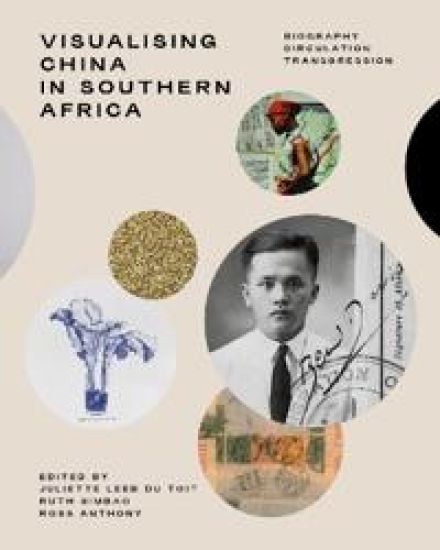
With China’s rise as the new superpower, its presence in Africa has expanded, leading to significant economic, geopolitical and cultural shifts. Chinese and African encounters through the lens of the visual arts and material culture, however, is a neglected field. Visualising China in Southern Africa is a ground-breaking volume that addresses this deficit through engaging with the work of contemporary African and Chinese artists while analysing broader material production that prefigures the current relationship. The essays are wide-ranging in their analysis of ceramics, photography, painting, etching, sculpture, film, performance, postcards, stamps, installations, political posters, cartoons and architecture. Richly illustrated, the collection includes scholarly chapters, photo essays, interviews, and artists’ personal accounts, organised around four themes: material flows, orientations and transgressions, spatial imaginaries, and biographies. Some of the artists, photographers, filmmakers, curators and collectors in this volume include: Stary Mwaba, Hua Jiming, Anawana Haloba, Gerald Machona, Nobukho Nqaba, Marcus Neustetter, Brett Murray, Diane Victor, William Kentridge, Kristin NG-Yang, Kok Nam, Mark Lewis, the Chinese Camera Club of South Africa, Wu Jing, Henion Han and Shengkai Wu.
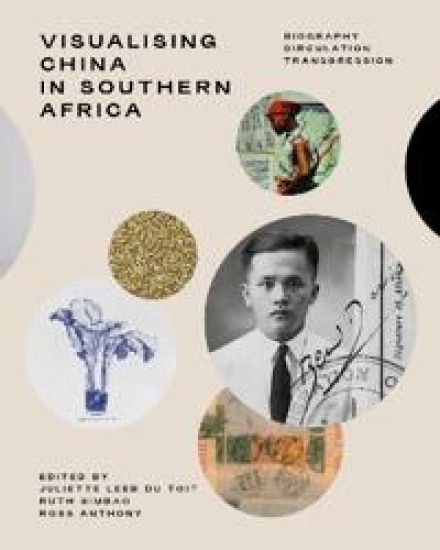
China and Africa have long shared a history of allegiance and contact points through global political forces from the time of colonialism and the Cold War. With China's rise as the new superpower, its presence in Africa has expanded, leading to significant economic, geopolitical and cultural shifts. While issues such as trade, aid and development have received much attention, Chinese and African encounters through the lens of the visual arts and material culture is a neglected field. Visualising China in Southern Africa: Biography, Circulation, Transgression is a ground-breaking volume that addresses this deficit through engaging with the work of contemporary African and Chinese artists while analysing broader material production that prefigures the current relationship. The essays are wide-ranging in their analysis of ceramics, photography, painting, etching, sculpture, film, performance, postcards, stamps, installations, political posters, cartoons and architecture. Visualising China in Southern Africa confines its focus to southern Africa, yet even within this region, the context is complex. Ethnicity and nationalism, the lingering influence of Cold War allegiances and colonial configurations all continue to play a role. The various visual cultures discussed in this volume emphasise the commonality of these categories, but also point towards other shared histories that transcend the nation-state category. The collection includes scholarly chapters, photo essays, interviews, and artists' personal accounts, organised around four themes: material flows, orientations and transgressions, spatial imaginaries, and biographies. The artists, photographers, filmmakers, curators and collectors in this volume include: Stary Mwaba, Hua Jiming, Anawana Haloba, Gerald Machona, Nobukho Nqaba, Marcus Neustetter, Brett Murray, Diane Victor, William Kentridge, Kristin NG-Yang, Kok Nam, Mark Lewis, the Chinese Camera Club of South Africa, Wu Jing, Henion Han and Shengkai Wu.
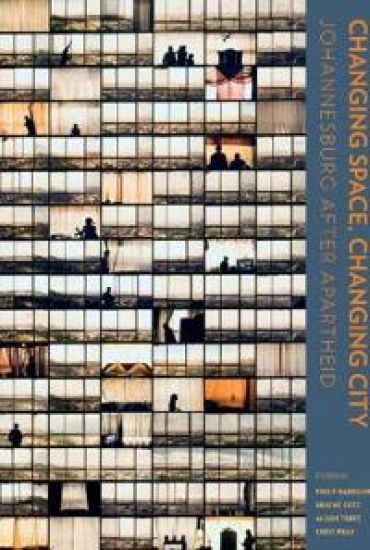
As the dynamo of South Africa’s economy, Johannesburg commands a central position in the nation’s imagination, and scholars throughout the world monitor the city as an exemplar of urbanity in the global South. This richly illustrated study offers detailed empirical analyses of changes in the city’s physical space, as well as a host of chapters on the character of specific neighbourhoods and the social identities being forged within them. Informing all of these is a consideration of underlying economic, social and political processes shaping the wider Gauteng region. A mix of respected academics, practising urban planners and experienced policymakers offer compelling overviews of the rapid and complex spatial developments that have taken place in Johannesburg since the end of apartheid, along with tantalising glimpses into life on the streets and behind the high walls of this diverse city. The book has three sections. Section A provides an overview of macro spatial trends and the policies that have infl uenced them. Section B explores the shaping of the city at district and suburban level, revealing the peculiarity of processes in different areas. This analysis elucidates thelarger trends, while identifying shifts that are not easily detected at the macro level. Section C is an assembly of chapters and short vignettes that focus on the interweaving of place and identity at a micro level. With empirical data supported by new data sets including the 2011 Census, the city’s Development Planning and Urban Management Department’s information system, and Gauteng City-Region Observatory’s substantial archive, the book is an essential reference for planning practitioners, urban geographers, sociologists, and social anthropologists, among others.