Kirjojen hintavertailu – 12 903 735 kirjaa ja 27 kauppaa

Kirjailija

Kieran McEvoy

Kirjat ja teokset yhdessä paikassa: 9 kirjaa, julkaisuja vuosilta 2001–2026, suosituimpiin kuuluu Paramilitary Imprisonment in Northern Ireland. Vertaile teosten hintoja ja tarkista saatavuus suomalaisista kirjakaupoista.

9 kirjaa

Kirjojen julkaisuvuodet: 2001–2026.

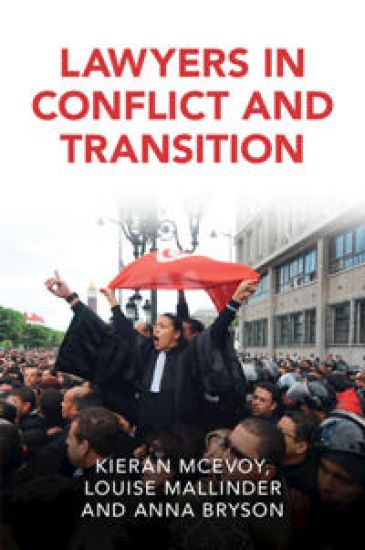
Lawyers in Conflict and Transition

Lawyers in Conflict and Transition

Kieran McEvoy; Louise Mallinder; Anna Bryson

Cambridge University Press
2023
pokkari
Countries undergoing or recovering from conflict and authoritarianism often face profound rule of law challenges. The law on the statute books may be repressive, judicial independence may be compromised, and criminal justice agencies may be captured by powerful interests. How do lawyers working within such settings imagine the law? How do they understand their ethical obligations towards their clients and the rule of law? What factors motivate them to use their legal practice and social capital to challenge repressive power? What challenges and risks can they face if they do so? And when do lawyers facilitate or acquiesce to illegality and injustice? Drawing on over 130 interviews from Cambodia, Chile, Israel, Palestine, South Africa, and Tunisia, this book explores the extent to which theoretical understandings within law and society research on the motivations, strategies, tactics, and experiences of lawyers within democratic states apply to these more challenging environments.
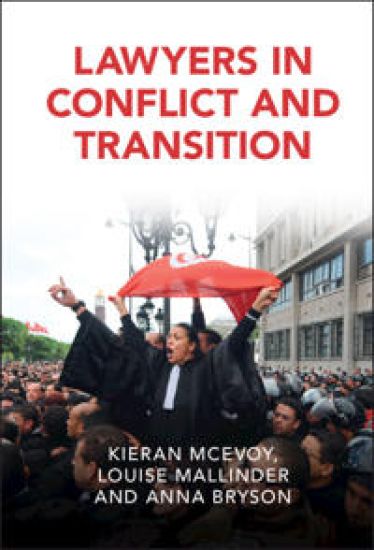
Lawyers in Conflict and Transition

Lawyers in Conflict and Transition

Kieran McEvoy; Louise Mallinder; Anna Bryson

Cambridge University Press
2022
sidottu
Countries undergoing or recovering from conflict and authoritarianism often face profound rule of law challenges. The law on the statute books may be repressive, judicial independence may be compromised, and criminal justice agencies may be captured by powerful interests. How do lawyers working within such settings imagine the law? How do they understand their ethical obligations towards their clients and the rule of law? What factors motivate them to use their legal practice and social capital to challenge repressive power? What challenges and risks can they face if they do so? And when do lawyers facilitate or acquiesce to illegality and injustice? Drawing on over 130 interviews from Cambodia, Chile, Israel, Palestine, South Africa, and Tunisia, this book explores the extent to which theoretical understandings within law and society research on the motivations, strategies, tactics, and experiences of lawyers within democratic states apply to these more challenging environments.
Paramilitary Imprisonment in Northern Ireland

Paramilitary Imprisonment in Northern Ireland

Kieran McEvoy

Oxford University Press
2001
sidottu
This book offers a unique analysis of paramilitary imprisonment in Northern Ireland. The central focus of the book is the struggle between inmates and the state concerning the prisoners' assertion of their status as political prisoners. Drawing upon interviews with former Republican and Loyalist prisoners as well as prison managers and staff, this book locates that experience within the broader theoretical literature on imprisonment. Four forms of prison resistance are examined by which prisoners asserted their political status. Dirty protest and hunger strike are characterised as resistance through self sacrifice. Violence, destruction and intimidation are examined as prison resistance becoming an extension of armed struggle. Escape is analysed as a form of resistance through ridicule. And finally law is considered as instrumental resistance and a dialogical process with a range of audiences. The book then considers a range of prison management adopted by the prison authorities. `Reactive Containment' is described as a military-led model of management which incapacitated the terrorist `enemy' but acknowledged the political character of the inmates. `Criminalization' is viewed as a strategy designed to deny any practical or symbolic acceptance of the political motivation of prisoners. `Managerialism', it is argued, encompasses a series of scientific discourses to rationalise conflicting interactions with prisoners, from pragmatic accommodations to a dogged determination to prevent further recognition of de facto political status. The book concludes with an analysis of the early release of paramilitary prisoners and the conflict resolution process and some reflections on political prisons as spaces both during and after a political conflict.
The Trouble With Truth

The Trouble With Truth

Kieran McEvoy; Cheryl Lawther

Willan Publishing
2026
nidottu
Unlike many other peace accords, the Good Friday Agreement signed in 1998 did not include a formal mechanism for 'dealing with the past' in Northern Ireland. Despite that omission, the politics of truth recovery and its assumed links to reconciliation have been a constant theme in the transition from conflict in the jurisdiction. This book critically explores that relationship. It draws extensively from the international context and the author's experience over several years of grassroots work exploring 'dealing with the past' style initiatives. It charts the myriad of styles of truth recovery which have been part of the Northern Ireland transition including the Bloody Sunday Tribunal, public inquiries into controversial deaths, the work of the Office of the Police Ombudsman, litigation strategies and various 'bottom up' community based efforts at truth recovery. It also reflects upon the recommendations of the British government appointed Consultative Group on the Past and the contested debate as to how and whether its recommendations should be implemented. The book argues that the Northern Ireland experience speaks to important issues more generally in transitional justice concerning the sequencing, ownership and forms of truth recovery deployed, the agentic capacity of grass-roots activism, the politicization of victimhood, the construction and deployment of transitional knowledge, the importance of political will and leadership in transitions and the problematic relationship between truth recovery and reconciliation.
The Trouble With Truth

The Trouble With Truth

Kieran McEvoy; Cheryl Lawther

Willan Publishing
2026
sidottu
Unlike many other peace accords, the Good Friday Agreement signed in 1998 did not include a formal mechanism for 'dealing with the past' in Northern Ireland. Despite that omission, the politics of truth recovery and its assumed links to reconciliation have been a constant theme in the transition from conflict in the jurisdiction. This book critically explores that relationship. It draws extensively from the international context and the author's experience over several years of grassroots work exploring 'dealing with the past' style initiatives. It charts the myriad of styles of truth recovery which have been part of the Northern Ireland transition including the Bloody Sunday Tribunal, public inquiries into controversial deaths, the work of the Office of the Police Ombudsman, litigation strategies and various 'bottom up' community based efforts at truth recovery. It also reflects upon the recommendations of the British government appointed Consultative Group on the Past and the contested debate as to how and whether its recommendations should be implemented. The book argues that the Northern Ireland experience speaks to important issues more generally in transitional justice concerning the sequencing, ownership and forms of truth recovery deployed, the agentic capacity of grass-roots activism, the politicization of victimhood, the construction and deployment of transitional knowledge, the importance of political will and leadership in transitions and the problematic relationship between truth recovery and reconciliation.
We Will Remember

We Will Remember

Kieran McEvoy

Creative Force Press
2024
pokkari
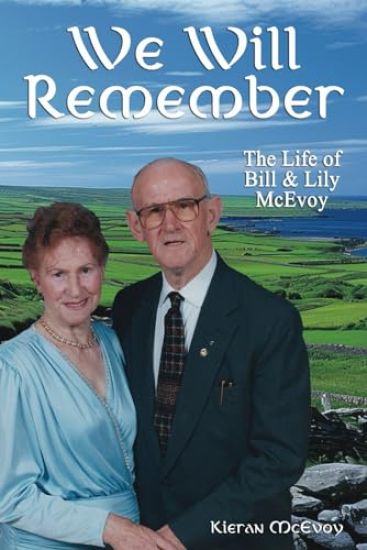
That future generations might glean from this story the strength and courage of their two notable ancestors who surmounted and overcame every difficulty and obstacle that stood in their way. That these two patriarchs of our large Irish family will continue to speak to the many generations yet to come. Their son Kieran shares their story as spoken to him as a young boy by his loving mother and later in life by his father. In their many trips to Ireland together, Kieran gleans from the many stories told to him by his father as they travelled together and visited the people and places that helped create the legacy of Lily and Bill McEvoy.
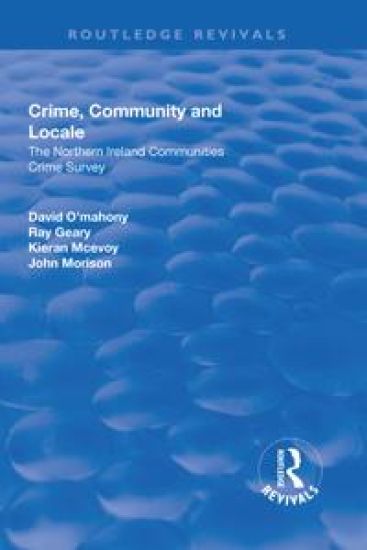
Crime, Community and Locale

Crime, Community and Locale

David O'Mahony; Ray Geary; Kieran McEvoy; John Morison

Routledge
2019
nidottu
This title was first published in 2000: This text reports on the findings of the Communities Crime Survey, a communities-based survey carried out within Northern Ireland. The survey asked a number of questions beyond the usual remit of local crime surveys, in order to explore more fully a whole range of issues relating to the experience of living in a society where more obvious manifestations of conflict are beginning to recede and other more mundane but still important issues relating to crime and policing are coming to the fore. The book aims to go behind the headlines of violence and political conflict to examine how people in a range of communities in Northern Ireland experience a whole range of factors relating to crime, policing and the general experience of living within their particular communities. The process of change is far from over in Northern Ireland, and this book indicates how some of the central issues that must be resolved are perceived by a range of ordinary people in various urban and rural communities, in religiously segregated and integrated communities and those with different levels of income and social infrastructure. The experiences and attitudes gathered are important in understanding how the process of change and development in this society might be advanced, and what lessons might be offered to elsewhere. The survey ultimately concludes that Northern Ireland is neither a homogeneous entity nor a society that is simply divided on religious and/or political grounds. Rather it is a society that is divided by religion and politics, but also by a number of other variables, including geography, gender, age, socio-economic class and ethnic origin, all of which in part influence people's experiences and attitudes towards crime and policing.
Crime, Community and Locale: The Northern Ireland Communities Crime Survey

Crime, Community and Locale: The Northern Ireland Communities Crime Survey

David O'Mahony; Ray Geary; Kieran McEvoy; John Morison

Routledge
2017
sidottu
This title was first published in 2000: This text reports on the findings of the Communities Crime Survey, a communities-based survey carried out within Northern Ireland. The survey asked a number of questions beyond the usual remit of local crime surveys, in order to explore more fully a whole range of issues relating to the experience of living in a society where more obvious manifestations of conflict are beginning to recede and other more mundane but still important issues relating to crime and policing are coming to the fore. The book aims to go behind the headlines of violence and political conflict to examine how people in a range of communities in Northern Ireland experience a whole range of factors relating to crime, policing and the general experience of living within their particular communities. The process of change is far from over in Northern Ireland, and this book indicates how some of the central issues that must be resolved are perceived by a range of ordinary people in various urban and rural communities, in religiously segregated and integrated communities and those with different levels of income and social infrastructure. The experiences and attitudes gathered are important in understanding how the process of change and development in this society might be advanced, and what lessons might be offered to elsewhere. The survey ultimately concludes that Northern Ireland is neither a homogeneous entity nor a society that is simply divided on religious and/or political grounds. Rather it is a society that is divided by religion and politics, but also by a number of other variables, including geography, gender, age, socio-economic class and ethnic origin, all of which in part influence people's experiences and attitudes towards crime and policing.
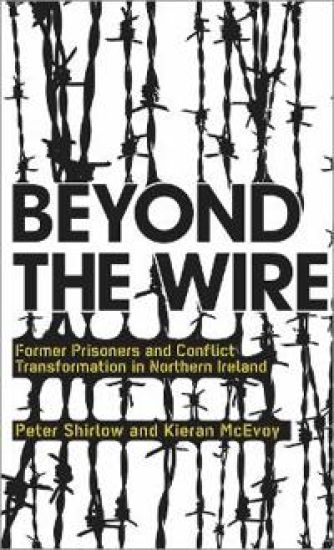
Beyond the Wire

Beyond the Wire

Peter Shirlow; Kieran McEvoy

Pluto Press
2008
sidottu
This book provides the first detailed examination of the role played by former loyalist and republican prisoners in grass roots conflict transformation work in the Northern Ireland peace process. It challenges the assumed passivity of former prisoners and ex-combatants. Instead, it suggests that such individuals and the groups which they formed have been key agents of conflict transformation. They have provided leadership in challenging cultures of violence, developed practical methods of resolving inter-communal conflict and found ways for communities to explore their troubled past. In analysing this, the authors challenge the sterile demonisation of former prisoners and the processes that maintain their exclusion from normal civic and social life. The book is a constructive reminder of the need for full participation of both former combatants and victims in post-conflict transformation. It also lays out a new agenda for reconciliation which suggests that conflict transformation can and should begin 'from the extremes'. The book will be of interest to students of criminology, peace and conflict studies, law and politics, geography and sociology as well as those with a particular interest in the Northern Ireland conflict.