Kirjojen hintavertailu – 12 903 735 kirjaa ja 27 kauppaa

Kirjailija

Kieron Sheehy

Kirjat ja teokset yhdessä paikassa: 5 kirjaa, julkaisuja vuosilta 2010–2017, suosituimpiin kuuluu Virtual Worlds. Vertaile teosten hintoja ja tarkista saatavuus suomalaisista kirjakaupoista.

5 kirjaa

Kirjojen julkaisuvuodet: 2010–2017.

Developing Children as Researchers

Developing Children as Researchers

Chae-Young Kim; Kieron Sheehy; Lucinda Kerawalla

Routledge
2017
sidottu
Encouraging young children to create and carry out their own social research projects can have significant social and educational benefits. In addition, their research may help them to influence local and national policies and practices on issues that matter to them. To support this, Developing Children as Researchers acts as a practical guide to give teachers – and other adults who work with children – a set of structured, easy-to-follow session plans that will help children to become researchers in their own right. Comprising of ten session plans that have already been tried and tested in schools, this guide will assist you in supporting child researchers while helping you to develop the techniques for teaching research skills effectively. The session plans also ensure that children’s views are heard and reflected by encouraging their active curiosity and investigation of issues that they may be concerned about. Forming a step-by-step guide, the ten sessions cover themes such as: starting the research process and identifying a research topic; the three key principles of research: be sceptical, systematic and ethical; choosing research participants and drawing up a research plan; the range of data collection and analysis methods; reporting the results of, and reflecting upon, a research project. Children’s research has often depended upon the support of academic researchers to provide resources and training. By making the research training and facilitation process more widely accessible, this guide will help remove the psychological and practical hurdles that teachers and others who regularly work with children might feel about helping children’s research themselves.
Developing Children as Researchers

Developing Children as Researchers

Chae-Young Kim; Kieron Sheehy; Lucinda Kerawalla

Routledge
2017
nidottu
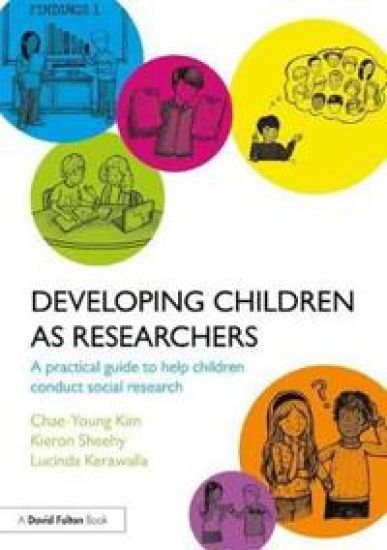
Encouraging young children to create and carry out their own social research projects can have significant social and educational benefits. In addition, their research may help them to influence local and national policies and practices on issues that matter to them. To support this, Developing Children as Researchers acts as a practical guide to give teachers – and other adults who work with children – a set of structured, easy-to-follow session plans that will help children to become researchers in their own right. Comprising of ten session plans that have already been tried and tested in schools, this guide will assist you in supporting child researchers while helping you to develop the techniques for teaching research skills effectively. The session plans also ensure that children’s views are heard and reflected by encouraging their active curiosity and investigation of issues that they may be concerned about. Forming a step-by-step guide, the ten sessions cover themes such as: starting the research process and identifying a research topic; the three key principles of research: be sceptical, systematic and ethical; choosing research participants and drawing up a research plan; the range of data collection and analysis methods; reporting the results of, and reflecting upon, a research project. Children’s research has often depended upon the support of academic researchers to provide resources and training. By making the research training and facilitation process more widely accessible, this guide will help remove the psychological and practical hurdles that teachers and others who regularly work with children might feel about helping children’s research themselves.
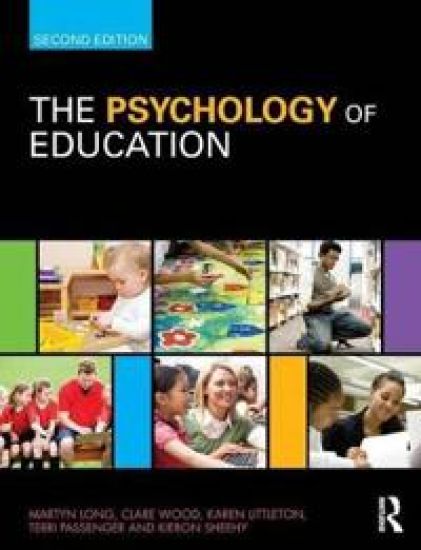
The Psychology of Education

The Psychology of Education

Martyn Long; Clare Wood; Karen Littleton; Terri Passenger; Kieron Sheehy

Routledge
2010
nidottu
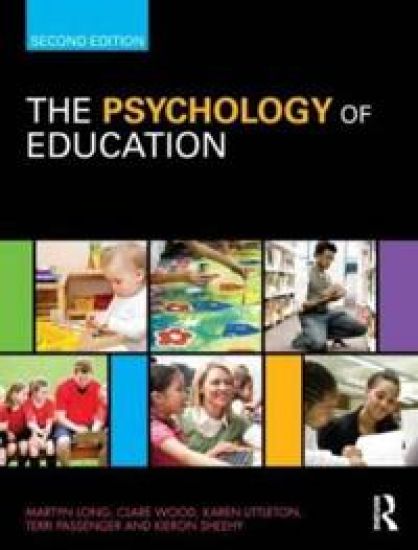
Written in an accessible and engaging style, this second edition of The Psychology of Education addresses key concepts from psychology which relate to education. Throughout the text the author team emphasise an evidence-based approach, providing practical suggestions to improve learning outcomes, while fictional case studies are used in this new edition to provide students with a sense of what psychological issues can look like in the classroom. Activities around these case studies give students the chance to think about how to apply their theoretical knowledge to these real-world contexts.‘Key implications’ are drawn out at appropriate points, and throughout the book students are provided with strategies for interrogating evidence. Key terms are glossed throughout the book and chapters are summarised and followed by suggestions for further reading. A chapter on Learning interactions and social worlds is new to this edition. The following chapters have all been extensively updated:LearningAssessmentIndividual differences and achievementStudent engagement and motivationThe educational contextSociety and cultureLanguageLiteracyInclusive education and special educational needsBehaviour problemsDealing with behaviour problems. This book is essential reading for undergraduate students of Education Studies and Psychology as well as trainee teachers on BA, BEd and PGCE courses. It will also be of use to postgraduates training to be educational psychologists.
The Psychology of Education

The Psychology of Education

Martyn Long; Clare Wood; Karen Littleton; Terri Passenger; Kieron Sheehy

Routledge
2010
sidottu
Written in an accessible and engaging style, this second edition of The Psychology of Education addresses key concepts from psychology which relate to education. Throughout the text the author team emphasise an evidence-based approach, providing practical suggestions to improve learning outcomes, while fictional case studies are used in this new edition to provide students with a sense of what psychological issues can look like in the classroom. Activities around these case studies give students the chance to think about how to apply their theoretical knowledge to these real-world contexts.‘Key implications’ are drawn out at appropriate points, and throughout the book students are provided with strategies for interrogating evidence. Key terms are glossed throughout the book and chapters are summarised and followed by suggestions for further reading. A chapter on Learning interactions and social worlds is new to this edition. The following chapters have all been extensively updated:LearningAssessmentIndividual differences and achievementStudent engagement and motivationThe educational contextSociety and cultureLanguageLiteracyInclusive education and special educational needsBehaviour problemsDealing with behaviour problems. This book is essential reading for undergraduate students of Education Studies and Psychology as well as trainee teachers on BA, BEd and PGCE courses. It will also be of use to postgraduates training to be educational psychologists.
Virtual Worlds

Virtual Worlds

Kieron Sheehy; Rebecca Ferguson; Gill Clough

Nova Science Publishers Inc
2010
sidottu
The book deals with the challenges that arise when virtual worlds are used for learning and teaching. The ideas and practices emerging from this field are relevant to all educators, and offers insights into the development of a pedagogy that is authentic, inclusive and enjoyable. Each chapter addresses a particular issue and is illustrated with examples drawn from both research and practice. These examples cover a wide range of learning scenarios, both formal and informal, involving teenagers, school pupils, undergraduate and postgraduate students as well as a variety of lifelong learners. The issues include the importance of virtual worlds, the influence of online games and physical-world economics and politics, the relationship between avatars and learner identity, the challenges of ensuring child safety and protection, interaction between real-world and in-world environments and activities, accessibility and the development of new pedagogues. The authors are all teachers and learners in virtual worlds; many have been responsible for designing, programming and maintaining virtual environments.