Kirjojen hintavertailu – 12 903 724 kirjaa ja 27 kauppaa

Kirjailija

Kim Kanaga

Kirjat ja teokset yhdessä paikassa: 4 kirjaa, julkaisuja vuosilta 2007–2015, suosituimpiin kuuluu How to Form a Team. Vertaile teosten hintoja ja tarkista saatavuus suomalaisista kirjakaupoista.

4 kirjaa

Kirjojen julkaisuvuodet: 2007–2015.

How to Form a Team

How to Form a Team

Center for Creative Leadership (CCL); Kim Kanaga; Michael E. Kossler

Centre for Creative Leadership
2007
nidottu
One of the first steps to take toward increasing team effectiveness is to pay attention to how the team is formed. You can head off most of the problems that beset teams during the formation stage by setting a clear direction, building organizational support, creating an empowering team design, identifying key relationships, and monitoring external factors. When a team is formed with the five high-performance principles described in this guidebook, it has a head start on achieving success.

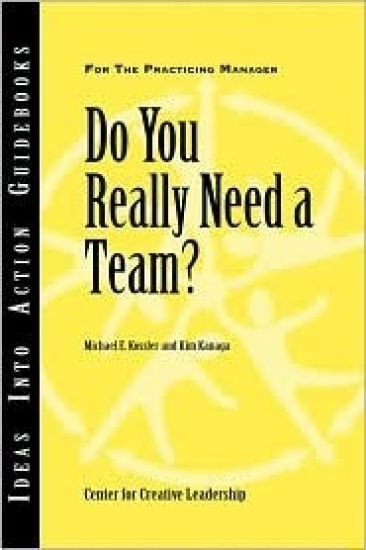
Do You Really Need a Team?

Do You Really Need a Team?

Center for Creative Leadership (CCL); Michael E. Kossler; Kim Kanaga

Centre for Creative Leadership
2008
nidottu
Despite all of the attention and accolades that organizations place on teams, they are not always the most efficient way to meet a business challenge. It's expensive and time consuming to launch a team, and it's a full-time job to lead a team toward achieving organizational objectives. This guidebook was written to help managers determine if a team is the right tool for meeting a business goal, and explains potential obstacles and challenges to forming a team that can operate at its full potential.
Maintaining Team Performance

Maintaining Team Performance

Kim Kanaga; Henry Browning

CENTRE FOR CREATIVE LEADERSHIP
2007
nidottu
Between the time a team is launched and the time it delivers results, managers need to know that the team is on course. Whether they have launched a team to achieve a business objective or have inherited a team, they need to monitor effectiveness on an ongoing basis and make course corrections that keep small problems from becoming major disasters. Monitoring and maintaining team performance is a key element of leading a team. You can provide that leadership by paying attention to four important dimensions: team member effort, team member knowledge and skills, team tactics, and group dynamics. By focusing on those four areas, you can assess your team's performance, zero in on areas of weakness, and take the corrective measures necessary to ensure peak performance and to deliver expected results.