Kirjojen hintavertailu – 12 859 829 kirjaa ja 27 kauppaa

Kirjailija

Kimberly Hutchings

Kirjat ja teokset yhdessä paikassa: 12 kirjaa, julkaisuja vuosilta 1995–2020, suosituimpiin kuuluu Global Ethics. Vertaile teosten hintoja ja tarkista saatavuus suomalaisista kirjakaupoista.

12 kirjaa

Kirjojen julkaisuvuodet: 1995–2020.

Violence and Political Theory

Violence and Political Theory

Elizabeth Frazer; Kimberly Hutchings

Polity Press
2020
nidottu
Is politics necessarily violent? Does the justifiability of violence depend on whether it is perpetrated to defend or upend the existing order – or perhaps on the way in which it is conducted? Is violence simply direct physical harm, or can it also be structural, symbolic, or epistemic? In this book, Elizabeth Frazer and Kimberley Hutchings explore how political theorists, from Niccolo Machiavelli to Elaine Scarry, have addressed these issues. They engage with both defenders and critics of violence in politics, analysing their diverse justificatory and rhetorical strategies in order to draw out the enduring themes of these debates. They show how political theorists have tended to evade the central difficulties raised by violence by either reducing it to a neutral tool or identifying it with something quite distinct, such as justice or virtue. They argue that, because violence is necessarily wrapped up with hierarchical and exclusive structures and imaginaries, legitimising it in terms of the ends that it serves, or how it is perpetrated, no longer makes sense. This book will be an invaluable resource for students and scholars in areas ranging from the ethics of terror and war to radical and revolutionary political thought.

Violence and Political Theory

Violence and Political Theory

Elizabeth Frazer; Kimberly Hutchings

Polity Press
2020
sidottu
Is politics necessarily violent? Does the justifiability of violence depend on whether it is perpetrated to defend or upend the existing order – or perhaps on the way in which it is conducted? Is violence simply direct physical harm, or can it also be structural, symbolic, or epistemic? In this book, Elizabeth Frazer and Kimberley Hutchings explore how political theorists, from Niccolo Machiavelli to Elaine Scarry, have addressed these issues. They engage with both defenders and critics of violence in politics, analysing their diverse justificatory and rhetorical strategies in order to draw out the enduring themes of these debates. They show how political theorists have tended to evade the central difficulties raised by violence by either reducing it to a neutral tool or identifying it with something quite distinct, such as justice or virtue. They argue that, because violence is necessarily wrapped up with hierarchical and exclusive structures and imaginaries, legitimising it in terms of the ends that it serves, or how it is perpetrated, no longer makes sense. This book will be an invaluable resource for students and scholars in areas ranging from the ethics of terror and war to radical and revolutionary political thought.

Can Political Violence Ever Be Justified?

Can Political Violence Ever Be Justified?

Elizabeth Frazer; Kimberly Hutchings

Polity Press
2019
nidottu
Violence – from state coercion to wars and revolutions – remains an enduring global reality. But whereas it is often believed that the point of constitutional politics is to make violence unnecessary, others argue that it is an unavoidable element of politics. In this lucid and erudite book, Elizabeth Frazer and Kimberly Hutchings address these issues using vivid contemporary and historic examples. They carefully explore the strategies that have been deployed to condone violence, either as means to certain ends or as an inherent facet of politics. Examining the complex questions raised by different types of violence, they conclude that, ultimately, all attempts to justify political violence fail. This book will be essential introductory reading for students and scholars of the ethics and politics of political violence.
Can Political Violence Ever Be Justified?

Can Political Violence Ever Be Justified?

Elizabeth Frazer; Kimberly Hutchings

Polity Press
2019
sidottu
Violence – from state coercion to wars and revolutions – remains an enduring global reality. But whereas it is often believed that the point of constitutional politics is to make violence unnecessary, others argue that it is an unavoidable element of politics. In this lucid and erudite book, Elizabeth Frazer and Kimberly Hutchings address these issues using vivid contemporary and historic examples. They carefully explore the strategies that have been deployed to condone violence, either as means to certain ends or as an inherent facet of politics. Examining the complex questions raised by different types of violence, they conclude that, ultimately, all attempts to justify political violence fail. This book will be essential introductory reading for students and scholars of the ethics and politics of political violence.
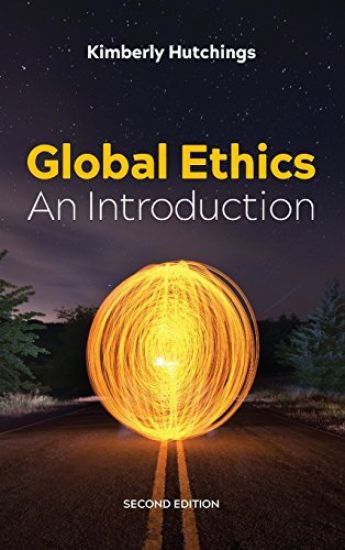
Global Ethics

Global Ethics

Kimberly Hutchings

Polity Press
2018
sidottu
This revised edition of Kimberly Hutchings’s best-selling textbook provides an accessible introduction to the field of Global Ethics for students of politics, international relations and globalization. It offers an overview and assessment of key perspectives in Global Ethics and their implications for substantive moral issues in global politics. These include the morality of state and non-state violence, the obligations of rich to poor in a globalizing world, and the scope and nature of international human rights. The second edition contains expanded coverage of pressing contemporary issues relating to migration, changes in the technologies of war, and the global environment. Hutchings’s excellent book helps non-specialist students to understand the assumptions underpinning different moral traditions, and enables them to formulate their own views on how to approach moral judgement and prescription – essential in a world which, though it is shared by all, possesses massive cultural differences and inequalities of power.
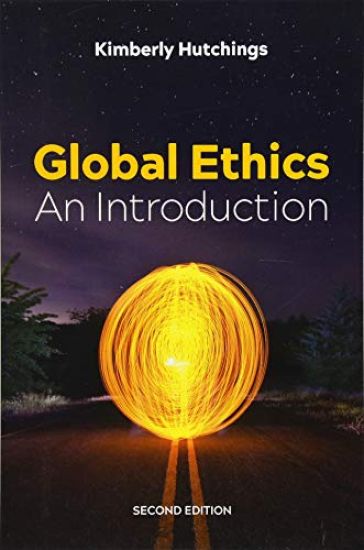
Global Ethics

Global Ethics

Kimberly Hutchings

Polity Press
2018
nidottu
This revised edition of Kimberly Hutchings’s best-selling textbook provides an accessible introduction to the field of Global Ethics for students of politics, international relations and globalization. It offers an overview and assessment of key perspectives in Global Ethics and their implications for substantive moral issues in global politics. These include the morality of state and non-state violence, the obligations of rich to poor in a globalizing world, and the scope and nature of international human rights. The second edition contains expanded coverage of pressing contemporary issues relating to migration, changes in the technologies of war, and the global environment. Hutchings’s excellent book helps non-specialist students to understand the assumptions underpinning different moral traditions, and enables them to formulate their own views on how to approach moral judgement and prescription – essential in a world which, though it is shared by all, possesses massive cultural differences and inequalities of power.
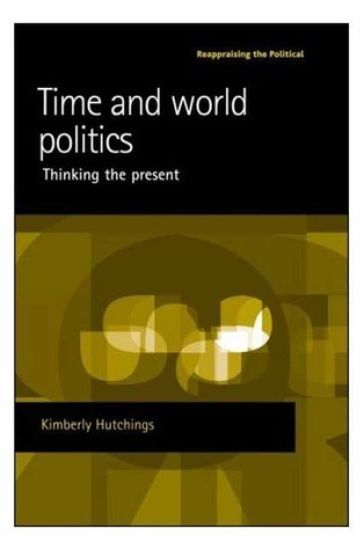
Time and World Politics

Time and World Politics

Kimberly Hutchings

Manchester University Press
2008
sidottu

Halvin toimitettuna 121,40 €

This book offers the first authoritative guide to assumptions about time in theories of contemporary world politics. It demonstrates how predominant theories of the international or global ‘present’ are affected by temporal assumptions, grounded in western political thought, that fundamentally shape what we can and cannot know about world politics today. The first part of the book traces the philosophical roots of assumptions about time in contemporary political theory. The second part examines contemporary theories of world politics, including liberal and realist International Relations theories and the work of Habermas, Hardt and Negri, Virilio and Agamben. In each case, it is argued, assumptions about political time ensure the identification of the particular temporality of western experience with the political temporality of the world as such and put the theorist in the unsustainable position of holding the key to the direction of world history. In the final chapter, the book draws on postcolonial and feminist thinking, and the philosophical accounts of political time in the work of Derrida and Deleuze, to develop a new ‘untimely’ way of thinking about time in world politics.
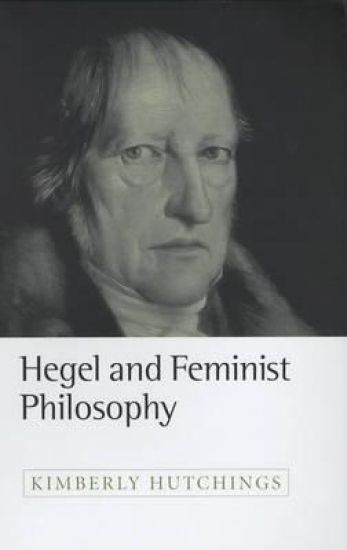
Hegel and Feminist Philosophy

Hegel and Feminist Philosophy

Kimberly Hutchings

Polity Press
2002
sidottu
Hegel and Feminist Philosophy traces the legacy of Hegel in the work of thinkers such as de Beauvoir, Irigaray and Butler, and also in contemporary debates in feminist ethics and political philosophy. As Hutchings demonstrates, this is an ambivalent legacy. Hegel figures both as an antagonistic ‘other’ and as a significant resource for feminist thinking from de Beauvoir onwards. Hegel's philosophy is antagonistic to feminism in so far as it denigrates the female or feminist subject, excluding women from both reason and history. His work provides a resource for feminist philosophy because his account of reason and history is fundamentally non-binary and can be drawn on in feminist philosophy’s attempts to escape the binary thinking of the philosophical tradition. Hutchings claims that feminist philosophy is characterized by patterns of thought which oscillate between accepting and overturning conceptual dualisms central to the philosophical tradition. She suggests that Hegelian elements within feminist thought provide the basis for a rethinking of feminist philosophy which escapes this either/or choice and opens up new possibilities for feminism. This is demonstrated by showing how Hegelian modes of thinking help to resolve entrenched debates within feminist philosophy over sexual difference, ethical judgement and equality of right. Hegel and Feminist Philosophy will be of great interest to students and scholars of philosophy, women's studies and political theory.
Hegel and Feminist Philosophy

Hegel and Feminist Philosophy

Kimberly Hutchings

Polity Press
2002
nidottu
Traces the legacy of Hegel in the work of thinkers such as Beauvoir, Irigaray and Butler, and also in contemporary debates in feminist ethics, political philosophy and epistemology. It should be of interest to students and scholars of philosophy, women's studies and political theory.
International Political Theory

International Political Theory

Kimberly Hutchings

SAGE Publications Inc
1999
sidottu
`A lucid, comprehensive analysis of normative approaches to international relations, and an original contribution to critical theory' - Andrew Linklater, University of Keele `Hutchings combines a valuable account of the current state of the art with a lucid expositon of her own, highly distinctive, position. This will be required reading for students in international political theory, and indeed anyone interested in normative issues in international relations' - Chris Brown, London School of Economics and Political Science Providing an invaluable overview of the competing schools of thought in traditional and contemporary international theory, this book seeks to path the way forward for new ways of thinking about international political morality. First, the role and place of normative theory in the study of international politics is explained before a discussion of mainstream approaches within international relations and applied ethics. Here the student is introduced to the central debates between realists and idealists, and cosmopolitans and communitarians. Second, the conceptual challenges of contemporary approaches in critical theory, postmodernism and feminism are outlined and then used as a platform to develop the author's own Hegelian-Foucauldian approach for doing normative international theory. Third, the insights drawn from each approach are applied to the study of two key topics in contemporary theoretical debate: the right to self-determination, and the idea of cosmopolitan democracy, and conclusions drawn for transcending the theoretical deadlock in international relations. Accessibly written and wide-ranging, this text will quickly become essential reading for all students and academics of politics and international relations seeking a deeper understanding of the underlying tensions and future potential of international theory today.
International Political Theory

International Political Theory

Kimberly Hutchings

SAGE Publications Inc
1999
nidottu
`A lucid, comprehensive analysis of normative approaches to international relations, and an original contribution to critical theory' - Andrew Linklater, University of Keele `Hutchings combines a valuable account of the current state of the art with a lucid expositon of her own, highly distinctive, position. This will be required reading for students in international political theory, and indeed anyone interested in normative issues in international relations' - Chris Brown, London School of Economics and Political Science Providing an invaluable overview of the competing schools of thought in traditional and contemporary international theory, this book seeks to path the way forward for new ways of thinking about international political morality. First, the role and place of normative theory in the study of international politics is explained before a discussion of mainstream approaches within international relations and applied ethics. Here the student is introduced to the central debates between realists and idealists, and cosmopolitans and communitarians. Second, the conceptual challenges of contemporary approaches in critical theory, postmodernism and feminism are outlined and then used as a platform to develop the author's own Hegelian-Foucauldian approach for doing normative international theory. Third, the insights drawn from each approach are applied to the study of two key topics in contemporary theoretical debate: the right to self-determination, and the idea of cosmopolitan democracy, and conclusions drawn for transcending the theoretical deadlock in international relations. Accessibly written and wide-ranging, this text will quickly become essential reading for all students and academics of politics and international relations seeking a deeper understanding of the underlying tensions and future potential of international theory today.
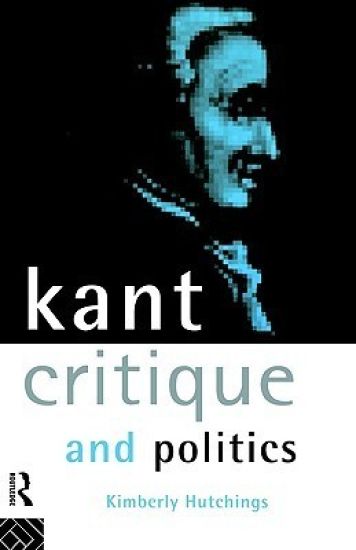
Kant, Critique and Politics

Kant, Critique and Politics

Kimberly Hutchings

Routledge
1995
nidottu
Why does the ghost of Kant continue to haunt contemporary critical theory? Kant, Critique and Politics examines the influence of Kantian critique on the work of such major and diverse theorists as Habermas, Arendt, Foucault and Lyotard. It offers an entirely new reading of Kant, challenging the orthodox distinctions between modernist and postmodernist theorizing, by illuminating how Kant's influence continues to structure critical debate. This is the first book to offer both a systematic reading of Kant and to contextualise his work in the light of the continental tradition. It will be central to political philosophers and students of international relations and feminist theory.