Kirjojen hintavertailu – 12 903 725 kirjaa ja 27 kauppaa

Kirjailija

Kiran Klaus Patel

Kirjat ja teokset yhdessä paikassa: 12 kirjaa, julkaisuja vuosilta 2005–2026, suosituimpiin kuuluu Projekt Europa. Vertaile teosten hintoja ja tarkista saatavuus suomalaisista kirjakaupoista.

12 kirjaa

Kirjojen julkaisuvuodet: 2005–2026.

A Concise History of the European Union

A Concise History of the European Union

Kiran Klaus Patel

Cambridge University Press
2026
nidottu
European integration has many origins, although its history goes back less far than is often assumed. This study offers an accessible and engaging overview of the past and present of today's European Union, from the postwar era to the present day. Beginning with the foundational treaties of the 1950s, the book examines how the EU became an increasingly global actor through the 1980s and 1990s. Focusing particularly on recent developments, Kiran Klaus Patel explores how the EU's current role was far from a given and remains fragile. Looking beyond public discourse fixated on crisis, Patel highlights the adaptability and resilience of the EU and how it has turned challenges into opportunities and expanded its own role in the process. This book sheds new light on the past in order to understand the present – and possible options for the future. In the process, it challenges conventional wisdoms of Europhiles and Eurosceptics alike.
A Concise History of the European Union

A Concise History of the European Union

Kiran Klaus Patel

Cambridge University Press
2026
sidottu
European integration has many origins, although its history goes back less far than is often assumed. This study offers an accessible and engaging overview of the past and present of today's European Union, from the postwar era to the present day. Beginning with the foundational treaties of the 1950s, the book examines how the EU became an increasingly global actor through the 1980s and 1990s. Focusing particularly on recent developments, Kiran Klaus Patel explores how the EU's current role was far from a given and remains fragile. Looking beyond public discourse fixated on crisis, Patel highlights the adaptability and resilience of the EU and how it has turned challenges into opportunities and expanded its own role in the process. This book sheds new light on the past in order to understand the present – and possible options for the future. In the process, it challenges conventional wisdoms of Europhiles and Eurosceptics alike.

Transformation durch Recht

Transformation durch Recht

Kiran Klaus Patel; Hans Christian Röhl

Mohr Siebeck
2020
sidottu
Die Zeit zwischen 1985 und 1992 steht für einen grundlegenden Wandel im europäischen Einigungsprozess. Der Amtsantritt von Jacques Delors als Präsident der Europäischen Kommission 1985, die Einheitliche Europäische Akte 1987 und der Vertrag von Maastricht 1992 bilden die Wegmarken dieser Entwicklung, die das Beziehungsgeflecht zwischen der Europäischen Union und ihren Mitgliedstaaten nachhaltig veränderte. Die transformative Wirkung dieser Phase wurde bisher kaum als solche gesehen. Sie wird in diesem Band im Gespräch zwischen Rechtswissenschaft und Zeitgeschichte erstmals genauer vermessen. Dazu versichern sich die Autoren der jeweiligen disziplinären Perspektive auf den Gegenstand und ordnen ihn in einen allgemeinen zeitgeschichtlichen Kontext ein. Sie fragen, auf welche Weise und in welcher Form das Recht zum Instrument des Wandels werden konnte. Weiterhin untersucht der Band die Dynamiken dieser Veränderungen auf Ebene der Mitgliedstaaten am Beispiel Deutschlands und zeigt auf, welche Konsequenzen dieser Wandel für das Verhältnis des neuen Europas zu anderen Weltteilen haben kann.
Project Europe

Project Europe

Kiran Klaus Patel

Cambridge University Press
2020
sidottu

Halvin toimitettuna 35,10 €

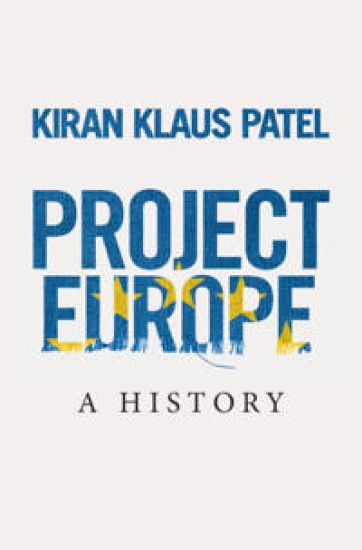
Today it often appears as though the European Union has entered existential crisis after decades of success, condemned by its adversaries as a bureaucratic monster eroding national sovereignty: at best wasteful, at worst dangerous. How did we reach this point and how has European integration impacted on ordinary people's lives - not just in the member states, but also beyond? Did the predecessors of today's EU really create peace after World War II, as is often argued? How about its contribution to creating prosperity? What was the role of citizens in this process, and can the EU justifiably claim to be a 'community of values'? Kiran Klaus Patel's bracing look back at the myths and realities of integration challenges conventional wisdoms of Europhiles and Eurosceptics alike and shows that the future of Project Europe will depend on the lessons that Europeans derive from its past.
The New Deal

The New Deal

Kiran Klaus Patel

Princeton University Press
2017
pokkari
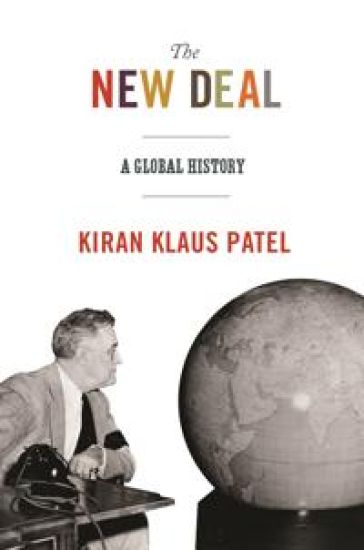
The New Deal: A Global History provides a radically new interpretation of a pivotal period in US history. The first comprehensive study of the New Deal in a global context, the book compares American responses to the international crisis of capitalism and democracy during the 1930s to responses by other countries around the globe--not just in Europe but also in Latin America, Asia, and other parts of the world. Work creation, agricultural intervention, state planning, immigration policy, the role of mass media, forms of political leadership, and new ways of ruling America's colonies--all had parallels elsewhere and unfolded against a backdrop of intense global debates. By avoiding the distortions of American exceptionalism, Kiran Klaus Patel shows how America's reaction to the Great Depression connected it to the wider world. Among much else, the book explains why the New Deal had enormous repercussions on China; why Franklin D. Roosevelt studied the welfare schemes of Nazi Germany; and why the New Dealers were fascinated by cooperatives in Sweden--but ignored similar schemes in Japan. Ultimately, Patel argues, the New Deal provided the institutional scaffolding for the construction of American global hegemony in the postwar era, making this history essential for understanding both the New Deal and America's rise to global leadership.
The New Deal

The New Deal

Kiran Klaus Patel

Princeton University Press
2016
sidottu
The New Deal: A Global History provides a radically new interpretation of a pivotal period in US history. The first comprehensive study of the New Deal in a global context, the book compares American responses to the international crisis of capitalism and democracy during the 1930s to responses by other countries around the globe--not just in Europe but also in Latin America, Asia, and other parts of the world. Work creation, agricultural intervention, state planning, immigration policy, the role of mass media, forms of political leadership, and new ways of ruling America's colonies--all had parallels elsewhere and unfolded against a backdrop of intense global debates. By avoiding the distortions of American exceptionalism, Kiran Klaus Patel shows how America's reaction to the Great Depression connected it to the wider world. Among much else, the book explains why the New Deal had enormous repercussions on China; why Franklin D. Roosevelt studied the welfare schemes of Nazi Germany; and why the New Dealers were fascinated by cooperatives in Sweden--but ignored similar schemes in Japan. Ultimately, Patel argues, the New Deal provided the institutional scaffolding for the construction of American global hegemony in the postwar era, making this history essential for understanding both the New Deal and America's rise to global leadership.
Soldiers of Labor

Soldiers of Labor

Kiran Klaus Patel

Cambridge University Press
2010
pokkari
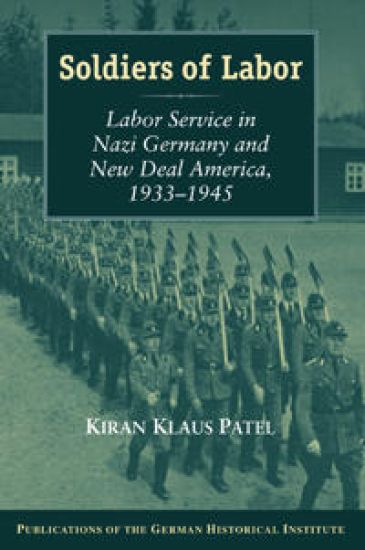
Originally published in 2005, Soldiers of Labor is a systematic comparison between the labor policies of the Nazi dictatorship and New Deal America. The main subject of the book is the Nazi Labor Service (Reichsarbeitsdienst), a public work scheme that provided work and education for young men. Here, the organizational setup, the educational dimension, and its practical work are extensively examined. Originally, the institution was an instrument in the fight against unemployment at the end of the Weimar Republic. After 1933, it became a Nazi propaganda tool that ultimately became involved in the Nazi's war of extermination. This study examines the similarities and differences, the mutual perceptions, and transfers between the Nazi Labor Service and its New Deal equivalent, the Civilian Conservation Corps. Patel uncovers stunning similarities between the two organizations, as well as President Roosevelt's irritating personal interest in the Nazi equivalent of his pet agency, the CCC.
Europäisierung Wider Willen

Europäisierung Wider Willen

Kiran Klaus Patel

Walter de Gruyter
2009
sidottu
Seit wann gibt es in Deutschland das ganze Jahr uber frisches Obst? Wie konnten einige Tonnen niederlandischer Eier Anfang der 1960er Jahre die Hallstein-Doktrin als einem zentralen Pfeiler westdeutscher Aussenpolitik zum Wanken bringen? Und wieso sieht man auf US-amerikanischen Strassen so wenige in Europa oder Japan hergestellte Lastwagen? All diese Fragen stehen im Kontext der Einigung des Agrarsektors unter den Vorzeichen der Europaischen Wirtschaftsgemeinschaft (EWG) seit den 1950er Jahren. Kiran Klaus Patel untersucht erstmals die Rolle der Bundesrepublik Deutschland bei der Entstehung der Gemeinsamen Agrarpolitik der EWG und schlagt dabei innovative Brucken zwischen der Erforschung des europaischen Integrationsprozesses und der Debatte uber transnationale Geschichte. Die gangige Vorstellung uber das europapolitische Engagement der Bundesrepublik wird dabei in ein vollig neues Licht geruckt."
Soldiers of Labor

Soldiers of Labor

Kiran Klaus Patel

Cambridge University Press
2005
sidottu
Originally published in 2005, Soldiers of Labor is a systematic comparison between the labor policies of the Nazi dictatorship and New Deal America. The main subject of the book is the Nazi Labor Service (Reichsarbeitsdienst), a public work scheme that provided work and education for young men. Here, the organizational setup, the educational dimension, and its practical work are extensively examined. Originally, the institution was an instrument in the fight against unemployment at the end of the Weimar Republic. After 1933, it became a Nazi propaganda tool that ultimately became involved in the Nazi's war of extermination. This study examines the similarities and differences, the mutual perceptions, and transfers between the Nazi Labor Service and its New Deal equivalent, the Civilian Conservation Corps. Patel uncovers stunning similarities between the two organizations, as well as President Roosevelt's irritating personal interest in the Nazi equivalent of his pet agency, the CCC.