Kirjojen hintavertailu – 12 859 819 kirjaa ja 27 kauppaa
Kirjailija
Kirk Johnson
Kirjat ja teokset yhdessä paikassa: 8 kirjaa, julkaisuja vuosilta 2009–2024, suosituimpiin kuuluu Trees Are Made Of Gas. Vertaile teosten hintoja ja tarkista saatavuus suomalaisista kirjakaupoista.
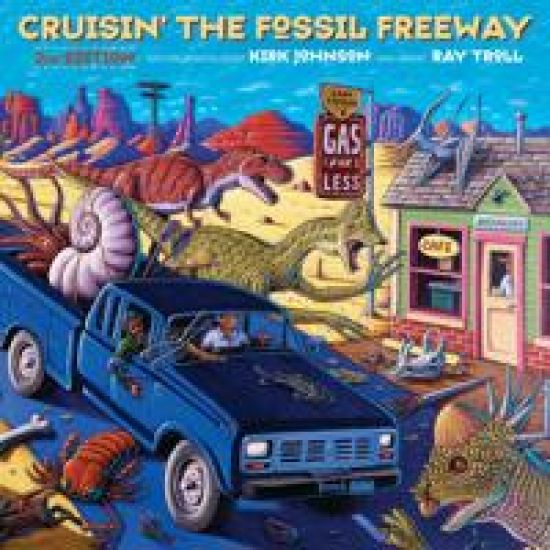
An epoch tale of a scientist and an artist on the ultimate 5,000-mile paleo road trip. Cruisin' the Fossil Freeway follows the most unusual travels of a paleontologist and an artist as they drive across the American West in search of fossils. Throughout their journey, they encounter "paleonerds" like themselves, people dedicated to finding everything from suburban T. rex to killer Eocene pigs to ancient fossilized forests. This updated editions brings the text up-to-date on new discoveries, new realizations, and new places, along with new art. A fascinating travelogue, Cruisin' the Fossil Freeway shows us that fossils are everywhere if you learn to look for them—even at 65 miles per hour.
An illustrated companion map for Cruisin' the Fossil Freeway , which follows the zany travels of a paleontologist and an artist as they drive across the American West in search of fossils.
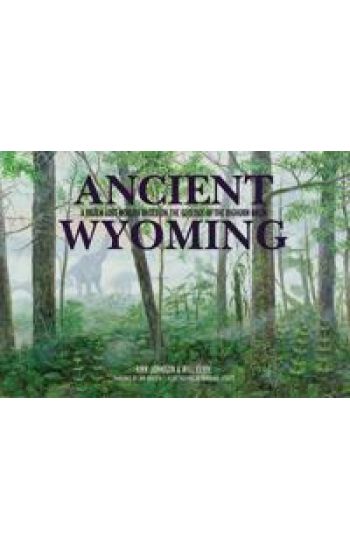
Sponsored by a grant from the National Science Foundation to the Denver Museum of Natural History. Ever wondered what the ground below you was like millions of years ago? Merging paleontology, geology, and artistry, Ancient Wyoming illustrates scenes from the distant past and provides fascinating details on the flora and fauna of the past 300 million years. The book provides a unique look at Wyoming, both as it is today and as it was throughout ancient history--at times a vast ocean, a lush rain forest, and a mountain prairie.
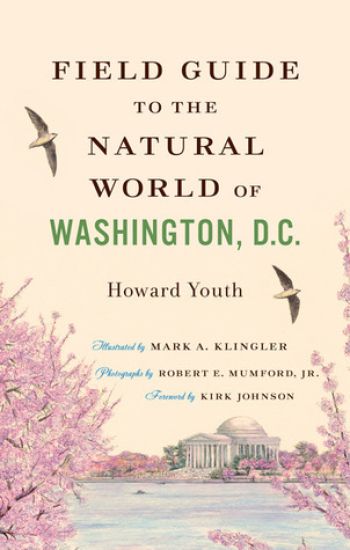
Nature awaits discovery at almost every turn in the complex ecosystem of Washington, D. C. In parks large and small, within the District's gardens, and on public streets, there is tremendous biodiversity. In Field Guide to the Natural World of Washington, D. C., naturalist Howard Youth takes us on an urban safari, describing the wild side of the nation's capital. Beyond the abundant wildlife that can be seen in every neighborhood, Washington boasts a large park network rich in natural wonders. A hike along the trails of Rock Creek Park, one of the country's largest and oldest urban forests, quickly reveals white-tailed deer, eastern gray squirrels, and little brown bats. Mayapples, Virginia bluebells, and red mulberry trees are but a few of the treasures found growing at the National Arboretum. A stroll along the Potomac and Anacostia Rivers might reveal stealthy denizens such as bullfrogs, largemouth bass, and common snapping turtles. Detailed drawings by Carnegie artist Mark A. Klingler and photography by Robert E. Mumford, Jr., reveal the rich color and stunning beauty of the flora and fauna awaiting every D. C. naturalist. Whether seeking a secluded jog or an adventurous outing, residents and tourists alike will find this handsome guide indispensable for finding oases away from the noise of the city.
Nature awaits discovery at almost every turn in the complex ecosystem of Washington, D. C. In parks large and small, within the District's gardens, and on public streets, there is tremendous biodiversity. In Field Guide to the Natural World of Washington, D. C., naturalist Howard Youth takes us on an urban safari, describing the wild side of the nation's capital. Beyond the abundant wildlife that can be seen in every neighborhood, Washington boasts a large park network rich in natural wonders. A hike along the trails of Rock Creek Park, one of the country's largest and oldest urban forests, quickly reveals white-tailed deer, eastern gray squirrels, and little brown bats. Mayapples, Virginia bluebells, and red mulberry trees are but a few of the treasures found growing at the National Arboretum. A stroll along the Potomac and Anacostia Rivers might reveal stealthy denizens such as bullfrogs, largemouth bass, and common snapping turtles. Detailed drawings by Carnegie artist Mark A. Klingler and photography by Robert E. Mumford, Jr., reveal the rich color and stunning beauty of the flora and fauna awaiting every D. C. naturalist. Whether seeking a secluded jog or an adventurous outing, residents and tourists alike will find this handsome guide indispensable for finding oases away from the noise of the city.
This is an essential reference for describing, measuring and classifying the foliage of flowering plants. The presented system provides long-needed guidelines for characterizing the organization, shape, venation, and surface features of angiosperm leaves. In contrast to systems focusing on reproductive characters for identification, the emphasis is on macroscopic features of the leaf blade including leaf characters, venation, and tooth characters. The advantage of this system is that it allows for the classification of plants independently of their flowers, which is especially useful for fossil leaves (usually found in isolation) and tropical plants (whose flowering cycles are brief and irregular, and whose fruits and flowers may be difficult to access). An illustrated terminology including detailed definitions and annotated illustrations is the focus of the classification system, the aim of which is to provide a framework with comparative examples to allow both modern and fossil leaves to be described and classified consistently. Published in association with the New York Botanical Garden.
This is an essential reference for describing, measuring and classifying the foliage of flowering plants. The presented system provides long-needed guidelines for characterizing the organization, shape, venation, and surface features of angiosperm leaves. In contrast to systems focusing on reproductive characters for identification, the emphasis is on macroscopic features of the leaf blade including leaf characters, venation, and tooth characters. The advantage of this system is that it allows for the classification of plants independently of their flowers, which is especially useful for fossil leaves (usually found in isolation) and tropical plants (whose flowering cycles are brief and irregular, and whose fruits and flowers may be difficult to access). An illustrated terminology including detailed definitions and annotated illustrations is the focus of the classification system, the aim of which is to provide a framework with comparative examples to allow both modern and fossil leaves to be described and classified consistently.