Kirjojen hintavertailu – 12 859 818 kirjaa ja 27 kauppaa

Kirjailija

Kishore Mahbubani

Kirjat ja teokset yhdessä paikassa: 12 kirjaa, julkaisuja vuosilta 2009–2026, suosituimpiin kuuluu Has China Won?: The Chinese Challenge to American Primacy. Vertaile teosten hintoja ja tarkista saatavuus suomalaisista kirjakaupoista.

12 kirjaa

Kirjojen julkaisuvuodet: 2009–2026.

Has China Won?: The Chinese Challenge to American Primacy
From a former president of the United Nations Security Council, an authoritative look at the US, China, and the defining geopolitical contest of the twenty-first century "An excellent and important book on the biggest question in international affairs: how will the relationship between the US and China evolve?" --Martin Wolf, chief economics commentator, Financial Times China and the United States are world powers without serious rivals. They eye each other warily across the Pacific. They vie for the allegiances of other major nations and an ever-larger share of the global GDP. They tout opposing values and ideologies. A massive geopolitical contest is underway. Drawing on his decades of experience in diplomacy and geopolitical strategy, Kishore Mahbubani offers a bracingly honest appraisal of the strengths and weaknesses of these ambitious and eccentric superpowers--and a clear-eyed assessment of their best path forward. Updated with a preface reassessing the US-China power struggle from the vantage point of the second Trump presidency, Has China Won? is the definitive guide to the deep fault lines between the two countries.
Living the Asian Century

Living the Asian Century

Kishore Mahbubani

PUBLICAFFAIRS,U.S.
2024
pokkari

Halvin toimitettuna 23,20 €

In this stirring memoir, a preeminent politician and diplomat traces the transformation of the Republic of Singapore from a poor colony into an Asian powerhouseGrowing up in poverty in the 1950s, Kishore Mahbubani expected to become a common textile salesman after finishing high school. Instead, a government scholarship sent him to the University of Singapore, and four years later he found himself in the country's Ministry of Foreign Affairs. Meanwhile, almost none of Mahbubani's cousins, scattered around the world after India's brutal partition, from Guyana to Hong Kong, would complete university. During this same period, Singapore itself was undergoing a metamorphosis. Granted internal self-governance in 1959 and achieving full independence six years later, the country came of age alongside Mahbubani. And as his star rose, so did the nation's. In Living the Asian Century, Mahbubani vividly chronicles his own life going from a poor childhood in a multiethnic neighborhood to an illustrious diplomatic career that led him far from Singapore, from Cambodia to Australia, Malaysia to the United States and the UN-including the pinnacle of influence, the Security Council. Along the way Mahbubani has become one of Asia's most widely known commentators and spokespeople, with a unique perspective that straddles India, China, and the West.
Has China Won?

Has China Won?

Kishore Mahbubani

PUBLICAFFAIRS,U.S.
2022
pokkari

Halvin toimitettuna 21,70 €

The twenty-first century's great geopolitical contest has begun. A major trade war has broken out. American and Chinese naval vessels are having close encounters in the South China Sea. American congressmen and businessmen are cheering their government's public attacks on China. China is standing firm and resolute. Who will win this contest? What is at stake? And who will judge the winner? In this book, Kishore Mahbubani evaluates the two sides, and shows how China has been thinking on a global scale, launching ambitious initiatives under some of the world's most pragmatic and competent leaders. Most critically, the Chinese people have regained their cultural confidence. Chinese society is now infused with innovation and dynamism. Meanwhile, America has seen the power of its economic model badly damaged by the 2008 financial crisis. To many it is no longer the indispensable nation but an awkward interloper. The global rise of China and the relative strategic decline of the US presents a political challenge that the US has never faced before. American policymakers must shake off their complacency and launch a major strategic reboot of both domestic and foreign policies that have weakened the nation's social foundations and global standing. Otherwise, the start-up nation, barely two hundred and fifty years old, with only a quarter of China's population, cannot expect to defeat the world's oldest continuous civilization. With his trademark candor, Mahbubani delivers impartial and incisive insights on the strategic stakes and mistakes in this new great game.
The Asian 21st Century

The Asian 21st Century

Kishore Mahbubani

SPRINGER VERLAG, SINGAPORE
2021
sidottu
This open access book consists of essays written by Kishore Mahbubani to explore the challenges and dilemmas faced by the West and Asia in an increasingly interdependent world village and intensifying geopolitical competition. The contents cover four parts: Part One The End of the Era of Western Domination. The major strategic error that the West is now making is to refuse to accept this reality. The West needs to learn how to act strategically in a world where they are no longer the number 1. Part Two The Return of Asia. From the years 1 to 1820, the largest economies in the world were Asian. After 1820 and the rise of the West, however, great Asian civilizations like China and India were dominated and humiliated. The twenty-first century will see the return of Asia to the center of the world stage. Part Three The Peaceful Rise of China. The shift in the balance of power to the East has been most pronounced in the rise of China. While this rise has been peaceful, many in the West have responded with considerable concern over the influence China will have on the world order. Part Four Globalization, Multilateralism and Cooperation. Many of the world’s pressing issues, such as COVID-19 and climate change, are global issues and will require global cooperation to deal with. In short, human beings now live in a global village. States must work with each other, and we need a world order that enables and facilitates cooperation in our global village.
The Asian 21st Century

The Asian 21st Century

Kishore Mahbubani

SPRINGER VERLAG, SINGAPORE
2021
nidottu
This open access book consists of essays written by Kishore Mahbubani to explore the challenges and dilemmas faced by the West and Asia in an increasingly interdependent world village and intensifying geopolitical competition. The contents cover four parts: Part One The End of the Era of Western Domination. The major strategic error that the West is now making is to refuse to accept this reality. The West needs to learn how to act strategically in a world where they are no longer the number 1. Part Two The Return of Asia. From the years 1 to 1820, the largest economies in the world were Asian. After 1820 and the rise of the West, however, great Asian civilizations like China and India were dominated and humiliated. The twenty-first century will see the return of Asia to the center of the world stage. Part Three The Peaceful Rise of China. The shift in the balance of power to the East has been most pronounced in the rise of China. While this rise has been peaceful, many in the West have responded with considerable concern over the influence China will have on the world order. Part Four Globalization, Multilateralism and Cooperation. Many of the world’s pressing issues, such as COVID-19 and climate change, are global issues and will require global cooperation to deal with. In short, human beings now live in a global village. States must work with each other, and we need a world order that enables and facilitates cooperation in our global village.
Has the West Lost It?

Has the West Lost It?

Kishore Mahbubani

Penguin Books Ltd.
2019
pokkari

Halvin toimitettuna 17,00 €

The West's two-century epoch as global powerhouse is at an end. A new world order, with China and India as the strongest economies, dawns. How will the West react to its new status of superpower in decline? In Kishore Mahbubani's timely polemic, he argues passionately that the West can no longer presume to impose its ideology on the world, and crucially, that it must stop seeking to intervene, politically and militarily, in the affairs of other nations. He examines the West's greatest follies of recent times: the humiliation of Russia at the end of the Cold War, which led to the rise of Putin, and the invasion of Iraq after 9/11, which destabilised the Middle East. Yet, he argues, essential to future world peace are the Western constructs of democracy and reason, which it must continue to promote, by diplomacy rather than force, via multilateral institutions of global governance such as the UN. Only by recognising its changing status, and seeking to influence rather than dominate, he warns, can the West continue to play a key geopolitical role.
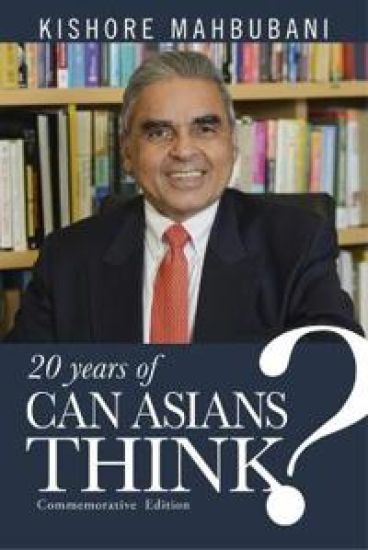
Can Asians Think?

Can Asians Think?

Kishore Mahbubani

Marshall Cavendish International (Asia) Pte Ltd
2018
sidottu
This commemorative edition of Can Asians Think? celebrates the long-running success of the publication over two decades, and the continued relevance of the author’s thought-provoking essays. This edition comprises of 18 essays selected by the author from those published over the past 20 years and additional new essays, and includes a new Introduction and Postscript comments by the author on what he foresees for Asia in the years ahead. The essays are set out under three parts: 1. Can Asians Think? 2. Can Asians Think for Themselves? 3. Can Asians Think for Humanity? “This 20th anniversary edition of Can Asians Think? provides an opportunity for all Asians, from East Asia to West Asia, from Central Asia to Southeast Asia, to reflect on how remarkable these past two decades – from 1998 to 2018 – have been for Asian history.” – Kishore Mahbubani
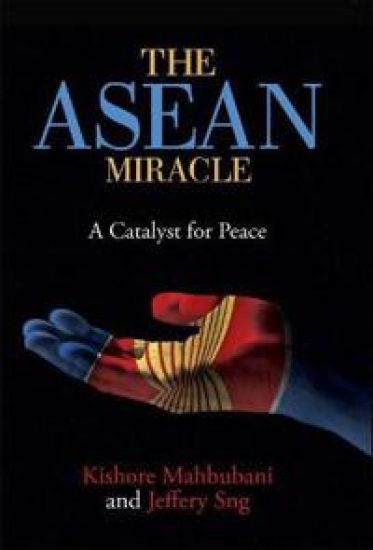
The ASEAN Miracle

The ASEAN Miracle

Kishore Mahbubani; Jeffery Sng

NUS Press
2017
sidottu
The Association of Southeast Asian Nations is a miracle. Why? In an era of growing cultural pessimism, many thoughtful individuals believe that different civilisations—especially Islam and the West—cannot live together in peace. The ten countries of ASEAN provide a thriving counter-example of civilizational co-existence. Here 625m people live together in peace. This miracle was delivered by ASEAN. In an era of growing economic pessimism, where many young people believe that their lives will get worse in coming decades, Southeast Asia bubbles with optimism. In an era where many thinkers predict rising geopolitical competition and tension, ASEAN regularly brings together all the world’s great powers. Stories of peace are told less frequently than stories of conflict and war. ASEAN’s imperfections make better headlines than its achievements. But in the hands of thinker and writer Kishore Mahbubani, the good news story is also a provocation and a challenge to the rest of the world.
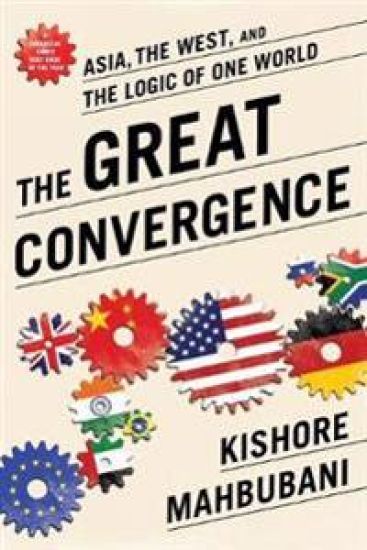
The Great Convergence

The Great Convergence

Kishore Mahbubani

PublicAffairs,U.S.
2014
pokkari
In this visionary roadmap to the twenty-first-century, Kishore Mahbubani prescribes solutions for improving global institutional order. He diagnoses seven geopolitical fault lines most in need of serious reform. But his message remains optimistic: despite the archaic geopolitical contours that try to shackle us today, our world has seen more positive change in the past thirty years than in the previous three hundred.
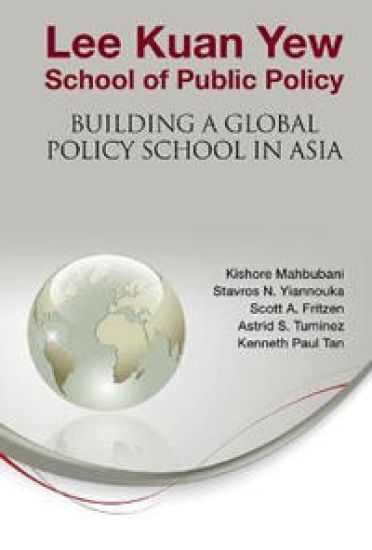
Lee Kuan Yew School Of Public Policy: Building A Global Policy School In Asia

Lee Kuan Yew School Of Public Policy: Building A Global Policy School In Asia

Kishore Mahbubani; Astrid S Tuminez; Stavros N Yiannouka; Scott A Fritzen; Kenneth Paul Tan

World Scientific Publishing Co Pte Ltd
2012
sidottu
In an industry of higher education that measures the longevity of its leading institutions in decades and centuries, the establishment and rapid growth of the eight-year-old Lee Kuan Yew School of Public Policy (LKY School), National University of Singapore, is a remarkable story that deserves to be told. The five co-authors, all of whom were involved in guiding the School during its formative years, provide unique perspectives of key events and the thinking behind major decisions that helped place the School on its current trajectory. They also provide insights into the challenges faced along the way as well as their own motivations in becoming part of this enterprise. Finally, each author provides his or her own thoughts as to the challenges and opportunities that could emerge for the LKY School in years to come. Read the chapters authored by dynamic, key founding and management personnel of the LKY School and discover for yourselves:the relevance of an Asian policy schoolwhat will make the LKY School's curriculum “one of the most innovative”what sets global policy studies apart from all other academic disciplineswhy executive education at the LKY School is one of the largest in the worldwhy the LKY School is the third best-endowed policy school in the worlda view of high-profile participating “student officials”
The New Asian Hemisphere

The New Asian Hemisphere

Kishore Mahbubani

PublicAffairs,U.S.
2009
pokkari
For two centuries Asians have been bystanders in world history, reacting defencelessly to the surges of Western commerce, thought, and power. That era is over. Asia is returning to the centre stage it occupied for eighteen centuries before the rise of the West. By 2050, three of the world's largest economies will be Asian: China, India, and Japan. In The New Asian Hemisphere , Kishore Mahbubani argues that Western minds need to step outside their comfort zone" and prepare new mental maps to understand the rise of Asia. The West, he says, must gracefully share power with Asia by giving up its automatic domination of global institutions from the IMF to the World Bank, from the G7 to the UN Security Council. Only then will the new Asian powers reciprocate by becoming responsible stakeholders in a stable world order.