Kirjojen hintavertailu – 12 859 828 kirjaa ja 27 kauppaa

Kirjailija

Kit Candlin

Kirjat ja teokset yhdessä paikassa: 3 kirjaa, julkaisuja vuosilta 2015–2026, suosituimpiin kuuluu A History of the Fedon Rebellion. Vertaile teosten hintoja ja tarkista saatavuus suomalaisista kirjakaupoista.

3 kirjaa

Kirjojen julkaisuvuodet: 2015–2026.

A History of the Fedon Rebellion

A History of the Fedon Rebellion

Kit Candlin

JOHN WILEY AND SONS LTD
2026
sidottu
In 1795, an attempted revolution in the colony of Grenada took place, led by the enigmatic Julien Fédon. While not as well-known as its Haitian counterpart, the bloody uprising powerfully shifted the balance of power in the Caribbean and fundamentally changed the way the British crown ran its colonies. But what might have happened had Fédon’s rebellion played out differently, with a more consistent message towards enslaved emancipation and mixed-race empowerment? In this compelling new book, historian Kit Candlin retells the captivating and essential story of rebellion and resistance in Grenada: of secret plans and clandestine meetings, frayed nerves and paranoia, all in a highly unstable, interconnected world. It is a dark and dramatic story filled with a motley collection of transient adventurers, itinerant planters, marginalised free people of colour and those enslaved—the flotsam of one of the most polyglot, contested, and liminal places in the Atlantic World. Not only did the Grenadian conflict play a crucial role in shaping the British empire, but understanding its story brings further nuance and context to the region’s bitter legacy of rebellion and revolution. Candlin’s rich tale of what happened—and what might have been—is not to be missed by anyone interested in the Caribbean in the Age of Revolution.
Enterprising Women

Enterprising Women

Kit Candlin; Cassandra Pybus

University of Georgia Press
2018
pokkari
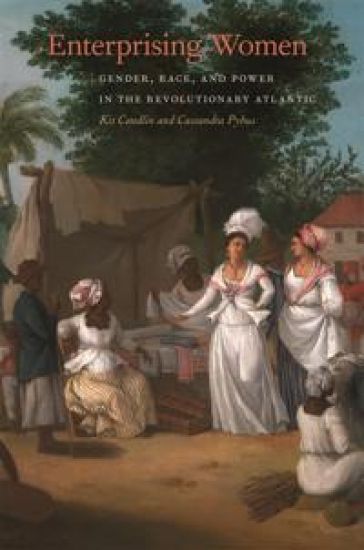
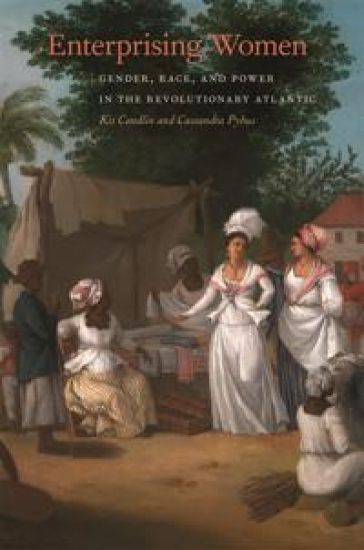
In the Caribbean colony of Grenada in 1797, Dorothy Thomas signed the manumission documents for her elderly slave Betty. Thomas owned dozens of slaves and was well on her way to amassing the fortune that would make her the richest black resident in the nearby colony of Demerara. What made the transaction notable was that Betty was Dorothy Thomas’s mother and that fifteen years earlier Dorothy had purchased her own freedom and that of her children. Although she was just one remove from bondage, Dorothy Thomas managed to become so rich and powerful that she was known as the Queen of Demerara. Dorothy Thomas’s story is but one of the remarkable acounts of pluck and courage recovered in Enterprising Women. As the microbiographies in this book reveal, free women of color in Britain’s Caribbean colonies were not merely the dependent concubines of the white male elite, as is commonly assumed. In the capricious world of the slave colonies during the age of revolutions, some of them were able to rise to dizzying heights of success. These highly entrepreneurial women exercised remarkable mobility and developed extensive commercial and kinship connections in the metropolitan heart of empire while raising well-educated children who were able to penetrate deep into British life.
Enterprising Women

Enterprising Women

Kit Candlin; Cassandra Pybus

University of Georgia Press
2015
sidottu
In the Caribbean colony of Grenada in 1797, Dorothy Thomas signed the manumission documents for her elderly slave Betty. Thomas owned dozens of slaves and was well on her way to amassing the fortune that would make her the richest black resident in the nearby colony of Demerara. What made the transaction notable was that Betty was Dorothy Thomas’s mother and that fifteen years earlier Dorothy had purchased her own freedom and that of her children. Although she was just one remove from bondage, Dorothy Thomas managed to become so rich and powerful that she was known as the Queen of Demerara. Dorothy Thomas’s story is but one of the remarkable acounts of pluck and courage recovered in Enterprising Women. As the microbiographies in this book reveal, free women of color in Britain’s Caribbean colonies were not merely the dependent concubines of the white male elite, as is commonly assumed. In the capricious world of the slave colonies during the age of revolutions, some of them were able to rise to dizzying heights of success. These highly entrepreneurial women exercised remarkable mobility and developed extensive commercial and kinship connections in the metropolitan heart of empire while raising well-educated children who were able to penetrate deep into British life.