

Kirjailija
Kit Heyam
Kirjat ja teokset yhdessä paikassa: 6 kirjaa, julkaisuja vuosilta 2020–2027, suosituimpiin kuuluu Precedented. Vertaile teosten hintoja ja tarkista saatavuus suomalaisista kirjakaupoista.
6 kirjaa
Kirjojen julkaisuvuodet: 2020–2027.
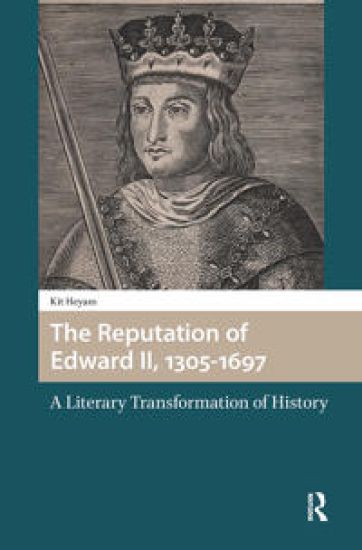
During his lifetime and the four centuries following his death, King Edward II (1307-1327) acquired a reputation for having engaged in sexual and romantic relationships with his male favourites, and having been murdered by penetration with a red-hot spit. This book provides the first account of how this reputation developed, providing new insights into the processes and priorities that shaped narratives of sexual transgression in medieval and early modern England. In doing so, it analyses the changing vocabulary of sexual transgression in English, Latin and French; the conditions that created space for sympathetic depictions of same-sex love; and the use of medieval history in early modern political polemic. It also focuses, in particular, on the cultural impact of Christopher Marlowe's Edward II (c.1591-92). Through such close readings of poetry and drama, alongside chronicle accounts and political pamphlets, it demonstrates that Edward's medieval and early modern afterlife was significantly shaped by the influence of literary texts and techniques. A 'literary transformation' of historiographical methodology is, it argues, an apposite response to the factors that shaped medieval and early modern narratives of the past.
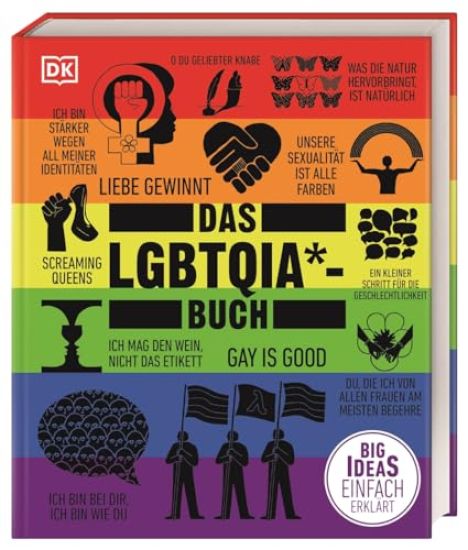
Big Ideas. Das LGBTQIA*-Buch
Jon Astbury; Michael Bronski; Kit Heyam
Dorling Kindersley Verlag
2024
sidottu
A groundbreaking global history of gender nonconformity Today's narratives about trans people tend to feature individuals with stable gender identities that fit neatly into the categories of male or female. Those stories, while important, fail to account for the complex realities of many trans people's lives. Before We Were Trans illuminates the stories of people across the globe, from antiquity to the present, whose experiences of gender have defied binary categories. Blending historical analysis with sharp cultural criticism, trans historian and activist Kit Heyam offers a new, radically inclusive trans history, chronicling expressions of trans experience that are often overlooked, like gender-nonconforming fashion and wartime stage performance. Before We Were Trans transports us from Renaissance Venice to seventeenth-century Angola, from Edo Japan to early America, and looks to the past to uncover new horizons for possible trans futures.
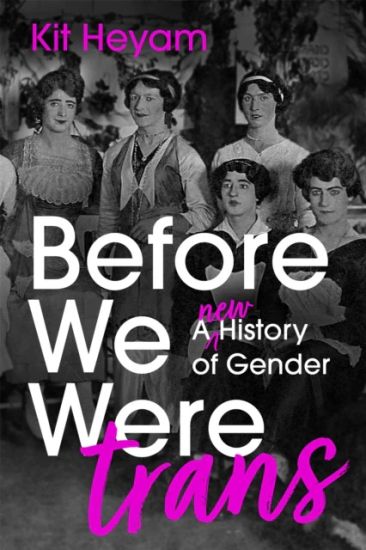
One of History Today's Best Books of 2022'I felt exquisitely anchored reading this wonderful book' Juno Roche'A thoughtful, fun, and refreshingly readable romp through the history of gender variance' Susan Stryker'A searing, reflexive read . . . that needs to be in everyone's hands expeditiously' Paula AkpanAcross the world today, people of all ages are doing fascinating, creative, messy things with gender. These people have a rich history - but one that is often left behind by narratives of trans lives that focus on people with stable, binary, uncomplicated gender identities. As a result, these stories tend to be recent, binary, stereotyped, medicalised and white. Before We Were Trans is a new and different story of gender, that seeks not to be comprehensive or definitive, but - by blending culture, feminism and politics - to widen the scope of what we think of as trans history by telling the stories of people across the globe whose experience of gender has been transgressive, or not characterised by stability or binary categories. Transporting us from Renaissance Venice to seventeenth-century Angola, from Edo Japan to North America, the stories this book tells leave questions and resist conclusions. They are fraught with ambiguity, and defy modern Western terminology and categories - not least the category of 'trans' itself. But telling them provides a history that reflects the richness of modern trans reality more closely than any previously written. Before We Were Trans is a history and celebration of gender in all its fluidity, ambiguity and complexity.

During his lifetime and the four centuries following his death, King Edward II (1307-1327) acquired a reputation for having engaged in sexual and romantic relationships with his male favourites, and having been murdered by penetration with a red-hot spit. This book provides the first account of how this reputation developed, providing new insights into the processes and priorities that shaped narratives of sexual transgression in medieval and early modern England. In doing so, it analyses the changing vocabulary of sexual transgression in English, Latin and French; the conditions that created space for sympathetic depictions of same-sex love; and the use of medieval history in early modern political polemic. It also focuses, in particular, on the cultural impact of Christopher Marlowe’s Edward II (c.1591-92). Through such close readings of poetry and drama, alongside chronicle accounts and political pamphlets, it demonstrates that Edward’s medieval and early modern afterlife was significantly shaped by the influence of literary texts and techniques. A ‘literary transformation’ of historiographical methodology is, it argues, an apposite response to the factors that shaped medieval and early modern narratives of the past.