
Kirjojen hintavertailu – 12 903 725 kirjaa ja 27 kauppaa

Kirjailija

Kitty Stewart

Kirjat ja teokset yhdessä paikassa: 2 kirjaa, julkaisuja vuodelta 2000, suosituimpiin kuuluu Fiscal Federalism in Russia. Vertaile teosten hintoja ja tarkista saatavuus suomalaisista kirjakaupoista.

2 kirjaa

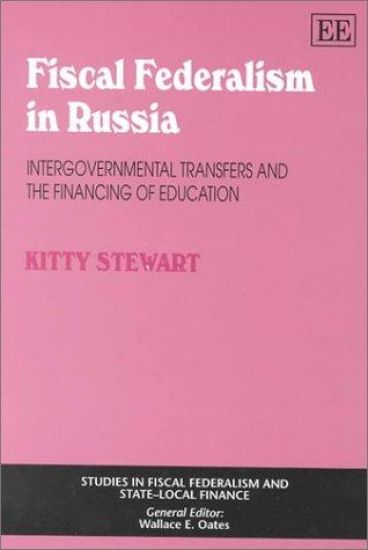
Fiscal Federalism in Russia

Fiscal Federalism in Russia

Kitty Stewart

Edward Elgar Publishing Ltd
2000
sidottu
Since the break-up of the Soviet Union in 1991, Russia has experienced a process of rapid fiscal decentralisation: its 88 regions are now in charge of almost half of total budgetary expenditure, while an overhaul of the revenue allocation system has given them substantial control over locally collected revenue. These regions are highly diverse in climate, natural resources and economic development, with some much better equipped than others to adjust to market conditions. Fiscal Federalism in Russia examines the combined impact of decentralisation and diversity on regional equality of service provision and in particular the provision of education. The book begins with an analysis of the system of intergovernmental transfers and goes on to explore the nature and extent of disparities in education spending, paying particular attention to regions where spending has fallen furthest. The book also contains a case study of the allocation decisions affecting the education sector within a single region, Novgorod Oblast, in North-West Russia. Based entirely on field research, the study provides a rare insight into the decision making process at regional and local level, as well as an analysis of the extent of internal revenue and spending disparities. Academics, researchers and those interested in decentralisation or the economics of transition will warmly welcome this detailed analysis of the direction and impact of inter-governmental transfers in Russia.
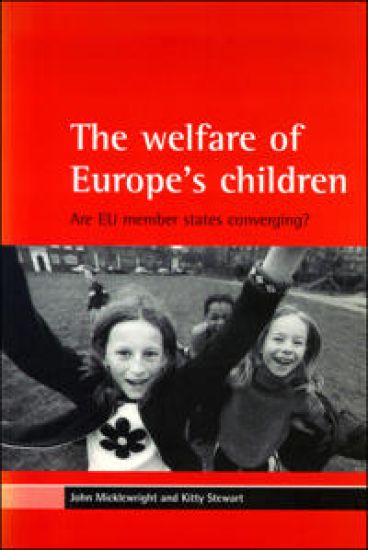
The welfare of Europe's children

The welfare of Europe's children

John Micklewright; Kitty Stewart

Policy Press
2000
nidottu
Discussion of convergence in the EU in recent years has centred on economic indicators related to monetary union and the single European currency, but it is the convergence of living standards that is the ultimate goal of European integration. This book analyses the living standards of the nearly 80 million children in the EU, who represent over a fifth of the Union's total population. The well-being of Europe's children is important now - and the nature of their progress to adulthood will have a major impact on the shape of Europe's future. By analysing the trends of child well-being in Europe over the last two decades, this book asks: Is the well-being of children in the EU becoming more similar across member states? Or Are countries diverging while their economies converge? These issues are addressed with a wealth of data on different dimensions of the changing welfare of Europe's children - evidence that has not previously been drawn together in a single source. The authors consider in turn the material well-being of children, their health and education, teenage fertility, and young people's own views of their lives. There is careful treatment of conceptual and measurement issues and data quality and comparability, together with reference to a large literature across the different relevant disciplines. This book aims to raise the profile of children in the debate on Europe's future, and in doing so to contribute to the growing discussion of economic and social cohesion in the EU. The analysis is rigorous but it avoids disciplinary jargon and will appeal to a pan-European audience. It is important reading for academics across the social sciences interested in the well-being of children and youth, NGOs working on behalf of the young, and local and national government policy advisers concerned with the issues in a domestic or European context.