Kirjojen hintavertailu – 12 903 727 kirjaa ja 27 kauppaa

Kirjailija

Klaus J. Hopt

Kirjat ja teokset yhdessä paikassa: 7 kirjaa, julkaisuja vuosilta 1988–2025, suosituimpiin kuuluu Neues Schuldrecht und Bankgeschäfte. Wissenszurechnung bei Kreditinstituten. Vertaile teosten hintoja ja tarkista saatavuus suomalaisista kirjakaupoista.

Nimi esiintyy myös muodoissa: Klaus J Hopt

7 kirjaa

Kirjojen julkaisuvuodet: 1988–2025.

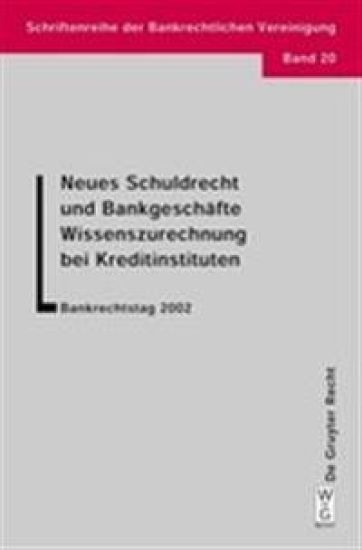
Neues Schuldrecht und Bankgeschäfte. Wissenszurechnung bei Kreditinstituten

Neues Schuldrecht und Bankgeschäfte. Wissenszurechnung bei Kreditinstituten

Walther Hadding; Klaus J Hopt; Herbert Schimansky

de Gruyter
2003
sidottu
Zwei aktuellen Themen von hoher kreditwirtschaftlicher Tragweite hat die Bankrechtliche Vereinigung - Wissenschaftliche Gesellschaft fur Bankrecht e. V. ihrem Bankrechtstag 2002 in Leipzig gewidmet. Neben den Auswirkungen der Schuldrechtsreform auf das Recht der Bankgeschafte wurde die unternehmensinterne Wissenszurechnung behandelt. 1. Abteilung: Neues Schuldrecht und BankgeschafteMathias Habersack, Mainz: Auswirkungen derSchuldrechtsreform auf das Recht der Bankgeschafte; HerbertSchimansky, Marxzell: Das Recht der Uberweisung ab 1. Januar 2002; Ahrend Weber, Berlin: Das neue Schuldrecht in der kreditwirtschaftlichen Praxis 2. Abteilung: Wissenszurechnung bei KreditinstitutenJosef Drexl, Munchen: Wissenszurechnungim unabhangigen und Konzernunternehmen- Zivil-, gesellschafts- und bankrechtliche Uberlegungen; GerdNobbe, Karlsruhe: Wissenszurechnung in der Rechtsprechung desBundesgerichtshofs; Jurgen Schroter, Frankfurt am Main: Wissenszurechnung aus der Sicht der kreditwirtschaftlichen Praxis

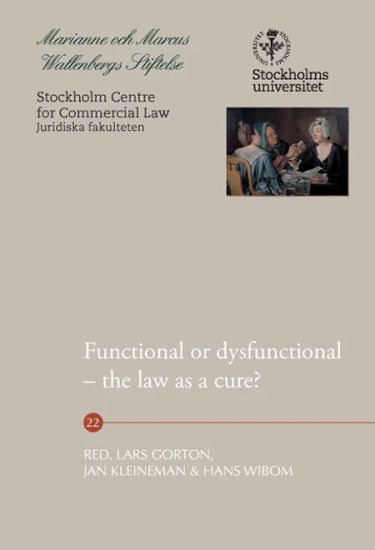
Functional or dysfunctional : the law as a cure?

Functional or dysfunctional : the law as a cure?

Jr. Coffee; Rowan Russell; Angela Itzikowitz; Philip R Wood; Kern Alexander; Jesper Lau Hansen; Erica Johansson; Klaus J. Hopt; William Blair; Michael D. Green; Brandon Jones; Ross Cranston; Brigitte Haar; Eiríkur Jónsson

Stockholm Centre for Commercial Law
2014
nidottu
On August 29–30 2014 the Marianne and Marcus Wallenberg Foundation in co-operation with the Stockholm Centre for Commercial Law arranged an International legal symposium under the heading “Functional or dysfunctional – the law as a cure? Risks and liability in the financial markets”. The symposium was held in honor of the 50th anniversary of the Marianne and Marcus Wallenberg Foundation. The topic of the symposium mirrors a particular interest of the activities of the SCCL covering regulatory as well as liability questions thus dealing with legal subjects which have also relevance to the Foundation. After World War II financial markets have gradually undergone huge differences depending on new financial devices, new financial markets and new financial actors evolving together with changes in regulation and supervision. These are circumstances which have together created new frames for the financial industry. Table of contents: - Extraterritorial Financial Regulation: Why E. T. Can’t Come Home by John C. Coffee, Jr. - Generally on Risks and Liability – Directors’ Liability Under the Law and Regulation in Australia by Rowan Russell - South African Company Law – Directors’ Duty of Care and Skill and the Introduction of the Business Judgment Rule: Answering the Critics by Angela Itzikowitz - International legal risk for banks and corporates by Philip R Wood - Macro-prudential regulation from an English and European Perspective – The Legal and Institutional Dimension by Kern Alexander - Comment on the session on the risks and liabilities of financial markets by Jesper Lau Hansen - Handling Risks in Financial Markets Regulation: EMIR and the problem with CCPs being Too Big to Fail by Erica Johansson - Responsibility of Banks and Their Directors, Including Liability and Enforcement by Klaus J. Hopt - Is there a role for culture and ethics in financial regulation? By William Blair - Tort Law to the Rescue? By Michael D. Green & Brandon Jones - The (non)-liability of banks under English law by Ross Cranston - Implementing liability on the basis of model case procedures – the example of the German Capital Markets Model Case Act (“KapMuG”) by Brigitte Haar - Tort cases in Iceland after the bank crash in 2008 by Eiríkur Jónsson
Rechtshilfe und Rechtsstaat

Rechtshilfe und Rechtsstaat

Klaus J. Hopt; Rainer Kulms; Jan von Hein

Mohr Siebeck
2006
sidottu
Im US-amerikanischen Zivilprozeßrecht stehen class actions im Dienst der regulation through litigation durch den Bürger. Sie führen zu transatlantischen Spannungen, wenn sich europäische Unternehmen als Beklagte hohen Schadensersatzforderungen ausgesetzt sehen. Klaus J. Hopt, Rainer Kulms und Jan von Hein überprüfen zunächst die Abläufe von dem Antrag auf certification als class action bis zu dem in der Praxis häufigen verfahrensbeendenden Vergleich, die Rolle der Verfahrensbeteiligten und ihrer Anwälte und die Kontrolle als zu hoch empfundener Schadensersatzurteile durch die Berufungsgerichte. Sodann werden die Durchführung und die Rechtsfolgen der Auslandszustellung nach dem Haager Zustellungsübereinkommen (HZÜ) geschildert. Diesem Zustellungsweg werden die Möglichkeiten zur Inlandszustellung in den USA sowie weitere alternative Zustellungsformen gegenübergestellt. Eingehend wird auf rechtsvergleichender Grundlage untersucht, welche Möglichkeiten zur Abwehr der Zustellung einer class action nach dem HZÜ bestehen. Abschließend zeigen die Autoren, welche Auswirkungen eine derartige Zustellungsverweigerung auf die internationale Rechtshilfe hätte.
Corporations, Capital Markets ad Business in the Law

Corporations, Capital Markets ad Business in the Law

Theodor Baums; Klaus J. Hopt; Norbert Horn

Kluwer Law International
2000
sidottu
This "Liber Amicorum" is written in honour of Richard M. Buxbaum to celebrate his 70th birthday. It pays tribute to his writings, teachings, editorial and administrative work, which have contributed immensely to the development of the international legal order. The contributions are from international experts in the field of commercial and economic law, corporate law, intellectual property and business law, and give an interesting and valuable account of current economic trends and academic thinking.