Kirjojen hintavertailu – 12 859 819 kirjaa ja 27 kauppaa

Kirjailija

Klaus Neusser

Kirjat ja teokset yhdessä paikassa: 4 kirjaa, julkaisuja vuosilta 2016–2025, suosituimpiin kuuluu Time Series Econometrics. Vertaile teosten hintoja ja tarkista saatavuus suomalaisista kirjakaupoista.

4 kirjaa

Kirjojen julkaisuvuodet: 2016–2025.

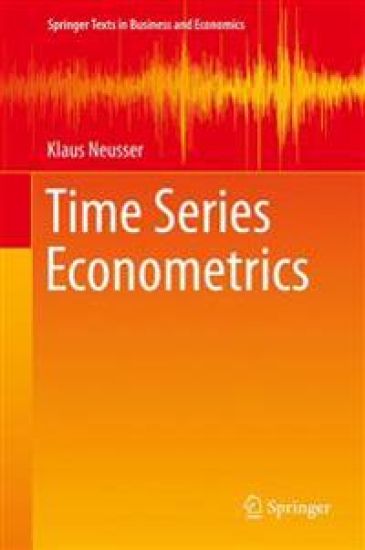
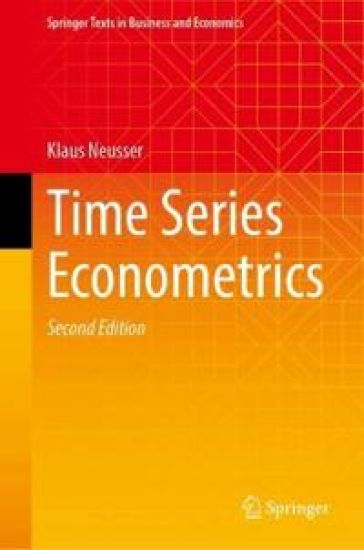
Time Series Econometrics

Time Series Econometrics

Klaus Neusser

Springer International Publishing AG
2025
sidottu
This text presents modern developments in time series analysis and focuses on their application to economic problems. The book first introduces the fundamental concept of a stationary time series and its relation to the basic properties of covariance funtions, investigating the structure and estimation of autoregressive-moving average (ARMA) models and their relations to the covariance structure. The book then moves on to non-stationary time series, highlighting its consequences for modeling and forecasting as well as regressions models and presenting standard statistical tests. Next, the text discusses volatility models and their applications in the analysis of financial market data, focusing on generalized autoregressive conditional heteroskedastic (GARCH) models. The second part of the text is devoted to multivariate processes, such as vector autoregressive (VAR) models and structural vector autoregressive (SVAR) models, which have become the main tools in empirical macroeconomics. The text concludes with a discussion of co-integrated models and the Kalman Filter, which is being used with increasing frequency. The exposition finally connects to recent developments in the field. Mathematically rigorous, yet application-oriented, this self-contained text will help students develop a deeper understanding of theory and better command of the models that are vital to the field. Assuming a basic knowledge of statistics and/or econometrics, this text is best suited for advanced undergraduate and beginning graduate students.
Zeitreihenanalyse in den Wirtschaftswissenschaften

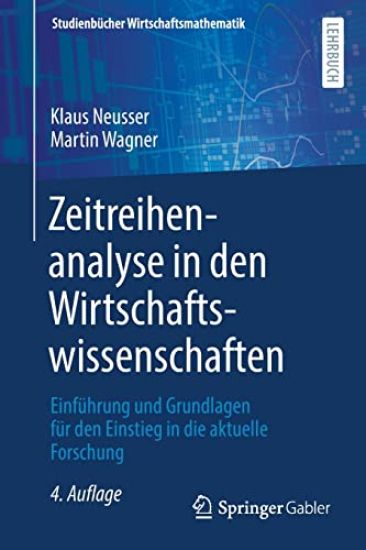
Zeitreihenanalyse in den Wirtschaftswissenschaften

Klaus Neusser; Martin Wagner

Springer-Verlag Berlin and Heidelberg GmbH Co. KG
2022
nidottu
Dieses Buch ermöglicht Studierenden der Wirtschaftswissenschaften mit Vorkenntnissen in Ökonometrie den Einstieg in die uni- und multivariate Zeitreihenanalyse und dient zugleich als wichtiges Bindeglied zur aktuellen Forschung auf diesem Gebiet. Das Buch beschränkt sich zwar auf nur wenige, aber zentrale Beweise, formuliert jedoch die verwendeten Konzepte, Definitionen und Theoreme mathematisch rigoros und ist somit bestens als Ausgangspunkt für weitergehende Studien der forschungsorientierten empirischen Literatur geeignet. Die betrachteten empirischen Beispiele sind vielfältig aus den relevanten wirtschafts- und finanzwissenschaftlichen Anwendungen gewählt: Behandelt werden Kursentwicklungen von Aktien oder Anleihen, die Entwicklung des Bruttoinlandsproduktes, die Inflationsrate oder die Arbeitslosenquote und vieles mehr. Für die 4. Auflage hat das Buch eine vollständige Überarbeitung erfahren: Es wurden aktuelle Entwicklungen berücksichtigt und entsprechende Inhalte ergänzt, viele empirische Beispiele aktualisiert und flächendeckend Übungsaufgaben bereitgestellt. Lesbarkeit und Verwendbarkeit als Lehrbuch wurden insgesamt deutlich verbessert; unter anderem wurden Notation und Sprache so angepasst, dass Einsteigern der anschließende Umstieg auf weiterführende Literatur erleichtert wird. Die im Buch verwendeten Daten und Programme werden auf einer eigenen Webseite der Autoren zur Verfügung gestellt.
Time Series Econometrics

Time Series Econometrics

Klaus Neusser

Springer International Publishing AG
2018
nidottu
This text presents modern developments in time series analysis and focuses on their application to economic problems. The book first introduces the fundamental concept of a stationary time series and the basic properties of covariance, investigating the structure and estimation of autoregressive-moving average (ARMA) models and their relations to the covariance structure. The book then moves on to non-stationary time series, highlighting its consequences for modeling and forecasting and presenting standard statistical tests and regressions. Next, the text discusses volatility models and their applications in the analysis of financial market data, focusing on generalized autoregressive conditional heteroskedastic (GARCH) models. The second part of the text devoted to multivariate processes, such as vector autoregressive (VAR) models and structural vector autoregressive (SVAR) models, which have become the main tools in empirical macroeconomics. The text concludes with a discussionof co-integrated models and the Kalman Filter, which is being used with increasing frequency. Mathematically rigorous, yet application-oriented, this self-contained text will help students develop a deeper understanding of theory and better command of the models that are vital to the field. Assuming a basic knowledge of statistics and/or econometrics, this text is best suited for advanced undergraduate and beginning graduate students.
Time Series Econometrics

Time Series Econometrics

Klaus Neusser

Springer International Publishing AG
2016
sidottu
This text presents modern developments in time series analysis and focuses on their application to economic problems. The book first introduces the fundamental concept of a stationary time series and the basic properties of covariance, investigating the structure and estimation of autoregressive-moving average (ARMA) models and their relations to the covariance structure. The book then moves on to non-stationary time series, highlighting its consequences for modeling and forecasting and presenting standard statistical tests and regressions. Next, the text discusses volatility models and their applications in the analysis of financial market data, focusing on generalized autoregressive conditional heteroskedastic (GARCH) models. The second part of the text devoted to multivariate processes, such as vector autoregressive (VAR) models and structural vector autoregressive (SVAR) models, which have become the main tools in empirical macroeconomics. The text concludes with a discussionof co-integrated models and the Kalman Filter, which is being used with increasing frequency. Mathematically rigorous, yet application-oriented, this self-contained text will help students develop a deeper understanding of theory and better command of the models that are vital to the field. Assuming a basic knowledge of statistics and/or econometrics, this text is best suited for advanced undergraduate and beginning graduate students.