Kirjojen hintavertailu – 12 859 818 kirjaa ja 27 kauppaa

Kirjailija

Kogila Moodley

Kirjat ja teokset yhdessä paikassa: 7 kirjaa, julkaisuja vuosilta 1993–2020, suosituimpiin kuuluu Seeking Mandela. Vertaile teosten hintoja ja tarkista saatavuus suomalaisista kirjakaupoista.

7 kirjaa

Kirjojen julkaisuvuodet: 1993–2020.

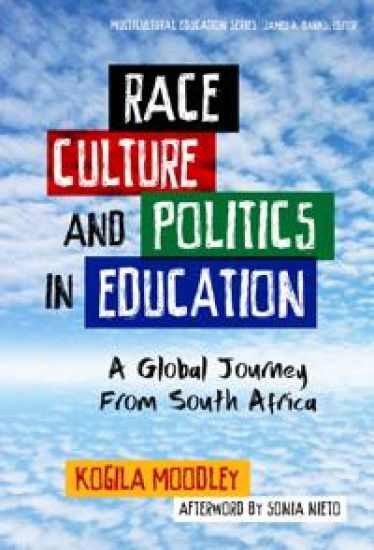
Race, Culture, and Politics in Education

Race, Culture, and Politics in Education

Kogila Moodley; Sonia Nieto

Teachers' College Press
2020
sidottu
This autobiographical volume will foster a deeper understanding of racism, discrimination, and inequality in all its subtleties. Through storytelling, framed within the life journey of a South African sociologist of Indian ancestry, this book examines how marginalized communities lived with, fought, and braved racial engineering under apartheid. Moodley shares her experiences of living, studying, and teaching race, ethnicity, identity, nationalism, and critical multiculturalism in five countries: South Africa, the United States, Germany, Egypt, and Canada. Everyday experiences are blended with academic interpretations, so readers gain insights from what is in part memoir and in other parts educational lessons drawn from numerous micro experiences. Subjects range from indentured labor to expropriation, the influences of Gandhi and Mandela, anti-Semitism in Europe to welfare colonialism in Canada, sectarianism in the Middle East to strategies for combatting bigotry in America. Book Features:Presents autobiographical material buttressed by strong theoretically driven social science research findings. Connects personal, cultural, and political landscapes to promote a global political literacy. Sketches subjects such as indigeneity (First Nations in Canada), memorialization in Germany (Holocaust), and sectarianism in the Middle East. Assesses the impact of role models and leaders, such as Nelson Mandela and Mahatma Gandhi. Examines how past injustices can be addressed both symbolically and materially.
Race, Culture, and Politics in Education

Race, Culture, and Politics in Education

Kogila Moodley; Sonia Nieto

Teachers' College Press
2020
nidottu
This autobiographical volume will foster a deeper understanding of racism, discrimination, and inequality in all its subtleties. Through storytelling, framed within the life journey of a South African sociologist of Indian ancestry, this book examines how marginalized communities lived with, fought, and braved racial engineering under apartheid. Moodley shares her experiences of living, studying, and teaching race, ethnicity, identity, nationalism, and critical multiculturalism in five countries: South Africa, the United States, Germany, Egypt, and Canada. Everyday experiences are blended with academic interpretations, so readers gain insights from what is in part memoir and in other parts educational lessons drawn from numerous micro experiences. Subjects range from indentured labor to expropriation, the influences of Gandhi and Mandela, anti-Semitism in Europe to welfare colonialism in Canada, sectarianism in the Middle East to strategies for combatting bigotry in America. Book Features:Presents autobiographical material buttressed by strong theoretically driven social science research findings. Connects personal, cultural, and political landscapes to promote a global political literacy. Sketches subjects such as indigeneity (First Nations in Canada), memorialization in Germany (Holocaust), and sectarianism in the Middle East. Assesses the impact of role models and leaders, such as Nelson Mandela and Mahatma Gandhi. Examines how past injustices can be addressed both symbolically and materially.
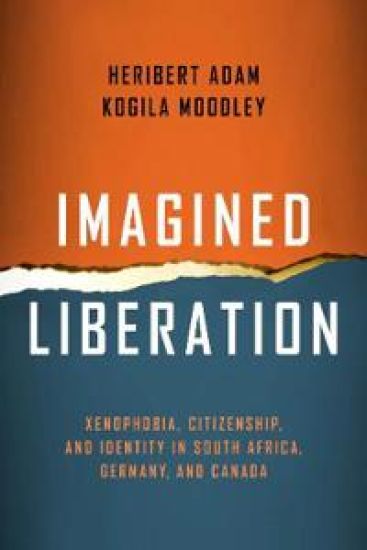
Imagined Liberation

Imagined Liberation

Heribert Adam; Kogila Moodley

Temple University Press,U.S.
2015
sidottu
On a spectrum of hostility towards migrants, South Africa ranks at the top, Germany in the middle and Canada at the bottom. South African xenophobic violence by impoverished slum dwellers is directed against fellow Africans. “Foreign” Africans are blamed for a high crime rate and most other maladies of an imagined liberation. Why would a society that liberated itself in the name of human rights turn against people who escaped human rights violations or unlivable conditions at home? What happened to the expected African solidarity? Why do former victims become victimizers? With porous borders, South Africa is incapable of upholding the blurred distinction between endangered refugees and economic migrants. Imagined Liberation asks what xenophobic societies can learn from other immigrant societies, such as Canada, that avoided the backlash against multiculturalism in Europe. Heribert Adam and Kogila Moodley stress an innovative teaching of political literacy that makes citizens aware as to why they hate.
Imagined Liberation

Imagined Liberation

Heribert Adam; Kogila Moodley

Temple University Press,U.S.
2015
pokkari
On a spectrum of hostility towards migrants, South Africa ranks at the top, Germany in the middle and Canada at the bottom. South African xenophobic violence by impoverished slum dwellers is directed against fellow Africans. “Foreign” Africans are blamed for a high crime rate and most other maladies of an imagined liberation. Why would a society that liberated itself in the name of human rights turn against people who escaped human rights violations or unlivable conditions at home? What happened to the expected African solidarity? Why do former victims become victimizers? With porous borders, South Africa is incapable of upholding the blurred distinction between endangered refugees and economic migrants. Imagined Liberation asks what xenophobic societies can learn from other immigrant societies, such as Canada, that avoided the backlash against multiculturalism in Europe. Heribert Adam and Kogila Moodley stress an innovative teaching of political literacy that makes citizens aware as to why they hate.
Seeking Mandela

Seeking Mandela

Heribert Adam; Kogila Moodley

Routledge Cavendish
2005
sidottu
The ongoing violence, despair and apparent paralysis in Israel/Palestine resemble a similar gloomy mood in South Africa during the late 1980s. Analogies with the South African case are increasingly applied to Israel/Palestine for two different purposes: to showcase South Africa as a model for a negotiated settlement and to label Israel a 'colonial settler state' that should be confronted with similar strategies (sanctions, boycott) as applied against the apartheid regime. Heribert Adam and Kogila Moodley show that both assumptions are problematic, because of the different historical and socio-political contexts. Peace-making resulted in an inclusive democracy in South Africa, while territorial separation in two states is widely hailed as the solution in Israel/Palestine. Adam and Moodley speculate on what would have happened in the Middle East had there been what they call 'a Palestinian Mandela' providing unifying moral and strategic leadership in the ethnic conflict. Unresolved issues in comparative politics and practical questions for conflict resolution can be clarified from the real-life laboratories of Israel and South Africa. A timely, relevant look at the issues of a polarized struggle, Seeking Mandela is an original comparison of South Africa and Israel, as well as an important critique of contemporary peace-making strategies.
Seeking Mandela

Seeking Mandela

Heribert Adam; Kogila Moodley; Heribert Adam

Temple University Press,U.S.
2005
sidottu
The ongoing violence, despair and paralysis in Israel/Palestine resembles a similar gloomy mood in South Africa during the late 1980s. Analogies with the South African case are increasingly applied to Israel/Palestine for two different purposes: to showcase South Africa as an inspiring model for a negotiated settlement and to label Israel a "colonial settler state" that should be confronted with similar strategies (sanctions, boycott) as applied against the apartheid regime. Both assumptions are problematic, because of the different historical and socio-political contexts. Peacemaking resulted in an inclusive democracy in South Africa, while territorial separation in two states is widely hailed as the solution in Israel/Palestine. However, a viable Palestinian state is undermined by Jewish settler expansionism and separation barriers on occupied land. Unresolved issues in comparative politics and practical questions for conflict resolution can be clarified from the real-life laboratories of Israel and South Africa.
The Opening of the Apartheid Mind

The Opening of the Apartheid Mind

Heribert Adam; Kogila Moodley

University of California Press
1993
sidottu
Refusing to be governed by what is fashionable or inoffensive, Heribert Adam and Kogila Moodley frankly address the passions and rationalities that drive politics in post-apartheid South Africa. They argue that the country's quest for democracy is widely misunderstood and that public opinion abroad relies on stereotypes of violent tribalism and false colonial analogies. Adam and Moodley criticize the personality cult surrounding Nelson Mandela and the accolades accorded F. W. de Klerk. They reject the black-versus-white conflict and substitute sober analysis and strategic pragmatism for the moral outrage that typifies so much writing about South Africa. Believing that the best expression of solidarity emanates from sympathetic but candid criticism, they pose challenging questions for the African National Congress and Nelson Mandela. They give in-depth coverage to political violence, the ANC-South African Communist Party alliance, Inkatha, and other controversial topics as well. The authors do not propose a solution that will guarantee a genuinely democratic South Africa. What they offer is an understanding of the country's social conditions and political constraints, and they sketch options for both a new South Africa and a new post-Cold War foreign policy for the whole of southern Africa. The importance of this book is as immediate as today's headlines.