
Kirjailija
Kotaiah Naik Dhanavath
Kirjat ja teokset yhdessä paikassa: 3 kirjaa, julkaisuja vuosilta 2022–2023, suosituimpiin kuuluu Biofuels. Vertaile teosten hintoja ja tarkista saatavuus suomalaisista kirjakaupoista.
3 kirjaa
Kirjojen julkaisuvuodet: 2022–2023.
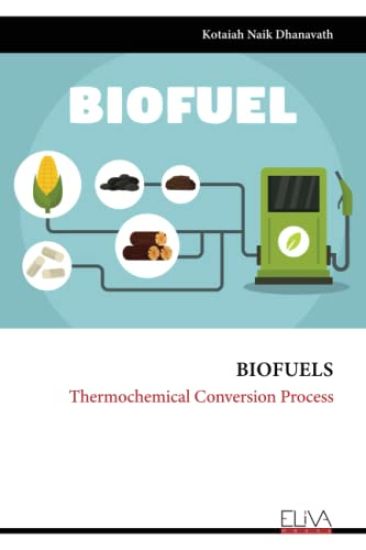
Due to an increased consumption of fossil fuel and rise in the cost of diesel and petroleum products, developing nations such as India, Sri Lanka and Bangladesh have been focusing on alternative energy resources such as the production of biodiesel from biomass or related wastes. The biodiesel can be generated from dedicated energy crops such as Karanja and Jatropha. Biomass can be used for energy, fuels and chemicals production has generated significant concerns across the globe, especially in developing nations, due to the shortage of food and cultivable land and extremely high population density. This has led to the use of non-edible biomass resources such as Karanja, Jatropha, Neem, Mahua, and Sorghum. The current book focuses on the thermochemical conversion process called pyrolysis. The pyrolysis is one of the most promising methods to produce bio-oil, bio-char and gases, from the thermal degradation of biomass in an inert atmosphere. The present study has utilized with different de-oiled seed cake generated from variety of biomass. The focus of the research work is pyrolysis of press seed cake produced from lignocellulosic biomass regardless of the type of original plant source was carried out in a fixed bed batch reactor to study the effects of temperature, retention time, and nitrogen (N2) flow rate on bio-oil and bio-char yields. In this book Response surface methodology based on Box-Behnken design was used to determine the optimum operating conditions to maximize the bio-oil and bio-char yield. The results obtained from the current study have made a significant contribution in demonstrating the value addition to various seed cake from dedicated energy crops.
Energy Resources
Satyavathi Bankupalli; Rajarathinam Parthasarathy; Kotaiah Naik Dhanavath
Eliva Press
2022
pokkari
Demand for energy and its resources are increasing every day due to the rapid growth of population and urbanization. As the major conventional energy resources like coal, petroleum and natural gas are on the verge of getting depleted in this century, biomass, which is an important renewable energy resource, can be used to produce renewable bioenergy (i.e., heat and electricity), biochemical and biofuels. However, the use of biomass for energy, fuels and chemicals production has generated significant concerns across the globe, especially in developing nations, due to the shortage of food and cultivable land and extremely high population density. This has led to the use of non-edible biomass resources such as Karanja, Jatropha, Neem, Mahua, and Sorghum. These biomass resources are widely used for extracting bio-oil in countries like India, Pakistan, Bangladesh, China, and Sri Lanka. However, after the extraction of bio-oil, a significant portion of biomass is left as a residual waste and generally referred as Press Seed Cake (PSC). These PSCs, despite having a very high organic content, are currently being landfilled. The current work focuses on the thermochemical conversion of PSCs with an aim to produce bioenergy, biochemical and biofuels. The present study has utilized PSC generated from Karanja, Mahua, Neem and Sorghum. Thermochemical conversion processes that include torrefaction, pyrolysis, gasification, and liquefaction have been investigated in detail. The focus of the thesis is therefore to study the thermochemical conversion of PSC produced from lignocellulosic biomass regardless of the type of original plant source.