Kirjojen hintavertailu – 12 859 829 kirjaa ja 27 kauppaa
Kirjailija
Kousik Das Malakar
Kirjat ja teokset yhdessä paikassa: 122 kirjaa, julkaisuja vuosilta 2019–2026, suosituimpiin kuuluu População e Ambiente: Uma Revisão (Parte-2). Vertaile teosten hintoja ja tarkista saatavuus suomalaisista kirjakaupoista.
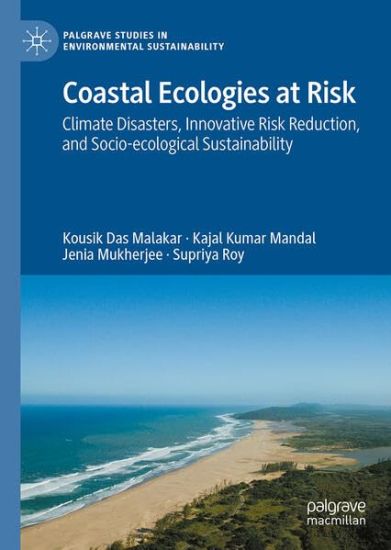
Coastal regions are increasingly vulnerable to the impacts of the climate crisis, including sea-level rise, cyclones, flooding, coastal erosion, and unsustainable development. These interconnected challenges threaten both ecosystems and livelihoods, highlighting the urgent need for innovative and inclusive approaches to disaster risk reduction. This book examines the evolving socio-ecological dimensions of climate-related disasters in coastal environments and explores the potential of participatory Geographic Information Systems (GIS) to strengthen resilience and adaptive capacity. Organised into three parts, the book first introduces key concepts, theories, and approaches related to climate disasters, geographies of coastal socio-ecological systems, and vulnerability assessment. The second part investigates contemporary challenges facing coastal communities and critically examines nature-based, community-centered, and participatory approaches to disaster risk reduction. Particular attention is given to the integration of local and Indigenous knowledge within participatory GIS frameworks for more effective and equitable decision-making. The final part presents empirical insights through field narratives and case studies that address climate adaptation, community resilience, sea-level rise, coastal flooding, migration, climate variability, Indigenous technical knowledge, sustainable management practices, and others. Bridging theory, methodology, and practice, this volume advances understanding of coastal disaster risk reduction and offers valuable insights for researchers, practitioners, policymakers, planners, students, and others engaged in climate resilience and sustainable coastal development.
Climate migration represents a multifaceted phenomenon encompassing the movement of people within and across borders in response to the impacts of the climate crisis. It is shaped by an intricate interplay of socio-ecological factors. The present book offers a comprehensive and critical exploration of the interconnections between the climate crisis, human migration, and the pursuit of socio-ecological sustainability in a rapidly transforming world. Through an integrative discussion, it discusses the processes of socio-ecological transformation and sustainability in the context of climate migration, highlighting the role of policy planning in supporting climate-affected populations and fostering resilient societies. This volume contributes to advancing scientific understanding of the geographies of climate migration among researchers, professionals, policymakers, students, and the general public, thereby promoting informed approaches to climate migration management at multiple scales. The book is structured in two parts. The first part provides a conceptual and methodological foundation, addressing the fundamentals of climate migration and migrants, socio-ecological transformation, the climate gap, justice, and social space. The second part presents real-world case studies that engage with pressing socio-ecological challenges and sustainable policy planning approaches. Overall, this book underscores the centrality of socio-ecological geographies in understanding contemporary socio-environmental challenges and in formulating equitable and sustainable responses to climate-induced migration.
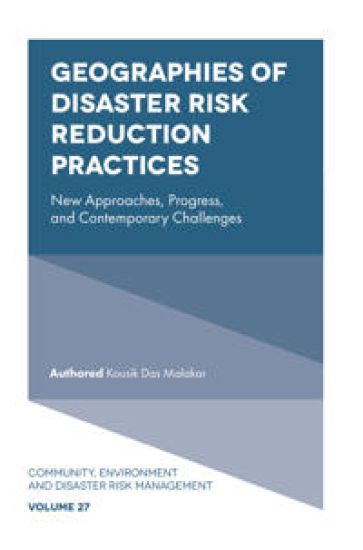
In the intricate web of socio-environmental crises across diverse geographical landscapes, grasping the intricacies of geographies and socio-spatial ecologies in disaster risk reduction practices is indispensable for global socio-ecological sustainability. In response to this imperative, this volume pioneers the development of disaster risk reduction understanding within the disaster research domain. This authored volume is structured into two parts. The initial part extensively explores the fundamentals of geographies in disaster risk reduction practices, encompassing concepts, methodologies, and challenges in disaster management, disaster preparedness, response, relief operations, resource allocation, disaster medicine, information dissemination, recovery, rehabilitation, and reconstruction. It also delves into various applications and emerging trends, management techniques, applied practices through contemporary case studies, socio-ecological challenges in disaster risk reduction, and sustainability considerations in management practices. The latter part focuses on real-world case studies within geographies and socio-spatial ecologies to examine scenarios of disaster risks, management practices, and community challenges specific to coastal regions. These case studies encompass topics such as mangrove vegetation health risks and stress, climate change adaptation strategies at the local level, shoreline change and vulnerability assessments, geographies of coastal hazards, societal vulnerability during the COVID-19 pandemic, as well as analyses of natural hazards and disaster risks, among others. This work enriches the scientific and practical understanding of mitigating disaster risks, and advocating for stakeholder integration in disaster policy planning among planners, scientists, researchers, professionals, government officials, students, and anyone else engaged in disaster research globally.
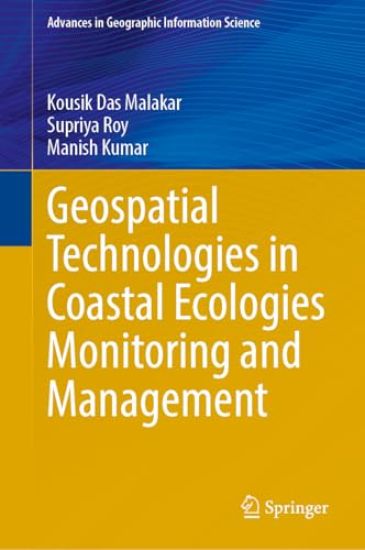
This book contributes to the advancement of scientific knowledge by demonstrating how geospatial technologies can support more effective coastal planning and management. These technologies, such as remote sensing, GIS, and GNSS, play a vital role in monitoring coastal ecosystems and offer powerful tools for data collection, analysis, visualization, and decision-making. They enhance the understanding of coastal needs and enable more informed and sustainable management strategies. Intended for scientists, professionals, researchers, planners, students, and the general public, the book promotes a deeper understanding of how geospatial tools address contemporary coastal challenges. It also emphasizes inclusive decision-making and supports the development of strategies for sustainable socio-ecological coastal systems. The book is structured into six parts. Part One introduces the fundamentals of remote sensing, including sensor networks, satellite systems, aerial imaging, photogrammetry, and air photo interpretation. Part Two covers key GIS concepts, data analysis, database management, digital image processing, and participatory GIS. Part Three explores GNSS and GPS techniques. Part Four discusses the application of geospatial tools in coastal ecological monitoring and management. Part Five presents real-world case studies and field narratives that explore a range of topics, including climatic trend analysis, shoreline dynamics modelling, mangrove canopy health, coastal land use and land cover changes, land surface temperature variations, ecological transformations, mangrove-human conflicts, climate adaptation strategies, the management of climate gaps, spatial considerations in coastal zone management, and the role of climate communication in shaping coastal narratives. And finally, Part Six examines the evolving nature of coastal research, highlighting the role of GIScience in transdisciplinary approaches and strategic decision-making.
Dieses Buch befasst sich mit der raumbezogenen Modellierung der Landoberfl chentemperatur (LST) und der Vegetationsbedingungen im Distrikt Bhiwani, Haryana, Indien, unter Verwendung fortschrittlicher GIScience-Techniken. Auf der Grundlage von LANDSAT-Satellitendaten bietet es eine umfassende raum-zeitliche Analyse von LST und Vegetationsindizes, einschlie lich NDVI (Normalized Difference Vegetation Index), VCI (Vegetation Condition Index) und SMI (Soil Moisture Index). Die Studie konzentriert sich auf die Kartierung von Temperaturschwankungen und den Zustand der Vegetation und bietet so Einblicke in Klimamuster, landwirtschaftliche Produktivit t und kologische Nachhaltigkeit. Dar ber hinaus wird die Beziehung zwischen LST und Vegetationsindizes untersucht, wobei die Auswirkungen der Landbedeckungsdynamik hervorgehoben werden. Dar ber hinaus bietet das Buch strategische Empfehlungen f r Aufforstungsinitiativen, nachhaltiges Wassermanagement, Stadtplanung und Klimaanpassung und unterstreicht deren Rolle f r ein effektives Umweltmanagement und eine nachhaltige Entwicklung. Dieses Buch dient als wertvolle Ressource f r Forscher, politische Entscheidungstr ger und Umweltplaner und unterstreicht die Rolle der GIS-Wissenschaft bei der Klima berwachung, dem Landmanagement und der nachhaltigen Entwicklung.
This book focuses on various psycho-social and socio-physical aspects of climate change and includes a wide range of case studies. Included topics are notable climate-related social thinking; climate vulnerability; transformation in socio-ecological subsystems; bioclimatological, urban bioclimatological and socio-bioclimatic ideas; disasters; policy instruments; climate justice; human rights; and sustainability. The book distinguishes itself from similar works by including a wide variety of topics and assists policy management in the current and upcoming climate crisis era. This book also addresses the Sustainable Development Goals 13 (Take Urgent Action to Combat Climate Change and Its Impacts), highlighting resilience, recovery potential and adaptive capacity, climate change measures integrated into policies and planning, and knowledge and capacity to mitigate climate change. The ideas covered in this book evolved in response to the current climate crisis, ideas that the authors believe will aid in societal management and development in the present and future. The book is a useful source for planners, geographers, professionals, academics, government officials, laypeople, and others interested in climate change.