Kirjojen hintavertailu – 12 903 725 kirjaa ja 27 kauppaa

Kirjailija

Krin Gabbard

Kirjat ja teokset yhdessä paikassa: 5 kirjaa, julkaisuja vuosilta 1996–2016, suosituimpiin kuuluu Black Magic. Vertaile teosten hintoja ja tarkista saatavuus suomalaisista kirjakaupoista.

5 kirjaa

Kirjojen julkaisuvuodet: 1996–2016.

Better Git It in Your Soul

Better Git It in Your Soul

Krin Gabbard

University of California Press
2016
sidottu
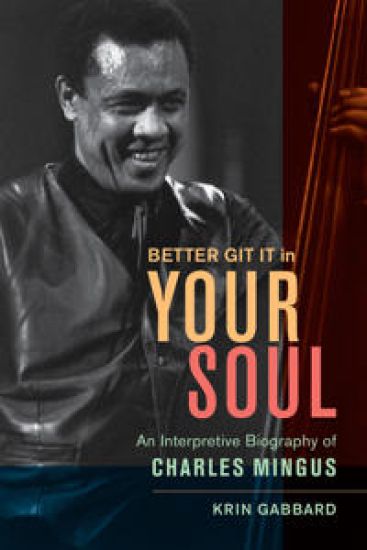
Charles Mingus is one of the most important-and most mythologized-composers and performers in jazz history. Classically trained and of mixed race, he was an outspoken innovator as well as a bandleader, composer, producer, and record-label owner. His vivid autobiography, Beneath the Underdog, has done much to shape the image of Mingus as something of a wild man: idiosyncratic musical genius with a penchant for skirt-chasing and violent outbursts. But, as the autobiography reveals, he was also a hopeless romantic. After exploring the most important events in Mingus's life, Krin Gabbard takes a careful look at Mingus as a writer as well as a composer and musician. He digs into how and why Mingus chose to do so much self-analysis, how he worked to craft his racial identity in a world that saw him simply as "black," and how his mental and physical health problems shaped his career. Gabbard sets aside the myth-making and convincingly argues that Charles Mingus created a unique language of emotions-and not just in music. Capturing many essential moments in jazz history anew, Better Git It in Your Soul will fascinate anyone who cares about jazz, African American history, and the artist's life.
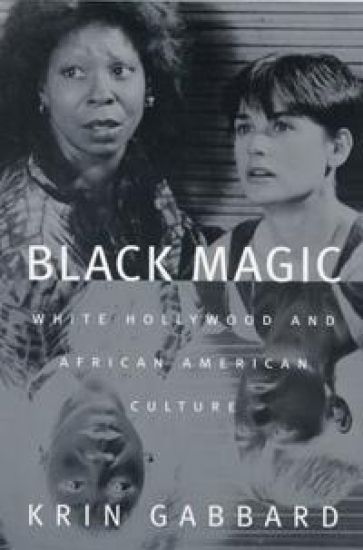
Black Magic

Black Magic

Krin Gabbard

Rutgers University Press
2004
nidottu
Why do so many African American film characters seem to have magical powers? And why do they use them only to help white people? When the actors are white, why is the sound track so commonly performed by African Americans? And why do so many white actors imitate black people when they wish to express strong emotion? As Krin Gabbard brilliantly reveals in Black Magic, we duly recognize the cultural heritage of African Americans in literature, music, and art, but there is a disturbing pattern in the roles that blacks are asked to play-particularly in the movies. Many recent films, including The Matrix, Fargo, The Green Mile, Ghost, The Talented Mr. Ripley, Pleasantville, The Bridges of Madison County, and Crumb, reveal a fascination with black music and sexuality even as they preserve the old racial hierarchies. Quite often the dependence on African American culture remains hidden-although it is almost perversely pervasive. In the final chapters of Black Magic, Gabbard looks at films by Robert Altman and Spike Lee that attempt to reverse many of these widespread trends.
Psychiatry and the Cinema

Psychiatry and the Cinema

Glen O. Gabbard; Krin Gabbard

American Psychiatric Association Publishing
1999
pokkari
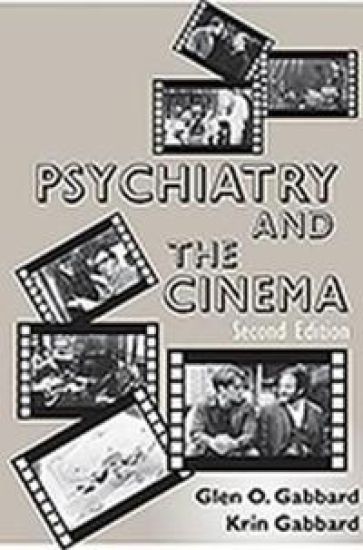
This text examines psychiatry and the cinema. It looks at the typology, mythology, and ideology of the psychiatry in movies. It also examines psychoanalytic film criticism and such issues as narcissm in the cinema, and phallic women in contemporary cinema.
Jammin' at the Margins

Jammin' at the Margins

Krin Gabbard

University of Chicago Press
1996
nidottu
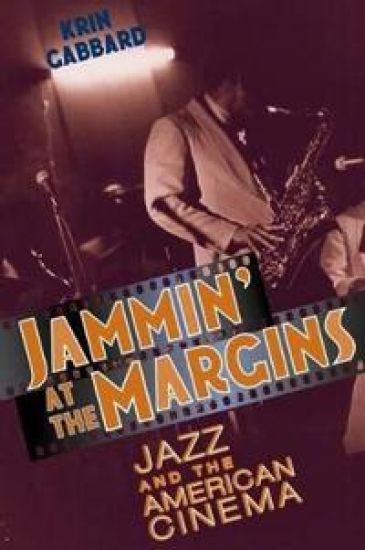
American cinema has long been fascinated by jazz and jazz musicians. Yet most jazz films aren't really about jazz. Rather, as Krin Gabbard shows, they create images of racial and sexual identity, many of which have become inseparable from popular notions of the music itself. In this work, Gabbard scrutinizes these films, exploring the fundamental obsessions that American culture has brought to jazz in the cinema. Gabbard's close look at jazz film biographies, from "The Jazz Singer" to "Bird", reveals Hollywood's reluctance to acknowledge black subjectivity. Black and even white jazz artists have become vehicles for familiar Hollywood conceptions of race, gender and sexuality. Even Scorsese's "New York, New York" and Spike Lee's "Mo' Better Blues" have failed to disentangle themselves from entrenched stereotypes and conventions. Gabbard also examines Hollywood's confrontation with jazz as an elite art form, and the role of the jazz trumpet as a crucial signifier of masculinity. Finally, he considers the acting careers of Louis Armstrong, Nat King Cole and Hoagy Carmichael; Duke Ellington's extraordinary work in films from 1929 until the late 1960s; and the forgotten career of Kay Kyser, star of nine Hollywood films and leader of a popular swing band.
Jammin' at the Margins

Jammin' at the Margins

Krin Gabbard

University of Chicago Press
1996
sidottu
American cinema has long been fascinated by jazz and jazz musicians. Yet most jazz films aren't really about jazz. Rather, as Krin Gabbard shows, they create images of racial and sexual identity, many of which have become inseparable from popular notions of the music itself. In this work, Gabbard scrutinizes these films, exploring the fundamental obsessions that American culture has brought to jazz in the cinema. Gabbard's close look at jazz film biographies, from "The Jazz Singer" to "Bird", reveals Hollywood's reluctance to acknowledge black subjectivity. Black and even white jazz artists have become vehicles for familiar Hollywood conceptions of race, gender and sexuality. Even Scorsese's "New York, New York" and Spike Lee's "Mo' Better Blues" have failed to disentangle themselves from entrenched stereotypes and conventions. Gabbard also examines Hollywood's confrontation with jazz as an elite art form, and the role of the jazz trumpet as a crucial signifier of masculinity. Finally, he considers the acting careers of Louis Armstrong, Nat King Cole and Hoagy Carmichael; Duke Ellington's extraordinary work in films from 1929 until the late 1960s; and the forgotten career of Kay Kyser, star of nine Hollywood films and leader of a popular swing band.