Kirjojen hintavertailu – 12 903 724 kirjaa ja 27 kauppaa

Kirjailija

Kris Deschouwer

Kirjat ja teokset yhdessä paikassa: 5 kirjaa, julkaisuja vuosilta 2003–2026, suosituimpiin kuuluu The Politics of Belgium. Vertaile teosten hintoja ja tarkista saatavuus suomalaisista kirjakaupoista.

5 kirjaa

Kirjojen julkaisuvuodet: 2003–2026.

The Politics of Belgium

The Politics of Belgium

Kris Deschouwer; Didier Caluwaerts; Petra Meier; Min Reuchamps; Dave Sinardet; Emilie van Haute

TAYLOR FRANCIS LTD
2026
sidottu
The third edition of this highly respected text covers the numerous political developments that have taken place in Belgium since 2012. This book covers topics such as the implementation of the sixth state reform, the rebranding of political parties with new party leaders, several elections at all levels of government (from local to European) leading to new governing coalitions, democratic innovations in several parliaments and, of course, the impact of the COVID-19 crisis and the challenges of climate changes on all political and social institutions. Key features: Gives an even-handed and analytically sophisticated account of contemporary Belgium politics. Explains the background to the territorial divide between a Dutch-speaking north and a French-speaking south that has shaped the political system and led to polarized communities and the need for institutional responses to internal conflict. Provides a thorough example of a consociational democracy, and shows how this form of democratic government, along with Belgium’s particular federal system has provided a basis – most of the time – to govern a deeply divided country. Provides a comprehensive picture of Belgian politics which helps answer the question of whether Belgium – and indeed other divided societies – can be governed in a legitimate democratic manner. This text is essential reading to students and scholars of Belgian politics and society, democracy and democratic innovations, political systems, and more broadly to European and comparative politics.

The Politics of Belgium

The Politics of Belgium

Kris Deschouwer; Didier Caluwaerts; Petra Meier; Min Reuchamps; Dave Sinardet; Emilie van Haute

TAYLOR FRANCIS LTD
2026
nidottu
The third edition of this highly respected text covers the numerous political developments that have taken place in Belgium since 2012. This book covers topics such as the implementation of the sixth state reform, the rebranding of political parties with new party leaders, several elections at all levels of government (from local to European) leading to new governing coalitions, democratic innovations in several parliaments and, of course, the impact of the COVID-19 crisis and the challenges of climate changes on all political and social institutions. Key features: Gives an even-handed and analytically sophisticated account of contemporary Belgium politics. Explains the background to the territorial divide between a Dutch-speaking north and a French-speaking south that has shaped the political system and led to polarized communities and the need for institutional responses to internal conflict. Provides a thorough example of a consociational democracy, and shows how this form of democratic government, along with Belgium’s particular federal system has provided a basis – most of the time – to govern a deeply divided country. Provides a comprehensive picture of Belgian politics which helps answer the question of whether Belgium – and indeed other divided societies – can be governed in a legitimate democratic manner. This text is essential reading to students and scholars of Belgian politics and society, democracy and democratic innovations, political systems, and more broadly to European and comparative politics.

The Politics of Belgium

The Politics of Belgium

Kris Deschouwer

Red Globe Press
2012
nidottu
Belgium set a new world record in 2011 for the time needed to form a government, taking no less than 541 days to bring together a new federal coalition. Governing a divided society like Belgium is never easy, demanding appropriate institutions and advanced political skills. In this fully revised and updated text, Kris Deschouwer gives an even-handed and analytically sophisticated account of contemporary Belgium politics. He explains the background to the territorial divide between a Dutch-speaking north and a French-speaking south that has shaped the political system and has led Belgium's polarized communities to contemplate divorce after decades of search for institutional responses to internal conflict. Deschouwer sets out the institutional arrangements of what has been called the most thorough example of a consociational democracy, and shows how this form of democratic government, along with Belgium's particular federal system has provided a basis – most of the time – to govern a deeply divided country. Fully updated to cover the latest developments, including the 2011 agreement on new constitutional reform, this leading text provides a comprehensive picture of Belgian politics which helps answer the question of whether Belgium – and indeed other divided societies – can be governed in a legitimate democratic manner.
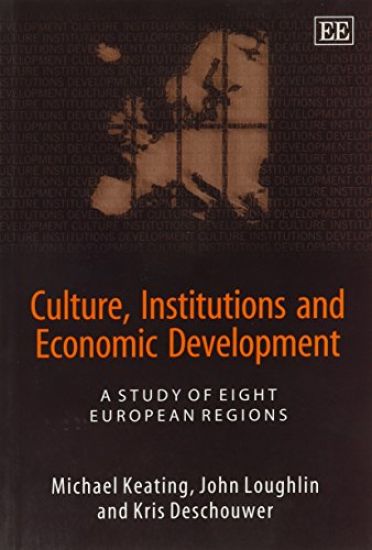
Culture, Institutions and Economic Development

Culture, Institutions and Economic Development

Michael Keating; John Loughlin; Kris Deschouwer

Edward Elgar Publishing Ltd
2005
nidottu
Regions are increasingly recognised as a key aspect of economic change in Europe, not merely as geographic spaces but also as social systems. Their history, culture, institutions and patterns of leadership mould the way in which they adapt to European and global competitive challenges. This book reviews the debate surrounding the construction of regions and presents eight case studies to illustrate how they are shaped and reshaped in a variety of different ways. The authors find that while some regions exhibit common patterns, there are significant variations, indicating that there is no definitive model of regional development. This book offers a systematic comparison of eight distinct regions and stateless nations, each with its own historical identity, but which is constantly being rebuilt in changing economic and political conditions. Avoiding economic or cultural determinism, the authors show how region-builders can shape their own responses to global challenges to produce models of development reflecting differing understandings and social compromises. Culture, Institutions and Economic Development will be warmly welcomed by academics within the fields of regional studies, European studies and political science.
Culture, Institutions and Economic Development

Culture, Institutions and Economic Development

Michael Keating; John Loughlin; Kris Deschouwer

Edward Elgar Publishing Ltd
2003
sidottu
Regions are increasingly recognised as a key aspect of economic change in Europe, not merely as geographic spaces but also as social systems. Their history, culture, institutions and patterns of leadership mould the way in which they adapt to European and global competitive challenges. This book reviews the debate surrounding the construction of regions and presents eight case studies to illustrate how they are shaped and reshaped in a variety of different ways. The authors find that while some regions exhibit common patterns, there are significant variations, indicating that there is no definitive model of regional development. This book offers a systematic comparison of eight distinct regions and stateless nations, each with its own historical identity, but which is constantly being rebuilt in changing economic and political conditions. Avoiding economic or cultural determinism, the authors show how region-builders can shape their own responses to global challenges to produce models of development reflecting differing understandings and social compromises. Culture, Institutions and Economic Development will be warmly welcomed by academics within the fields of regional studies, European studies and political science.