Kirjojen hintavertailu – 12 903 725 kirjaa ja 27 kauppaa

Kirjailija

Kristen Nawrotzki

Kirjat ja teokset yhdessä paikassa: 4 kirjaa, julkaisuja vuosilta 2013–2021, suosituimpiin kuuluu Reimagining Teaching in Early 20th Century Experimental Schools. Vertaile teosten hintoja ja tarkista saatavuus suomalaisista kirjakaupoista.

4 kirjaa

Kirjojen julkaisuvuodet: 2013–2021.

Reimagining Teaching in Early 20th Century Experimental Schools

Reimagining Teaching in Early 20th Century Experimental Schools

Alessandra Arce Hai; Helen May; Kristen Nawrotzki; Larry Prochner; Yordanka Valkanova

Springer Nature Switzerland AG
2021
nidottu
This book considers the diffusion and transfer of educational ideas through local and transcontinental networks within and across five socio-political spaces. The authors examine the social, political, and historical preconditions for the transfer of “new education” theory and practices in each period, place, and school, along with the networks of ideas and experts that supported this. The authors use historical methods to examine the schools and to pursue the story of the circulation of new ideas in education. In particular, chapters investigate how educational ideas develop within contexts, travel across boundaries, and are adapted in new contexts.
Reimagining Teaching in Early 20th Century Experimental Schools

Reimagining Teaching in Early 20th Century Experimental Schools

Alessandra Arce Hai; Helen May; Kristen Nawrotzki; Larry Prochner; Yordanka Valkanova

Springer Nature Switzerland AG
2020
sidottu
This book considers the diffusion and transfer of educational ideas through local and transcontinental networks within and across five socio-political spaces. The authors examine the social, political, and historical preconditions for the transfer of “new education” theory and practices in each period, place, and school, along with the networks of ideas and experts that supported this. The authors use historical methods to examine the schools and to pursue the story of the circulation of new ideas in education. In particular, chapters investigate how educational ideas develop within contexts, travel across boundaries, and are adapted in new contexts.
Writing History in the Digital Age

Writing History in the Digital Age

Jack Dougherty; Kristen Nawrotzki

The University of Michigan Press
2013
sidottu
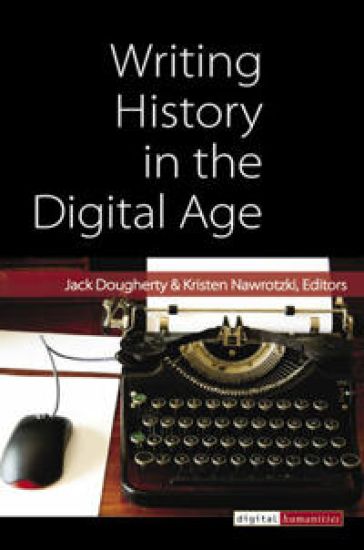
Writing History in the Digital Age began as a “what-if” experiment by posing a question: How have Internet technologies influenced how historians think, teach, author, and publish? To illustrate their answer, the contributors agreed to share the stages of their book-in-progress as it was constructed on the public web. To facilitate this innovative volume, editors Jack Dougherty and Kristen Nawrotzki designed a born-digital, open-access, and open peer review process to capture commentary from appointed experts and general readers. A customized WordPress plug-in allowed audiences to add page- and paragraph-level comments to the manuscript, transforming it into a socially networked text. The initial six-week proposal phase generated over 250 comments, and the subsequent eight-week public review of full drafts drew 942 additional comments from readers across different parts of the globe. The finished product now presents 20 essays from a wide array of notable scholars, each examining (and then breaking apart and reexamining) if and how digital and emergent technologies have changed the historical profession.
Writing History in the Digital Age

Writing History in the Digital Age

Jack Dougherty; Kristen Nawrotzki

The University of Michigan Press
2013
nidottu
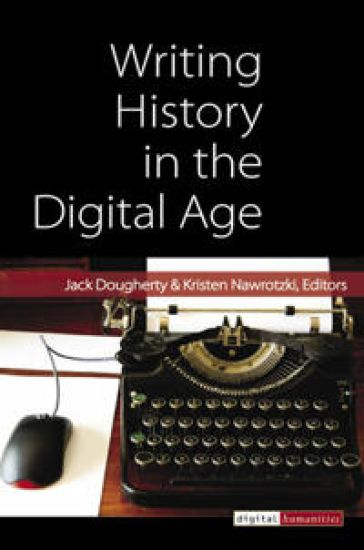
Writing History in the Digital Age began as a “what-if” experiment by posing a question: How have Internet technologies influenced how historians think, teach, author, and publish? To illustrate their answer, the contributors agreed to share the stages of their book-in-progress as it was constructed on the public web. To facilitate this innovative volume, editors Jack Dougherty and Kristen Nawrotzki designed a born-digital, open-access, and open peer review process to capture commentary from appointed experts and general readers. A customized WordPress plug-in allowed audiences to add page- and paragraph-level comments to the manuscript, transforming it into a socially networked text. The initial six-week proposal phase generated over 250 comments, and the subsequent eight-week public review of full drafts drew 942 additional comments from readers across different parts of the globe. The finished product now presents 20 essays from a wide array of notable scholars, each examining (and then breaking apart and reexamining) if and how digital and emergent technologies have changed the historical profession.