Kirjojen hintavertailu – 12 903 725 kirjaa ja 27 kauppaa

Kirjailija

Kristin Andrews

Kirjat ja teokset yhdessä paikassa: 6 kirjaa, julkaisuja vuosilta 2018–2026, suosituimpiin kuuluu Chimpanzee Rights. Vertaile teosten hintoja ja tarkista saatavuus suomalaisista kirjakaupoista.

6 kirjaa

Kirjojen julkaisuvuodet: 2018–2026.

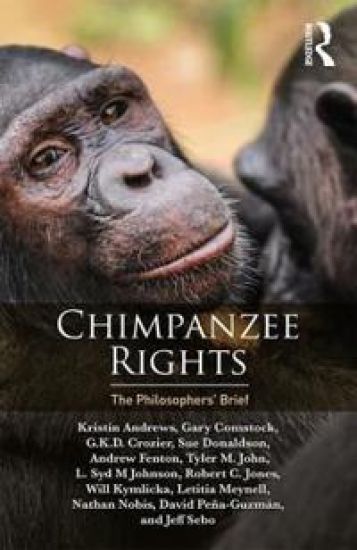
Chimpanzee Rights

Chimpanzee Rights

Kristin Andrews; Gary Comstock; Crozier G.K.D.; Sue Donaldson; Andrew Fenton; Tyler John; L. Syd M Johnson; Robert Jones; Will Kymlicka; Letitia Meynell; Nathan Nobis; David Pena-Guzman; Jeff Sebo

Routledge
2018
nidottu
Since 2013, an organization called the Nonhuman Rights Project has brought before the New York State courts an unusual request—asking for habeas corpus hearings to determine whether Kiko and Tommy, two captive chimpanzees, should be considered legal persons with the fundamental right to bodily liberty. While the courts have agreed that chimpanzees share emotional, behavioural, and cognitive similarities with humans, they have denied that chimpanzees are persons on superficial and sometimes conflicting grounds. Consequently, Kiko and Tommy remain confined as legal "things" with no rights. The major moral and legal question remains unanswered: are chimpanzees mere "things", as the law currently sees them, or can they be "persons" possessing fundamental rights? In Chimpanzee Rights: The Philosophers’ Brief, a group of renowned philosophers considers these questions. Carefully and clearly, they examine the four lines of reasoning the courts have used to deny chimpanzee personhood: species, contract, community, and capacities. None of these, they argue, merits disqualifying chimpanzees from personhood. The authors conclude that when judges face the choice between seeing Kiko and Tommy as things and seeing them as persons—the only options under current law—they should conclude that Kiko and Tommy are persons who should therefore be protected from unlawful confinement "in keeping with the best philosophical standards of rational judgment and ethical standards of justice." Chimpanzee Rights: The Philosophers’ Brief—an extended version of the amicus brief submitted to the New York Court of Appeals in Kiko’s and Tommy’s cases—goes to the heart of fundamental issues concerning animal rights, personhood, and the question of human and nonhuman nature. It is essential reading for anyone interested in these issues.

Chimpanzee Rights

Chimpanzee Rights

Kristin Andrews; Gary Comstock; Crozier G.K.D.; Sue Donaldson; Andrew Fenton; Tyler John; L. Syd M Johnson; Robert Jones; Will Kymlicka; Letitia Meynell; Nathan Nobis; David Pena-Guzman; Jeff Sebo

Routledge
2018
sidottu
Since 2013, an organization called the Nonhuman Rights Project has brought before the New York State courts an unusual request—asking for habeas corpus hearings to determine whether Kiko and Tommy, two captive chimpanzees, should be considered legal persons with the fundamental right to bodily liberty. While the courts have agreed that chimpanzees share emotional, behavioural, and cognitive similarities with humans, they have denied that chimpanzees are persons on superficial and sometimes conflicting grounds. Consequently, Kiko and Tommy remain confined as legal "things" with no rights. The major moral and legal question remains unanswered: are chimpanzees mere "things", as the law currently sees them, or can they be "persons" possessing fundamental rights? In Chimpanzee Rights: The Philosophers’ Brief, a group of renowned philosophers considers these questions. Carefully and clearly, they examine the four lines of reasoning the courts have used to deny chimpanzee personhood: species, contract, community, and capacities. None of these, they argue, merits disqualifying chimpanzees from personhood. The authors conclude that when judges face the choice between seeing Kiko and Tommy as things and seeing them as persons—the only options under current law—they should conclude that Kiko and Tommy are persons who should therefore be protected from unlawful confinement "in keeping with the best philosophical standards of rational judgment and ethical standards of justice." Chimpanzee Rights: The Philosophers’ Brief—an extended version of the amicus brief submitted to the New York Court of Appeals in Kiko’s and Tommy’s cases—goes to the heart of fundamental issues concerning animal rights, personhood, and the question of human and nonhuman nature. It is essential reading for anyone interested in these issues.

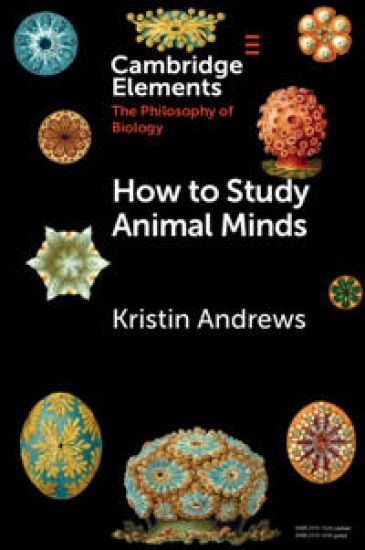
How to Study Animal Minds

How to Study Animal Minds

Kristin Andrews

Cambridge University Press
2020
pokkari

Halvin toimitettuna 30,00 €

Comparative psychology, the multidisciplinary study of animal behavior and psychology, confronts the challenge of how to study animals we find cute and easy to anthropomorphize, and animals we find odd and easy to objectify, without letting these biases negatively impact the science. In this Element, Kristin Andrews identifies and critically examines the principles of comparative psychology and shows how they can introduce other biases by objectifying animal subjects and encouraging scientists to remain detached. Andrews outlines the scientific benefits of treating animals as sentient research participants who come from their own social contexts and with whom we will be in relationship. With discussions of science's quest for objectivity, worries about romantic and killjoy theories, and debates about chimpanzee cognition between primatologists who work in the field and those in the lab, Andrews shows how scientists can address the different biases through greater integration of the subdisciplines of comparative psychology.
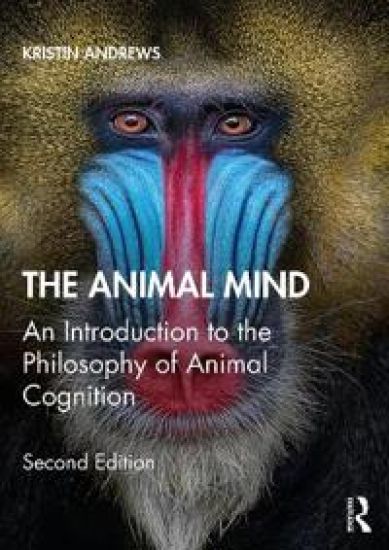
The Animal Mind

The Animal Mind

Kristin Andrews

Routledge
2020
sidottu
The philosophy of animal minds addresses profound questions about the nature of mind and the relationships between humans and other animals. In this fully revised and updated introductory text, Kristin Andrews introduces and assesses the essential topics, problems, and debates as they cut across animal cognition and philosophy of mind, citing historical and cutting-edge empirical data and case studies throughout. The second edition includes a new chapter on animal culture. There are also new sections on the evolution of consciousness and tool use in animals, as well as substantially revised sections on mental representation, belief, communication, theory of mind, animal ethics, and moral psychology. Further features such as chapter summaries, annotated further reading, and a glossary make The Animal Mind an indispensable introduction to those teaching philosophy of mind, philosophy of animal minds or animal cognition. It will also be an excellent resource for those in fields such as ethology, biology, and psychology.
The Animal Mind

The Animal Mind

Kristin Andrews

Routledge
2020
nidottu

Halvin toimitettuna 52,20 €

The philosophy of animal minds addresses profound questions about the nature of mind and the relationships between humans and other animals. In this fully revised and updated introductory text, Kristin Andrews introduces and assesses the essential topics, problems, and debates as they cut across animal cognition and philosophy of mind, citing historical and cutting-edge empirical data and case studies throughout. The second edition includes a new chapter on animal culture. There are also new sections on the evolution of consciousness and tool use in animals, as well as substantially revised sections on mental representation, belief, communication, theory of mind, animal ethics, and moral psychology. Further features such as chapter summaries, annotated further reading, and a glossary make The Animal Mind an indispensable introduction to those teaching philosophy of mind, philosophy of animal minds or animal cognition. It will also be an excellent resource for those in fields such as ethology, biology, and psychology.