Kirjojen hintavertailu – 12 903 735 kirjaa ja 27 kauppaa

Kirjailija

Kristin M Colberg

Kirjat ja teokset yhdessä paikassa: 3 kirjaa, julkaisuja vuosilta 2016–2025, suosituimpiin kuuluu The Future of Synodality. Vertaile teosten hintoja ja tarkista saatavuus suomalaisista kirjakaupoista.

3 kirjaa

Kirjojen julkaisuvuodet: 2016–2025.

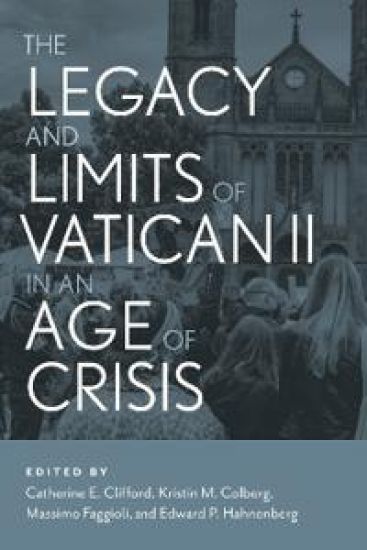
The Legacy and Limits of Vatican II in an Age of Crisis

The Legacy and Limits of Vatican II in an Age of Crisis

Massimo Faggioli; Edward P. Hahnenberg; Kristin M Colberg; Catherine Clifford

Liturgical Press
2025
pokkari
A renewed approach to the critical study of the event and documents of Vatican II, necessary for responding to the challenges facing today’s church. Packed with new insights from some of today’s most highly regarded voices on the Second Vatican Council, The Legacy and Limits of Vatican II in an Age of Crisis enacts the living tradition of the church by proposing a richer history to be told sixty years from its celebration, and a broader theology to inspire our work today. Vatican II did not anticipate our contemporary challenges, nor do its documents provide specific guidelines or step-by-step instructions for addressing them. But that does not make the council irrelevant. As a touchstone of the church’s magisterial tradition, the Second Vatican Council remains foundational for the life and mission of the Catholic Church today. However, like any monument of the tradition, the council requires ongoing investigation, critical analysis, and constant reconsideration from a diversity of contemporary perspectives if it is going to contribute to the living tradition of the church. Through historical and theological lenses, the contributors aim to rediscover forgotten voices and overlooked moments of Vatican II that may have something even more important to say today. Each chapter promises to surprise, enlighten, inspire, and teach in fresh and unexpected ways. The contributors offer readers striking insights on the council’s teaching related to the sexual abuse crisis, antiracism, politics, the Synod on Synodality, and much more. By reexamining the teaching of Vatican II from the perspective of our present ecclesial crisis, readers will have a better understanding of how its legacy and limits affect the ongoing reform of the church in a much-changed theological, ecclesial, and social landscape. Contributors: Matteo Caponi Catherine E. Clifford Kristin M. Colberg Agnès Desmazières Massimo Faggioli Theresa Gardner Edward P. Hahnenberg Timothy Hanchin Tuan A. Hoang Mary Kate Holman Jaisy A. Joseph Florian Klug William Kuncken Josephine Laffin Martin Madar Evgeniia Muzychenko William I. Orbih Bernard G. Prusak Daniel A. Rober
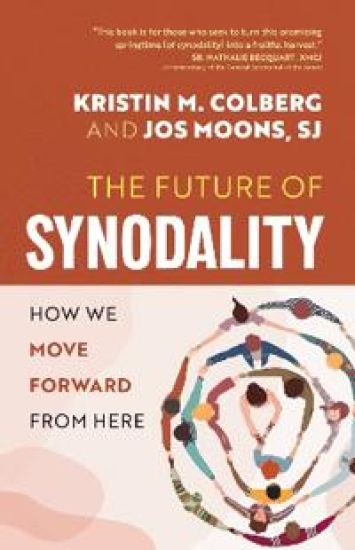
The Future of Synodality

The Future of Synodality

Kristin M Colberg; Jos Moons

Liturgical Press
2025
pokkari
Explore the historical and theological roots of a synodal church and where the path of a new, inclusive listening church leads. How can the church continue to grow in a more synodal—more participative, open-minded, inclusive, and spiritual—ecclesial style? Now that the Synod on Synodality (2021–2024) has ended, Kristin Colberg and Jos Moons begin to answer this key question in essential ways. In The Future of Synodality, they present key aspects of synodality’s origins, its theological foundations, and its recent expressions. They offer important takeaways from the synod in the context of looking toward the future, exploring the concrete transformations of a church marked by inclusive listening. Embracing the style of synodality as the church’s usual practice, the authors outline the three types of transformation required: a renewal of attitudes and behavior, a reform of ecclesial structures and procedures, and the adoption of synodal practices. The Synod on Synodality has changed the church. This book helps us understand this historic moment and learn how to walk on the synodal path toward a new beginning.
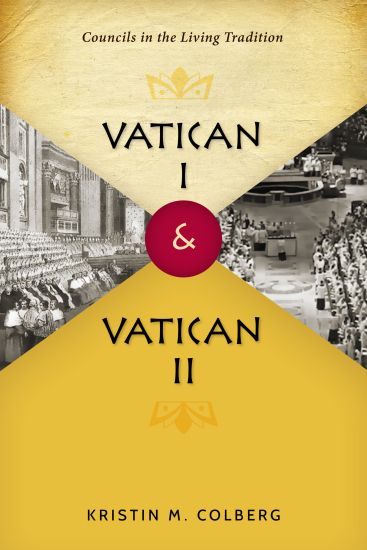
Vatican I and Vatican II

Vatican I and Vatican II

Kristin M Colberg

Liturgical Press
2016
pokkari
Vatican I and Vatican II represent two of the three ecumenical councils in modern times, yet relatively few studies have sought to understand their relation to one another. In fact, the councils are often positioned as mutually exclusive so that one must choose either Vatican I’s or Vatican II’s presentations of church and ecclesial authority. Failing to understand the relationship between these councils inhibits the church’s self-understanding and risks misinterpreting key aspects of its own tradition; further, it limits the church’s ability to teach effectively on topics of concern to modern women and men, such as authority, freedom, and ecclesiology. Vatican I and Vatican II: Councils in the Living Tradition uses the questions of what, why,and how the councils taught to frame and demonstrate significant points of continuity, complementarity, and difference between them. It argues that only by seeing both Vatican I and Vatican II as communicating vital dimensions of the Christian faith can the church’s living tradition be fully appreciated and speak meaningfully to modern Christian women and men.?