Kirjojen hintavertailu – 12 859 828 kirjaa ja 27 kauppaa

Kirjailija

Kristján Kristjánsson

Kirjat ja teokset yhdessä paikassa: 25 kirjaa, julkaisuja vuosilta 1996–2026, suosituimpiin kuuluu The Kindly Virtues. Vertaile teosten hintoja ja tarkista saatavuus suomalaisista kirjakaupoista.

Nimi esiintyy myös muodoissa: Kristjan Kristjansson, Kristjan Kristjánsson

25 kirjaa

Kirjojen julkaisuvuodet: 1996–2026.

The Kindly Virtues

The Kindly Virtues

Kristján Kristjánsson

EDWARD ELGAR PUBLISHING LTD
2026
sidottu
This enlightening book identifies a new subset of moral virtues motivated by kindness and adherence to norms of inoffensiveness and agreeableness. Kristján Kristjánsson proposes that these kindly virtues have inherent contextual and cultural specificity, distinguishing them from other kindness-motivated virtues. Kristján Kristjánsson justifies the creation of a new category of virtues distinct from both the Big-Five trait of agreeableness and Aristotle’s three virtues of agreeableness in everyday encounters. He explores considerateness and intellectual humility, assessing the independent moral value of the kindly virtues and discussing various taxonomies, including Gulliford and Roberts’ allocentric virtues. The book rejects the distinction between morality and manners amidst an increasingly harsh landscape of public debate, suggesting a new moral framework for conglomerating kindness and cultural specificity and addressing rarely discussed counterpoints to traditional virtuous behavioural guidelines. The Kindly Virtues is an essential resource for scholars and students of moral psychology, philosophy and education seeking to develop their understanding of alternative virtue frameworks. Psychologists and curriculum developers will also benefit from its insights.

Beyond Hormones

Beyond Hormones

Kristjan Kristjansson

PUBLISHER
2024
pokkari
Are you struggling to recognize yourself amidst the whirlwind of menopausal changes, wondering how to regain control? With every unexpected hot flash, unexplained weight gain, or sleepless night, it's easy to feel lost and out of control. You're not alone if you're yearning for a return to balance, inner harmony, and well-being WITHOUT resorting to quick fixes or medication-only approaches. The desire for a holistic path through menopause is growing, and times are changing - there is a shift in how we see menopause, not as a decline but as a new chapter of wisdom, fulfillment, and self-discovery. However, in a society that views this transition unfavorably, clear guidance on how to thrive through menopause is hard to come by, scarce and scattered across contradicting sources on the internet. That's why, in this book, you'll discover: Nutritional blueprints that align with your changing body's needs, empowering you to feel energized and balanced. Deep insights into the hormonal upheavals and how they influence your physical, mental, and emotional health. Practical strategies for managing common symptoms, from hot flashes to mood swings, with easy lifestyle adjustments. Movement & exercise regimens tailored to bolster your strength, flexibility, and mental clarity. Sleep solutions address the elusive quest for restful nights, reconnecting you with the healing power of sleep. A supportive perspective on sexual health, rekindling intimacy and pleasure during menopause and beyond. Steps to transform societal stereotypes into a celebration of growth, wisdom, and the beauty of evolving. This book is a beacon for every woman journeying through menopause, offering coping mechanisms and practical pathways to thrive. If you're looking for a scientifically backed yet digestible guide to thriving through menopause, look no further.
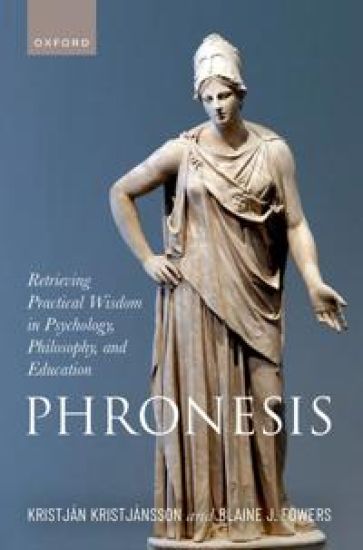
Phronesis

Phronesis

Kristján Kristjánsson; Blaine Fowers

Oxford University Press
2023
sidottu
Phronesis, or practical wisdom, has interested philosophers (and more recently psychologists) for millennia. In the last decade or so, a bandwagon of diverse academics has been working with and celebrating the notion of phronesis as a metacognitive capacity, guiding morally aspirational cognition and action. In Phronesis: Retrieving Practical Wisdom in Psychology, Philosophy, and Education, Kristján Kristjánsson and Blaine J. Fowers work through some of the relevant puzzles created by the recent phronesis discourse, filling gaps in the current literatures, and pushing the research agenda in new directions. The book does so in a way that is radically interdisciplinary and draws in equal measure on insights from psychology, philosophy, and education. Through its revised and applied Aristotelianism, the book makes a contribution to vital ongoing debates within moral psychology, moral philosophy, professional ethics, and moral education about the salience of phronesis - addressing the topic accessibly both for academics in key disciplines and for a wider readership of intellectually minded readers. In addition, it offers practical advice about the development and education of phronesis in different areas of professional practice and secondary and college-level education.
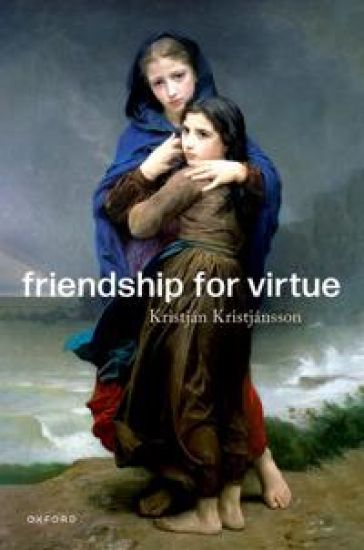
Friendship for Virtue

Friendship for Virtue

Kristján Kristjánsson

Oxford University Press
2022
sidottu
Through its revised and applied Aristotelianism, this book illuminates our understanding of friendship in moral philosophy, moral psychology, and moral education. Friendship for Virtue has four main aims. The first is to give the virtue of friendship the pride of place it deserves in contemporary Aristotle-inspired virtue ethics. The second is to integrate Aristotelian theory with recent social scientific research on friendship through mutual adjustments. The third is to retrieve Aristotelian friendship as a moral educational concept, where 'friendship for virtue' is to be understood as 'friendship for virtue development'. The fourth is to offer a more detailed and realistic account than Aristotle did of why even the best of friendships can go stale and dissolve and why the human relationships they represent are so precarious - for example in circumstances where erotic love and friendship clash.
Flourishing as the Aim of Education

Flourishing as the Aim of Education

Kristján Kristjánsson

Routledge
2021
nidottu
This book develops a conception of student flourishing as the overarching aim of education. Taking as its basis the Aristotelian concept of eudaimonia, it provides a theoretical study of the foundations of flourishing that goes well beyond Aristotle’s approach. Flourishing as the Aim of Education argues that the ‘good life’ of the student, to which education should contribute, must involve engagement with self-transcendent ideals and ignite awe-filled enchantment. It allows for social, individual and educational variance within the concept of flourishing, and it engages with a host of socio-political as well as ‘spiritual’ issues that are often overlooked in literature discussing character education. Each chapter closes with food for thought for practitioners who can directly facilitate student flourishing. An outgrowth of the author’s previous monograph Aristotelian Character Education, this book follows new directions in questioning how to educate young people towards a life of overall flourishing. It will be of great interest to researchers, academics and post-graduate students in the fields of character education, moral education and moral philosophy, as well as to educators and policy-makers.
Flourishing as the Aim of Education

Flourishing as the Aim of Education

Kristján Kristjánsson

Routledge
2019
sidottu
This book develops a conception of student flourishing as the overarching aim of education. Taking as its basis the Aristotelian concept of eudaimonia, it provides a theoretical study of the foundations of flourishing that goes well beyond Aristotle’s approach. Flourishing as the Aim of Education argues that the ‘good life’ of the student, to which education should contribute, must involve engagement with self-transcendent ideals and ignite awe-filled enchantment. It allows for social, individual and educational variance within the concept of flourishing, and it engages with a host of socio-political as well as ‘spiritual’ issues that are often overlooked in literature discussing character education. Each chapter closes with food for thought for practitioners who can directly facilitate student flourishing. An outgrowth of the author’s previous monograph Aristotelian Character Education, this book follows new directions in questioning how to educate young people towards a life of overall flourishing. It will be of great interest to researchers, academics and post-graduate students in the fields of character education, moral education and moral philosophy, as well as to educators and policy-makers.
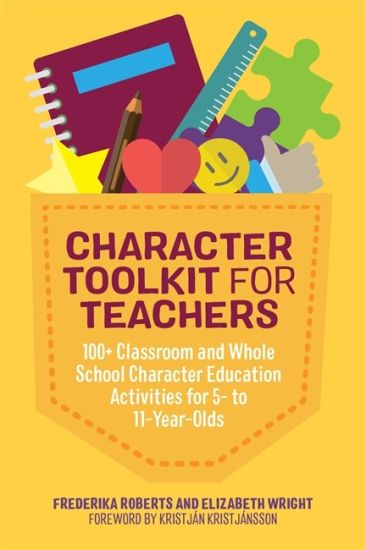
Character Toolkit for Teachers

Character Toolkit for Teachers

Frederika Roberts; Elizabeth Wright; Kristján Kristjánsson

Jessica Kingsley Publishers
2018
pokkari
This accessible and much-needed resource sets out advice on how to develop character and encourage wellbeing in pupils aged 5-11. Schools are increasingly aware of how beneficial positive character skills can be, but resources on how to develop them are scarce. This book gives teachers the means to promote gratitude, positive emotions, character strengths, and positive relationships through 100+ easy-to-implement activities such as student diaries, classroom displays and letter writing campaigns. It also includes tools and strategies that go beyond the classroom, helping to embed character education into the culture and ethos of the entire school. Each chapter will include a short introduction to the relevant theoretical background, and all activities are based on validated character education and positive psychology interventions. Bite-sized and practical, and full of ideas that can be dipped in and out of in the classroom, this is an ideal book for busy teachers.
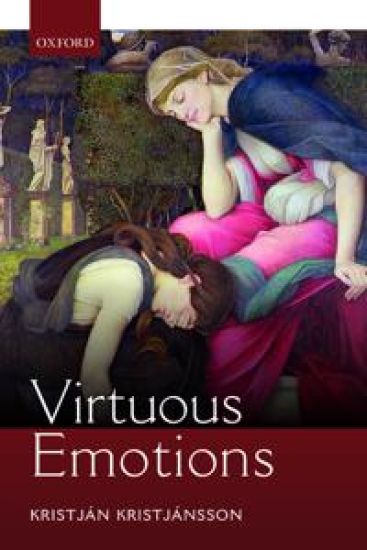
Virtuous Emotions

Virtuous Emotions

Kristján Kristjánsson

Oxford University Press
2018
sidottu
Many people are drawn towards virtue ethics because of the central place it gives to emotions in the good life. Yet it may seem odd to evaluate emotions as virtuous or non-virtuous, for how can we be held responsible for those powerful feelings that simply engulf us? And how can education help us to manage our emotional lives? The aim of this book is to offer readers a new Aristotelian analysis and moral justification of a number of emotions that Aristotle did not mention (awe, grief, and jealousy), or relegated, at best, to the level of the semi-virtuous (shame), or made disparaging remarks about (gratitude), or rejected explicitly (pity, understood as pain at another person's deserved bad fortune). Kristján Kristjánsson argues that there are good Aristotelian reasons for understanding those emotions either as virtuous or as indirectly conducive to virtue. Virtuous Emotions begins with an overview of Aristotle's ideas on the nature of emotions and of emotional value, and concludes with an account of Aristotelian emotion education.
Teaching Character and Virtue in Schools

Teaching Character and Virtue in Schools

James Arthur; Kristján Kristjánsson; Tom Harrison; Wouter Sanderse; Daniel Wright

CRC Press Inc
2017
nidottu
Teaching Character and Virtue in Schools addresses the contemporary issues of quantification and measurement in educational settings. The authors draw on the research of the Jubilee Centre at the University of Birmingham in order to investigate the concern that the conventional wisdom, sound judgement and professional discretion of teachers is being diminished and control mistakenly given over to administrators, policymakers and inspectors which in turn is negatively effecting pupils’ character development. The books calls for subject competence to be complemented by practical wisdom and good character in teaching staff. It posits that the constituent virtues of good character can be learned and taught, that education is an intrinsically moral enterprise and that character education should be intentional, organised and reflective. The book draws on the Jubilee Centre’s expertise in support of its claims and successfully integrates the fields of educational studies, psychology, sociology, philosophy and theology in its examination of contemporary educational practices and their wider effect on society as a whole. It offers sample lessons as well as a framework for character education in schools. The book encourages the view that character education is about helping students grasp what is ethically important and how to act for the right reasons so that they can become more autonomous and reflective individuals within the framework of a democratic society. Particularly interested readers will be educational leaders, teachers, those undertaking research in the field of education as well as policy analysts with a keen interest in developing the character and good sense of learners today.
Justice and Desert-Based Emotions

Justice and Desert-Based Emotions

Kristján Kristjánsson

Routledge
2017
nidottu
The clear message proposed in this book is that justice matters for morality and desert matters for justice - and that emotions matter for desert, justice and morality. Moreover, and no less importantly, justice education needs to take all those facts into consideration. Kristján Kristjánsson’s new book falls on the cutting edge of the latest developments in justice discourse, both in philosophy and in the social sciences. Written from a philosophical perspective, it gives an accessible but penetrating exploration of various interlocking and interdisciplinary themes relating to justice. Kristjánsson justifies the necessary interplay between philosophers and social scientists dealing with justice, probes the role of desert in justice and explains the rising interest in the emotionality of justice. He then analyses the main desert-based emotions, connects his discussion to recent trends in developmental and social psychology, offers a moral justification of desert and desert-based emotions, and concludes by applying all those ideas in a close study of how justice and desert should be handled in moral education at school. Kristjánsson deftly weaves together insights from disparate academic areas relevant for justice, in general, and desert, in particular. This is an engaging, eye-opening and provocative book that should excite anyone interested in justice discourse and help generate debate in different areas related to justice: philosophical, psychological and educational.
Aristotelian Character Education

Aristotelian Character Education

Kristján Kristjánsson

Routledge
2017
nidottu
This book provides a reconstruction of Aristotelian character education, shedding new light on what moral character really is, and how it can be highlighted, measured, nurtured and taught in current schooling. Arguing that many recent approaches to character education understand character in exclusively amoral, instrumentalist terms, Kristjánsson proposes a coherent, plausible and up-to-date concept, retaining the overall structure of Aristotelian character education. After discussing and debunking popular myths about Aristotelian character education, subsequent chapters focus on the practical ramifications and methodologies of character education. These include measuring virtue and morality, asking whether Aristotelian character education can salvage the effects of bad upbringing, and considering implications for teacher training and classroom practice. The book rejuvenates time-honoured principles of the development of virtues in young people, at a time when ‘character’ features prominently in educational agendas and parental concerns over school education systems. Offering an interdisciplinary perspective which draws from the disciplines of education, psychology, philosophy and sociology, this book will appeal to researchers, academics and students wanting a greater insight into character education.
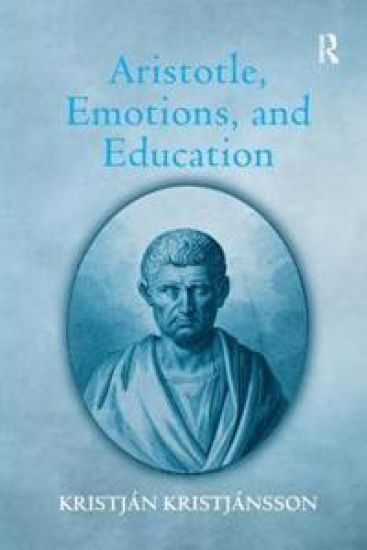
Aristotle, Emotions, and Education

Aristotle, Emotions, and Education

Kristján Kristjánsson

Routledge
2016
nidottu
What can Aristotle teach us that is relevant to contemporary moral and educational concerns? What can we learn from him about the nature of moral development, the justifiability and educability of emotions, the possibility of friendship between parents and their children, or the fundamental aims of teaching? The message of this book is that Aristotle has much to teach us about those issues and many others. In a formidable display of boundary-breaking scholarship, drawing upon the domains of philosophy, education and psychology, Kristján Kristjánsson analyses and dispels myriad misconceptions about Aristotle’s views on morality, emotions and education that abound in the current literature - including the claims of the emotional intelligence theorists that they have revitalised Aristotle’s message for the present day. The book proceeds by enlightening and astute forays into areas covered by Aristotle’s canonical works, while simultaneously gauging their pertinence for recent trends in moral education. This is an arresting book on how to balance the demands of head and heart: a book that deepens the contemporary discourse on emotion cultivation and virtuous living and one that will excite any student of moral education, whether academic or practitioner.
Teaching Character and Virtue in Schools

Teaching Character and Virtue in Schools

James Arthur; Kristján Kristjánsson; Tom Harrison; Wouter Sanderse; Daniel Wright

Routledge
2016
sidottu
Teaching Character and Virtue in Schools addresses the contemporary issues of quantification and measurement in educational settings. The authors draw on the research of the Jubilee Centre at the University of Birmingham in order to investigate the concern that the conventional wisdom, sound judgement and professional discretion of teachers is being diminished and control mistakenly given over to administrators, policymakers and inspectors which in turn is negatively effecting pupils’ character development. The books calls for subject competence to be complemented by practical wisdom and good character in teaching staff. It posits that the constituent virtues of good character can be learned and taught, that education is an intrinsically moral enterprise and that character education should be intentional, organised and reflective. The book draws on the Jubilee Centre’s expertise in support of its claims and successfully integrates the fields of educational studies, psychology, sociology, philosophy and theology in its examination of contemporary educational practices and their wider effect on society as a whole. It offers sample lessons as well as a framework for character education in schools. The book encourages the view that character education is about helping students grasp what is ethically important and how to act for the right reasons so that they can become more autonomous and reflective individuals within the framework of a democratic society. Particularly interested readers will be educational leaders, teachers, those undertaking research in the field of education as well as policy analysts with a keen interest in developing the character and good sense of learners today.
Virtues and Vices in Positive Psychology

Virtues and Vices in Positive Psychology

Kristján Kristjánsson

Cambridge University Press
2015
pokkari
Positive psychology is one of the biggest growth industries in the discipline of psychology. At the present time, the subfield of 'positive education' seems poised to take the world of education and teacher training by storm. In this first book-length philosophical study of positive psychology, Professor Kristján Kristjánsson subjects positive psychology's recent inroads into virtue theory and virtue education to sustained conceptual and moral scrutiny. Professor Kristjánsson's interdisciplinary perspective constructively integrates insights, evidence and considerations from social science and philosophy in a way that is easily accessible to the general reader. He offers an extended critique of positive psychology generally and 'positive education' in particular, exploring the philosophical assumptions, underpinnings and implications of these academic trends in detail. This provocative book will excite anyone interested in cutting-edge research on positive psychology and on the virtues that lie at the intersection of psychology, philosophy of mind, moral philosophy, education, and daily life.
Aristotelian Character Education

Aristotelian Character Education

Kristján Kristjánsson

Routledge
2015
sidottu
This book provides a reconstruction of Aristotelian character education, shedding new light on what moral character really is, and how it can be highlighted, measured, nurtured and taught in current schooling. Arguing that many recent approaches to character education understand character in exclusively amoral, instrumentalist terms, Kristjánsson proposes a coherent, plausible and up-to-date concept, retaining the overall structure of Aristotelian character education. After discussing and debunking popular myths about Aristotelian character education, subsequent chapters focus on the practical ramifications and methodologies of character education. These include measuring virtue and morality, asking whether Aristotelian character education can salvage the effects of bad upbringing, and considering implications for teacher training and classroom practice. The book rejuvenates time-honoured principles of the development of virtues in young people, at a time when ‘character’ features prominently in educational agendas and parental concerns over school education systems. Offering an interdisciplinary perspective which draws from the disciplines of education, psychology, philosophy and sociology, this book will appeal to researchers, academics and students wanting a greater insight into character education.
Virtues and Vices in Positive Psychology

Virtues and Vices in Positive Psychology

Kristján Kristjánsson

Cambridge University Press
2013
sidottu
Positive psychology is one of the biggest growth industries in the discipline of psychology. At the present time, the subfield of 'positive education' seems poised to take the world of education and teacher training by storm. In this first book-length philosophical study of positive psychology, Professor Kristján Kristjánsson subjects positive psychology's recent inroads into virtue theory and virtue education to sustained conceptual and moral scrutiny. Professor Kristjánsson's interdisciplinary perspective constructively integrates insights, evidence and considerations from social science and philosophy in a way that is easily accessible to the general reader. He offers an extended critique of positive psychology generally and 'positive education' in particular, exploring the philosophical assumptions, underpinnings and implications of these academic trends in detail. This provocative book will excite anyone interested in cutting-edge research on positive psychology and on the virtues that lie at the intersection of psychology, philosophy of mind, moral philosophy, education, and daily life.
The Self and its Emotions

The Self and its Emotions

Kristján Kristjánsson

Cambridge University Press
2012
pokkari
If there is one value that seems beyond reproach in modernity, it is that of the self and the terms that cluster around it, such as self-esteem, self-confidence and self-respect. It is not clear, however, that all those who invoke the self really know what they are talking about, or that they are all talking about the same thing. What is this thing called 'self', then, and what is its psychological, philosophical and educational salience? More specifically, what role do emotions play in the creation and constitution of the self? This book proposes a realist, emotion-grounded conception of selfhood. In arguing for a closer link between selfhood and emotion than has been previously suggested, the author critically explores and integrates self research from diverse academic fields. This is a provocative book that should excite anyone interested in cutting-edge research on self-issues and emotions that lies at the intersection of psychology, philosophy of mind, moral philosophy and moral education.
The Self and its Emotions

The Self and its Emotions

Kristján Kristjánsson

Cambridge University Press
2010
sidottu
If there is one value that seems beyond reproach in modernity, it is that of the self and the terms that cluster around it, such as self-esteem, self-confidence and self-respect. It is not clear, however, that all those who invoke the self really know what they are talking about, or that they are all talking about the same thing. What is this thing called 'self', then, and what is its psychological, philosophical and educational salience? More specifically, what role do emotions play in the creation and constitution of the self? This book proposes a realist, emotion-grounded conception of selfhood. In arguing for a closer link between selfhood and emotion than has been previously suggested, the author critically explores and integrates self research from diverse academic fields. This is a provocative book that should excite anyone interested in cutting-edge research on self-issues and emotions that lies at the intersection of psychology, philosophy of mind, moral philosophy and moral education.
Social Freedom

Social Freedom

Kristjan Kristjánsson

Cambridge University Press
2007
pokkari
When is it correct to say that a person's freedom is restricted? Can poverty constrain freedom? Can you constrain your own freedom, for instance through weakness of the will or self-deception, and are you not truly free unless you act on a rational choice? Kristján Kristjánsson offers a critical analysis of the main components of a theory of negative liberty: the nature of obstacles and constraints, the weight of obstacles and the relation of freedom to power and autonomy. Through this discussion, which examines much of the contemporary work on political freedom, he develops his own theory of negative liberty, the so-called 'responsibility view', which meets many of the goals of advocates of positive liberty while retaining its distinctive 'negative' nature. He also argues for, and implements, a method of naturalistic revision as a way of solving conceptual disputes in social philosophy.