
Kirjojen hintavertailu – 12 859 826 kirjaa ja 27 kauppaa

Kirjailija

Krzysztof Pancerz

Kirjat ja teokset yhdessä paikassa: 2 kirjaa, julkaisuja vuodelta 2018, suosituimpiin kuuluu High-Level Models of Unconventional Computations. Vertaile teosten hintoja ja tarkista saatavuus suomalaisista kirjakaupoista.

2 kirjaa

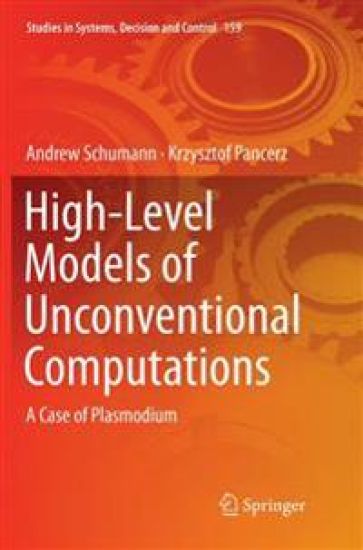
High-Level Models of Unconventional Computations

High-Level Models of Unconventional Computations

Andrew Schumann; Krzysztof Pancerz

Springer Nature Switzerland AG
2018
nidottu
This book shows that the plasmodium of Physarum polycephalum can be considered a natural labelled transition system, and based on this, it proposes high-level programming models for controlling the plasmodium behaviour. The presented programming is a form of pure behaviourism: the authors consider the possibility of simulating all basic stimulus–reaction relations. As plasmodium is a good experimental medium for behaviouristic models, the book applies the programming tools for modelling plasmodia as unconventional computers in different behavioural sciences based on studying the stimulus–reaction relations. The authors examine these relations within the framework of a bio-inspired game theory on plasmodia they have developed i.e. within an experimental game theory, where, on the one hand, all basic definitions are verified in experiments with Physarum polycephalum and Badhamia utricularis and, on the other hand, all basic algorithms are implemented in the object-oriented language for simulations of plasmodia. The results allow the authors to propose that the plasmodium can be a model for concurrent games and context-based games.
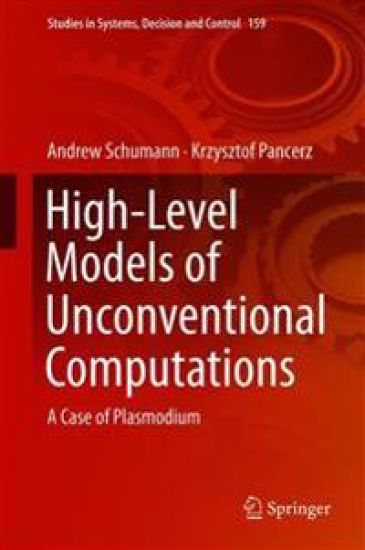
High-Level Models of Unconventional Computations

High-Level Models of Unconventional Computations

Andrew Schumann; Krzysztof Pancerz

Springer International Publishing AG
2018
sidottu
This book shows that the plasmodium of Physarum polycephalum can be considered a natural labelled transition system, and based on this, it proposes high-level programming models for controlling the plasmodium behaviour. The presented programming is a form of pure behaviourism: the authors consider the possibility of simulating all basic stimulus–reaction relations. As plasmodium is a good experimental medium for behaviouristic models, the book applies the programming tools for modelling plasmodia as unconventional computers in different behavioural sciences based on studying the stimulus–reaction relations. The authors examine these relations within the framework of a bio-inspired game theory on plasmodia they have developed i.e. within an experimental game theory, where, on the one hand, all basic definitions are verified in experiments with Physarum polycephalum and Badhamia utricularis and, on the other hand, all basic algorithms are implemented in the object-oriented language for simulations of plasmodia. The results allow the authors to propose that the plasmodium can be a model for concurrent games and context-based games.