Kirjojen hintavertailu – 12 903 725 kirjaa ja 27 kauppaa

Kirjailija

Kumkum Bhattacharyya

Kirjat ja teokset yhdessä paikassa: 3 kirjaa, julkaisuja vuosilta 2011–2019, suosituimpiin kuuluu The Lower Damodar River, India. Vertaile teosten hintoja ja tarkista saatavuus suomalaisista kirjakaupoista.

3 kirjaa

Kirjojen julkaisuvuodet: 2011–2019.

Reservoir Sedimentation

Reservoir Sedimentation

Kumkum Bhattacharyya; Vijay P. Singh

CRC Press
2019
sidottu
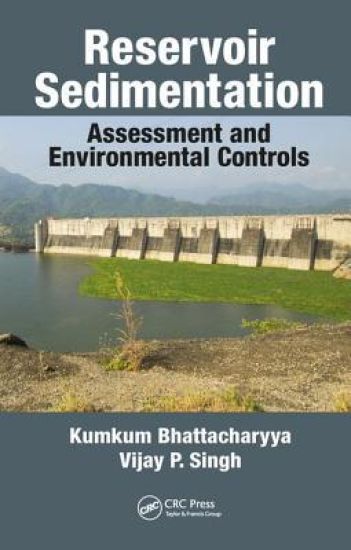
Reservoir Sedimentation: Assessment and Environmental Controls appraises the issues of sedimentation in reservoirs and discusses measures that can be employed for the effective management of sediment to prolong the operational life of reservoirs. It provides information for professional consultants and policymakers to enable them to manage dams in the best possible way, in order to ensure their sustainability as well as the sustainability of water resources in general. It examines the effects of anthropogenic intervention and management of sediment in dams and reservoirs, as water resources become more sensitive and the demand for clean water continues to increase. Features: Examines the issue of sedimentation in dams and reservoirs and presents water management strategies to alleviate environmental issues Presents methods to help ensure the environmental sustainability of dams and reservoirs, as well as the sustainability of water resources- with consideration of climate change and increased demand Illustrates the spatial distribution of sedimentation characteristics for several dams using geographic information systems (GIS) Explains the relationships between loss in capacity and catchment characteristics Examines regional variation in sediment yield, defines geomorphic regions on the basis of similar hydrometeorology, physiography, geology, and vegetation affecting reservoirs
The Lower Damodar River, India

The Lower Damodar River, India

Kumkum Bhattacharyya

Springer
2014
nidottu
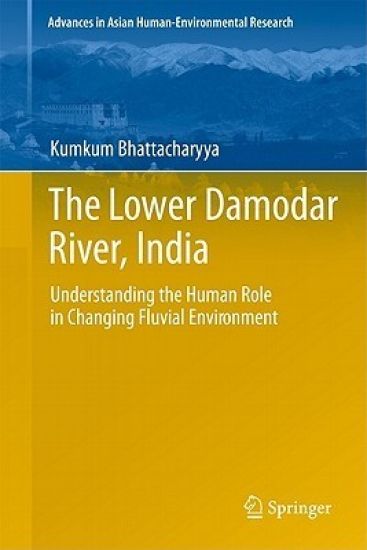
Interweaving the human aspects of river control with analysis of hydro-physical data, including historical data over the last few centuries, this monograph is a comprehensive evaluation of the Damodar’s lower reaches. While the Damodar River isn’t an exceptional tropical river, nor does it feature classic examples of river control structures, it is unusual and worthy of study due to the fact that nowhere else in the tropical world have riverine sandbars been used as a resource base as well as for permanent settlements. Based on their knowledge of river stages, the inhabitants have fine-tuned their land use to flood events, applying a concept of flood zoning to the riverbed. Every available space has been utilized rationally and judiciously. This rare human-environmental study analyzes the remarkable way in which immigrants unfamiliar with the riverine environment have adapted to the altered hydrologic regime of the river. In doing so they have demonstrated a sophisticated understanding of the flood regime and the vagaries of an unpromising environment in their land use, cropping and settlement patterns. Spurred on by restricted social and economic mobility and sometimes political constraints, these self-settled refugees have learned to adapt to their environment and live with the floods. Bhattacharyya’s text is particularly timely, as anthropogenic processes of this kind have not been adequately studied by geographers.
The Lower Damodar River, India

The Lower Damodar River, India

Kumkum Bhattacharyya

Springer
2011
sidottu
Interweaving the human aspects of river control with analysis of hydro-physical data, including historical data over the last few centuries, this monograph is a comprehensive evaluation of the Damodar’s lower reaches. While the Damodar River isn’t an exceptional tropical river, nor does it feature classic examples of river control structures, it is unusual and worthy of study due to the fact that nowhere else in the tropical world have riverine sandbars been used as a resource base as well as for permanent settlements. Based on their knowledge of river stages, the inhabitants have fine-tuned their land use to flood events, applying a concept of flood zoning to the riverbed. Every available space has been utilized rationally and judiciously. This rare human-environmental study analyzes the remarkable way in which immigrants unfamiliar with the riverine environment have adapted to the altered hydrologic regime of the river. In doing so they have demonstrated a sophisticated understanding of the flood regime and the vagaries of an unpromising environment in their land use, cropping and settlement patterns. Spurred on by restricted social and economic mobility and sometimes political constraints, these self-settled refugees have learned to adapt to their environment and live with the floods. Bhattacharyya’s text is particularly timely, as anthropogenic processes of this kind have not been adequately studied by geographers.