Kirjojen hintavertailu – 12 859 818 kirjaa ja 27 kauppaa

Kirjailija

Kuntala Lahiri-Dutt

Kirjat ja teokset yhdessä paikassa: 5 kirjaa, julkaisuja vuosilta 2013–2026, suosituimpiin kuuluu Everyday Justice in India's Coal Transition. Vertaile teosten hintoja ja tarkista saatavuus suomalaisista kirjakaupoista.

5 kirjaa

Kirjojen julkaisuvuodet: 2013–2026.

Everyday Justice in India's Coal Transition

Everyday Justice in India's Coal Transition

Kuntala Lahiri-Dutt; Patrik Oskarsson

Oxford University Press
2026
sidottu
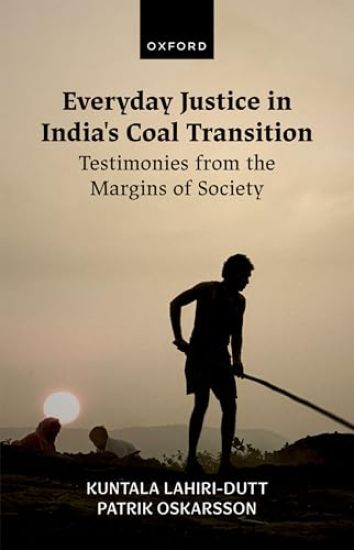
Everyday Justice in India's Coal Transition reimagines the concept of justice by exploring what a 'just transition' away from coal could look like in the Indian context. It defines 'everyday justice' more broadly to include informal economies and labour and the realities of human lives that have been fundamentally altered by coal mining. In doing so, it acknowledges the rights of local communities to make choices about their own future, have attachments to their own place and other local people, and finally, participate in political decisions and hold property. It builds a compelling case for everyday justice in India's coal transition through three kinds of evidence: testimonies collected from the same individuals over more than two decades, beginning in the late 1990s, to present a temporal view of their altered livelihoods and worldviews; a detailed examination of coal production and transport by various agents and unconventional labour arrangements therein; and the degradation of the landscape and decay of peasantry in older coal mining regions situated near the Jharkhand region in eastern India. Through decades of research, observation, interaction, and conversation with people, Lahiri-Dutt and Oskarsson provide vital insights for those aiming to understand grassroots perspectives and the need for multiple approaches to justice.
The Coal Nation

The Coal Nation

Kuntala Lahiri-Dutt

Routledge
2016
nidottu
Social science research is emerging on a range of issues around large and small-scale mining, connecting them to broader social, cultural, political, historical and economic factors rather than purely measuring the environmental impacts of mining. Within this broader context of global scholarly attention on extractive industries, this book explores two specific contexts: the cultural politics of coal and coal mining, within the context of one particular country, India, which is the third largest coal producer in the world. Both contexts are special; with its separate Ministry, coal occupies pride of place in contemporary India, shaping the energy future and influencing the economic and political milieu of the country. The supremacy attributed to coal mining in contemporary India represents how ’coal nationalism’ has replaced ’coal colonialism’ in the country, turning this commodity into an icon, a national symbol. In recent years the extraction of coal in forest-covered resource peripheries has dispossessed and pauperised many tribal and rural communities who have used these resource-rich lands for their livelihoods for generations. The combustion of coal to produce electricity constitutes the compelling need, and the factor that prevents the Indian state from fully engaging with the impending realities of a climate-changed future. All these reasons make the timing of this book of crucial importance. In particular, The Coal Nation explores the complex history of coal in India; from its colonial legacies to contemporary cultural and social impacts of mining; land ownership and moral resource rights; protective legislation for coal as well as for the indigenous and local communities; the question of legality, illegitimacy and illicit mining and of social justice. Presenting cutting-edge multidisciplinary social science research on coal and mining in India, The Coal Nation initiates a productive dialogue amongst academics and between them and activists.
The Coal Nation

The Coal Nation

Kuntala Lahiri-Dutt

Routledge
2014
sidottu
Social science research is emerging on a range of issues around large and small-scale mining, connecting them to broader social, cultural, political, historical and economic factors rather than purely measuring the environmental impacts of mining. Within this broader context of global scholarly attention on extractive industries, this book explores two specific contexts: the cultural politics of coal and coal mining, within the context of one particular country, India, which is the third largest coal producer in the world. Both contexts are special; with its separate Ministry, coal occupies pride of place in contemporary India, shaping the energy future and influencing the economic and political milieu of the country. The supremacy attributed to coal mining in contemporary India represents how ’coal nationalism’ has replaced ’coal colonialism’ in the country, turning this commodity into an icon, a national symbol. In recent years the extraction of coal in forest-covered resource peripheries has dispossessed and pauperised many tribal and rural communities who have used these resource-rich lands for their livelihoods for generations. The combustion of coal to produce electricity constitutes the compelling need, and the factor that prevents the Indian state from fully engaging with the impending realities of a climate-changed future. All these reasons make the timing of this book of crucial importance. In particular, The Coal Nation explores the complex history of coal in India; from its colonial legacies to contemporary cultural and social impacts of mining; land ownership and moral resource rights; protective legislation for coal as well as for the indigenous and local communities; the question of legality, illegitimacy and illicit mining and of social justice. Presenting cutting-edge multidisciplinary social science research on coal and mining in India, The Coal Nation initiates a productive dialogue amongst academics and between them and activists.
Dancing with the River

Dancing with the River

Kuntala Lahiri-Dutt; Gopa Samanta

Yale University Press
2013
sidottu
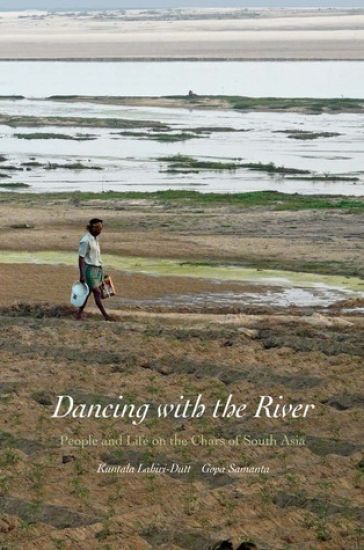
An intimate glimpse into the microcosmic world of “hybrid landscapes” and their inhabitantsWith this book Kuntala Lahiri-Dutt and Gopa Samanta offer an intimate glimpse into the microcosmic world of “hybrid environments.” Focusing on chars—the part-land, part-water, low-lying sandy masses that exist within the riverbeds in the floodplains of lower Bengal—the authors show how, both as real-life examples and as metaphors, chars straddle the conventional categories of land and water, and how people who live on them fluctuate between legitimacy and illegitimacy. The result, a study of human habitation in the nebulous space between land and water, charts a new way of thinking about land, people, and people's ways of life.