
Kirjailija
Kurt Gödel
Kirjat ja teokset yhdessä paikassa: 24 kirjaa, julkaisuja vuosilta 1940–2026, suosituimpiin kuuluu Kurt Gödel: Collected Works: Volume II. Vertaile teosten hintoja ja tarkista saatavuus suomalaisista kirjakaupoista.
Nimi esiintyy myös muodoissa: Kurt Godel
24 kirjaa
Kirjojen julkaisuvuodet: 1940–2026.
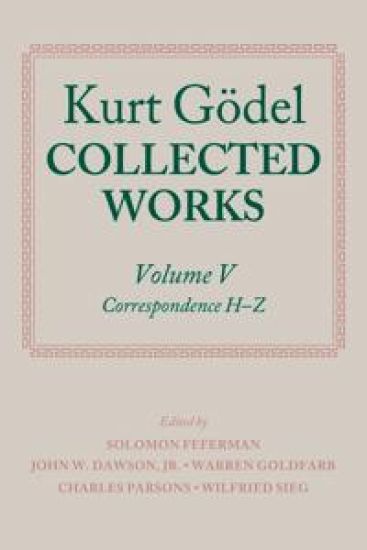
Kurt Gödel (1906 - 1978) was the most outstanding logician of the twentieth century, famous for his hallmark works on the completeness of logic, the incompleteness of number theory, and the consistency of the axiom of choice and the continuum hypothesis. He is also noted for his work on constructivity, the decision problem, and the foundations of computability theory, as well as for the strong individuality of his writings on the philosophy of mathematics. He is less well known for his discovery of unusual cosmological models for Einstein's equations, in theory permitting time travel into the past. The Collected Works is a landmark resource that draws together a lifetime of creative thought and accomplishment. The first two volumes were devoted to Gödel's publications in full (both in original and translation), and the third volume featured a wide selection of unpublished articles and lecture texts found in Gödel's Nachlass. These long-awaited final two volumes contain Gödel's correspondence of logical, philosophical, and scientific interest. Volume V, published for the first time in paperback, includes H to Z as well as a full inventory of Gödel's Nachlass, while Volume IV covers A to G. All volumes include introductory notes that provide extensive explanatory and historical commentary on each body of work, English translations of material originally written in German (some transcribed from the Gabelsberger shorthand), and a complete bibliography of all works cited. Kurt Gödel: Collected Works is designed to be useful and accessible to as wide an audience as possible without sacrificing scientific or historical accuracy. The only comprehensive edition of Gödel's work available, it will be an essential part of the working library of professionals and students in logic, mathematics, philosophy, history of science, and computer science and all others who wish to be acquainted with one of the great minds of the twentieth century.
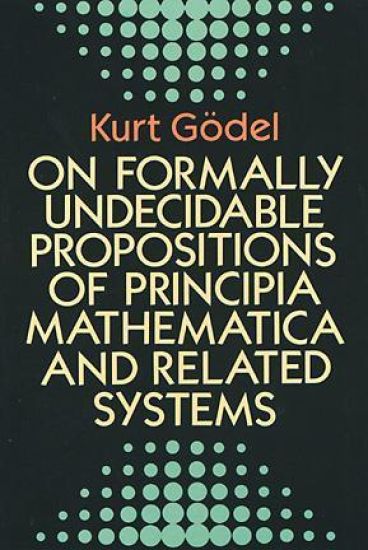
On Formally Undecidable Propositions of "Principia Mathematica" and Related Systems
Kurt Godel
Dover Publications Inc.
2003
nidottu
First English translation of revolutionary paper (1931) that established that even in elementary parts of arithmetic, there are propositions which cannot be proved or disproved within the system. It is thus uncertain that the basic axioms of arithmetic will not give rise to contradictions. Introduction by R. B. Braithwaite.
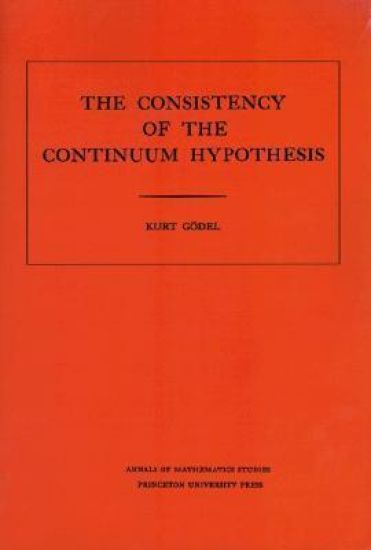
Kurt Godel, mathematician and logician, was one of the most influential thinkers of the twentieth century. Godel fled Nazi Germany, fearing for his Jewish wife and fed up with Nazi interference in the affairs of the mathematics institute at the University of Gottingen. In 1933 he settled at the Institute for Advanced Study in Princeton, where he joined the group of world-famous mathematicians who made up its original faculty. His 1940 book, better known by its short title, The Consistency of the Continuum Hypothesis, is a classic of modern mathematics. The continuum hypothesis, introduced by mathematician George Cantor in 1877, states that there is no set of numbers between the integers and real numbers. It was later included as the first of mathematician David Hilbert's twenty-three unsolved math problems, famously delivered as a manifesto to the field of mathematics at the International Congress of Mathematicians in Paris in 1900. In The Consistency of the Continuum Hypothesis Godel set forth his proof for this problem. In 1999, Time magazine ranked him higher than fellow scientists Edwin Hubble, Enrico Fermi, John Maynard Keynes, James Watson, Francis Crick, and Jonas Salk. He is most renowned for his proof in 1931 of the 'incompleteness theorem,' in which he demonstrated that there are problems that cannot be solved by any set of rules or procedures. His proof wrought fruitful havoc in mathematics, logic, and beyond.