
Kirjailija
Kurt Tucholsky
Kirjat ja teokset yhdessä paikassa: 131 kirjaa, julkaisuja vuosilta 1976–2026, suosituimpiin kuuluu ... Ganz Anders. Vertaile teosten hintoja ja tarkista saatavuus suomalaisista kirjakaupoista.
131 kirjaa
Kirjojen julkaisuvuodet: 1976–2026.

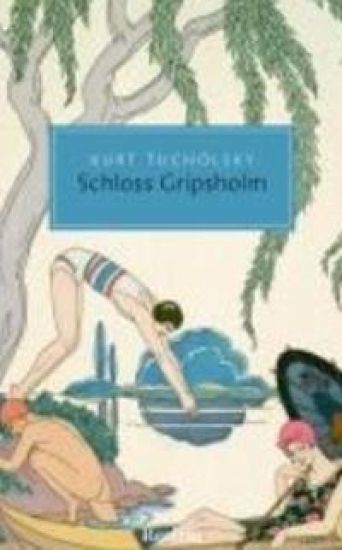
Im Jahr 1931 ver ffentlichte Kurt Tucholsky mit seiner Erz hlung 'Schlo Gripsholm. Eine Sommergeschichte' eines seiner bekanntesten Werke.

Wir saßen auf der Wolke und ließen die Beine baumeln. Nachher
Kurt Tucholsky
Reclam Philipp Jun.
2020
sidottu
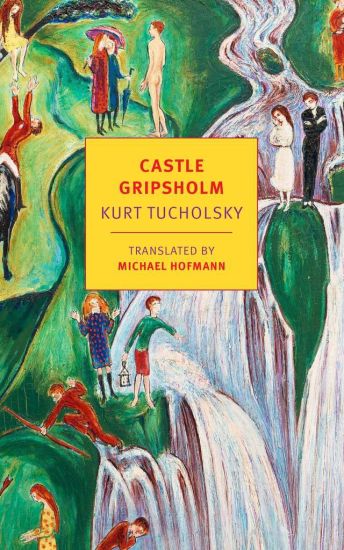
A beguiling fable about a summer holiday in the Swedish countryside that transforms into a provocative parable about oppression and the evil awaiting Europe as the Nazis came to power. Castle Gripsholm, the best and most beloved work by Kurt Tucholsky, is a short novel about an enchanted summer holiday. It begins with an assignment: Tucholsky's publisher wants him to write something light and funny, otherwise about whatever Tucholsky wants. A deal is struck and the story is off: about Peter, a writer; his girlfriend, known as the Princess; and a summer vacation far from the hurly-burly of Berlin. Peter and the Princess have rented a small house attached to a historic castle in Sweden, and they have five weeks of long days and white nights at their disposal; five weeks for swimming and walking and sex and talking and visits with Peter's buddy Karlchen and with Billy, the Princess's best friend. It is perfect, until they meet a weeping girl fleeing the cruel headmistress of a home for children. The vacationers decide they must free the girl and send her back to her mother in Switzerland, which brings about an encounter with authority that casts a worrying shadow over their radiant summer idyll. Soon they must return to Germany. What kind of fairy tale are they living in?

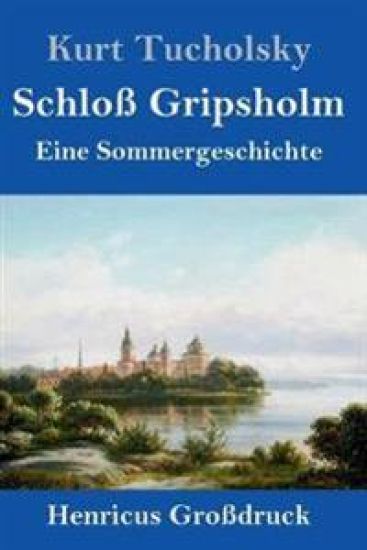
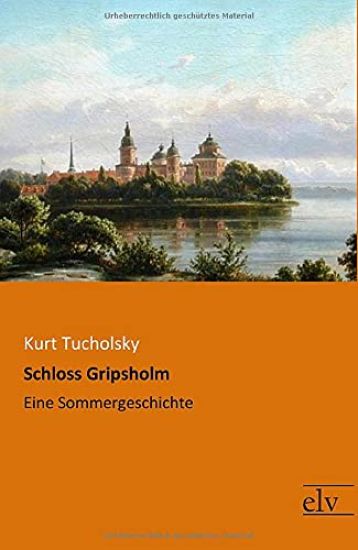
Kurt Tucholsky: Schlo Gripsholm. Eine Sommergeschichte Lesefreundlicher Gro druck in 16-pt-Schrift Gro format, 210 x 297 mm Berliner Ausgabe, 2019 Durchgesehener Neusatz mit einer Biographie des Autors bearbeitet und eingerichtet von Theodor Borken Erstdruck: 1931. Umschlaggestaltung von Thomas Schultz-Overhage unter Verwendung des Bildes: Ferdinand Richardt, Schloss Gripsholm, 1869. Gesetzt aus der Minion Pro, 16 pt. Henricus Edition Deutsche Klassik UG (haftungsbeschr nkt)
Kurt Tucholsky: Schlo Gripsholm. Eine Sommergeschichte Lesefreundlicher Gro druck in 16-pt-Schrift Gro format, 210 x 297 mm Berliner Ausgabe, 2019 Durchgesehener Neusatz mit einer Biographie des Autors bearbeitet und eingerichtet von Theodor Borken Erstdruck: 1931. Umschlaggestaltung von Thomas Schultz-Overhage unter Verwendung des Bildes: Ferdinand Richardt, Schloss Gripsholm, 1869. Gesetzt aus der Minion Pro, 16 pt. Henricus Edition Deutsche Klassik UG (haftungsbeschr nkt)

Kurt Tucholsky: Rheinsberg. Ein Bilderbuch f r Verliebte Lesefreundlicher Gro druck in 16-pt-Schrift Gro format, 210 x 297 mm Berliner Ausgabe, 2019 Durchgesehener Neusatz mit einer Biographie des Autors bearbeitet und eingerichtet von Theodor Borken Erstdruck: 1912. Umschlaggestaltung von Thomas Schultz-Overhage unter Verwendung des Bildes: Wilhelm Loeillot, nach einer Originalaufnahme von Theodor Hennicke, Lithographie des Schlosses Rheinsberg, 1857 und 1883. Gesetzt aus der Minion Pro, 16 pt. Henricus Edition Deutsche Klassik UG (haftungsbeschr nkt)
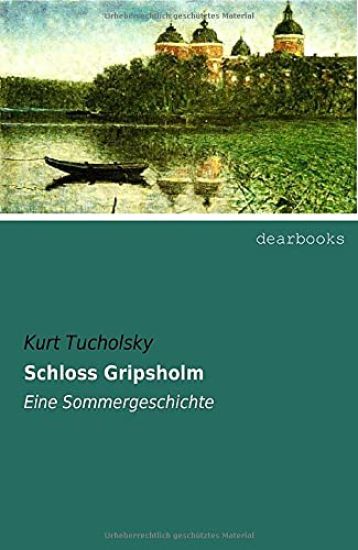
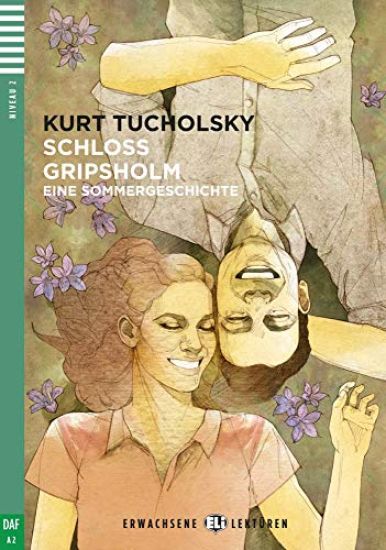
Schlo Gripsholm. Eine Sommergeschichte lautet der Titel einer Erz hlung, die Kurt Tucholsky im Jahre 1931 ver ffentlichte. Die heiter-melancholische Liebesgeschichte z hlt zu den bekanntesten Werken des Autors und erinnert an sein Romandeb t Rheinsberg: Ein Bilderbuch f r Verliebte. Das Buch beginnt mit dem Abdruck eines fiktiven Briefwechsels zwischen dem Autor und seinem Verleger, Ernst Rowohlt, dessen Unterschrift Tucholsky mit "Ernst (Riesenschn rkel) Rowohlt" wiedergibt. Darin regt Rowohlt Tucholsky an, doch mal wieder eine leichte und heitere Liebesgeschichte zu schreiben, w hrend jener um ein h heres Honorar feilscht. Die sich anschlie ende Erz hlung handelt vom Sommerurlaub des Erz hlers mit seiner Freundin Lydia, von ihm zumeist nur "die Prinzessin" genannt, in Schweden. Nach der Zug- und F hrfahrt und einigem Suchen kommen beide im Schloss Gripsholm an, in dem sie etwa drei Wochen verbringen. In ihrer Sommerfrische erhalten sie nacheinander Besuch von Kurts altem Kameraden und Freund Karlchen sowie von Lydias bester Freundin Billie... Kurt Tucholsky (1890-1935) war ein deutscher Journalist und Schriftsteller. Tucholsky z hlt zu den bedeutendsten Publizisten der Weimarer Republik. Als politisch engagierter Journalist und zeitweiliger Mitherausgeber der Wochenzeitschrift Die Weltb hne erwies er sich als Gesellschaftskritiker in der Tradition Heinrich Heines. Zugleich war er Satiriker, Kabarettautor, Liedtexter, Romanautor, Lyriker und Kritiker. Er verstand sich selbst als linker Demokrat, Sozialist, Pazifist und Antimilitarist und warnte vor der Erstarkung der politischen Rechten - vor allem in Politik, Milit r und Justiz.
Le storie del signor Wendriner
Kurt Tucholsky
Createspace Independent Publishing Platform
2017
nidottu
Simpatico cialtrone nella Berlino tra gli anni '20 e '30, Wendriner commercia, traffica, specula e si gode la vita. C'e pero un piccolo problema, o perlomeno cosi allora poteva apparire: e un ebreo. Ma che vuol dire essere ebrei? Lo scoprira a sue spese, facendoci pero anche divertire con la sua comica e universale volgarita.

Kurt Tucholsky was a brilliant satirist, poet, storyteller, lyricist, pacifist, and Democrat; a fighter, lady's man, reporter, and early warner against the Nazis who hated and loathed him and drove him out of Germany after his books were burned in 1933. His contemporary Erich Kaestner called him a "small, fat Berliner," who "wanted to stop a catastrophe with his typewriter." The New York Times hailed him as "one of the most brilliant writers of republican Germany. He was a poet as well as a critic and was so versatile that he used five or six pen names. As Peter Panter he was an outstanding essayist who at one time wrote topical sketches in the Vossische Zeitung, which ceased to appear under the Nazi regime; as Theobald Tiger he wrote satirical poems that were frequently interpreted by popular actors in vaudeville and cabartes, and as Ignatz Wrobel he contributed regularly to the Weltb hne, an independent weekly that was one of the first publications prohibited by the Hitler government." Tucholsky, who occupied the center stage in the tumultuous political and cultural world of 1920s Berlin, still emerges as an astonishingly contemporary figure. As an angry truth-teller, he pierced the hypocrisy and corruption around him with acute honesty. Imagine a writer with the acid voice of Christopher Hitchens and the satirical whimsy of Jon Stewart, combined with the iconoclasm of Bill Maher. That's Tucholsky in a nutshell. Like Hitchens, Tucholsky wrote a mixture of literary essays, social observations, and political commentary. His irony made the line between his "serious writing" and his "entertainments" almost invisible. The fashionable outsider watched the political "center" disappear, and, in the end, he found himself catapulted out of society altogether. His career was sandwiched between the two most deadly events of his century: the bloodbath of World War I and the scourge of Nazism. Just as the first war launched Hemingway's lifelong career as a wounded tough guy with a soft spot for guns and broads, Tucholsky discovered the reflexes of an escape artist. He was equally elusive as a writer. In today's world, a journalist isn't supposed to write plays, and a playwright isn't welcomed as a novelist. But in 1920s Berlin, Tucholsky was dealing with postwar realities that required shouting from the rooftops, and any rooftop would do. Kurt Tucholsky is one of Weimar Germany's most celebrated literary figures, loved by his many readers and hated by the Nazis. The poet, journalist, and satirist who was at the center of the tumultuous political and cultural world of 1920s Berlin still emerges as an astonishingly contemporary figure. But he was more than just an angry truth-teller; he was also one of the funniest satirical writers of his era, depicting everyday lives during the rise of modernity. The iconic translation of Harry Zohn, a literary figure from Vienna himself, presented Tucholsky to an American audience for the first time. Long out of print, Zohn's book is now being republished in a new edition.
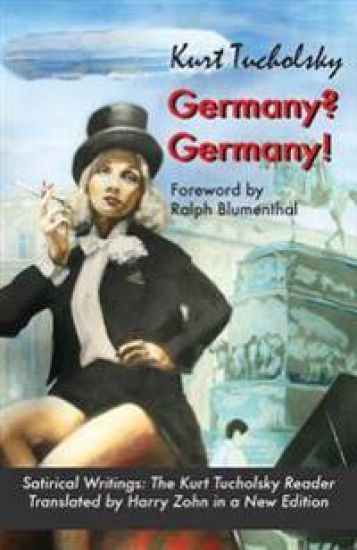
Kurt Tucholsky is one of Weimar Germany's most celebrated literary figures, loved by his many readers and hated by the Nazis. The poet, journalist, and satirist who was at the center of the tumultuous political and cultural world of 1920s Berlin still emerges as an astonishingly contemporary figure. But he was more than just an angry truth-teller; he was also one of the funniest satirical writers of his era, depicting everyday lives during the rise of modernity. The iconic translation of Harry Zohn, a literary figure from Vienna himself, presented Tucholsky to an American audience for the first time. Long out of print, Zohn's book is now being republished in a new edition. Kurt Tucholsky made his name as one of the Weimar era's most acid, incisive satirists; but to read this panoramic selection of essays, monologues, dialogues and aphorisms is to be reminded that he was also a brilliant literary shape-shifter, able to take on the persona of an embryo, a squirrel, a suite of pulp novels, or a prophet of post-apocalyptic hope with equal felicity. "In Europe, a man is a citizen once and an alien twenty-two times. A wise man is an alien twenty-three times," he wrote. His words sound alarmingly poignant today. -- George Prochnik, author of "Stranger in a Strange Land: Searching for Gershom Scholem and Jerusalem" Tucholsky's wit and his courage, his extraordinary sensitivity to language, and the timeliness of his writing have not waned a bit, even eight decades later.-- Noah Isenberg, Professor of Culture and Media at The New School for Liberal Arts, New York City Imagine a writer with the acid voice of Christopher Hitchens and the satirical whimsy of Jon Stewart, combined with the iconoclasm of Bill Maher. That's Tucholsky in a nutshell.-- Anne Nelson, author of "The Red Orchestra" and "The Guys" In Weimar Germany, Tucholsky was big, the most brilliant, prolific and witty cultural journalist of his time. He poured scorn on the reactionary institutions of the old regime, the follies of the Weimar Republic, and the peculiarities of the German character.-- William Grimes, The New York Times Tucholsky's writing is similar to that of Heinrich Heine, his role model, in that it appears superficially simple but is replete with hidden meanings. His works are touching, stirring, and precisely to the point.-- Peter Appelbaum MD, PhD, Emeritus Professor, Pennsylvania State University "Kurt Tucholsky was one of the most brilliant German Jewish writers and satirists of his time. The world has yet to discover his genius."--Peter Schneider, author of The Wall Jumper and Eduard's Homecoming

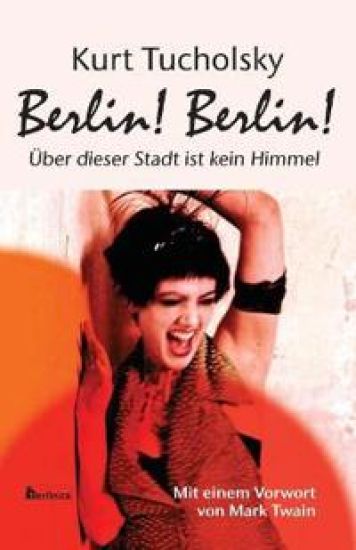
Berlin Berlin is a satirical selection from the "man with the acid pen and the perfect pitch for hypocrisy," as New York author and Tucholsky-expert Peter Wortsman writes. This book os a complete collection of Tucholsky's news stories, features, satirical pieces, and poems about his hometown Berlin. It depicts Weimar Berlin, its cabarets, its policies, its follies, its ticks, and its celebrities, such as Pola Negri, Gussy Holl, Bert Brecht, Max Reinhardt, or Heinrich Zille. The book contains some of Tucholsky's most famous pieces, among them Berlin Berlin , a feature of the stereotypical Berliner on the phone, on vacation or doing "bizness", more than one satirical biography of the author himself, and some of his most famed stories such as where the holes in the cheese come from, or about the lion who escaped the Berlin zoo. Herr Wendriner, the chatty Berlin businessman makes an appearance, as well as Lottchen, the flapper, modelled after one of Tucholsky's real-life gilrfriends. Also Tucholsky's long-term friends Karlchen and Jakopp are part of this book.