Kirjojen hintavertailu – 12 859 819 kirjaa ja 27 kauppaa

Kirjailija

Kwai Hang Ng

Kirjat ja teokset yhdessä paikassa: 4 kirjaa, julkaisuja vuosilta 2009–2018, suosituimpiin kuuluu Embedded Courts. Vertaile teosten hintoja ja tarkista saatavuus suomalaisista kirjakaupoista.

4 kirjaa

Kirjojen julkaisuvuodet: 2009–2018.

Embedded Courts

Embedded Courts

Kwai Hang Ng; Xin He

Cambridge University Press
2018
pokkari
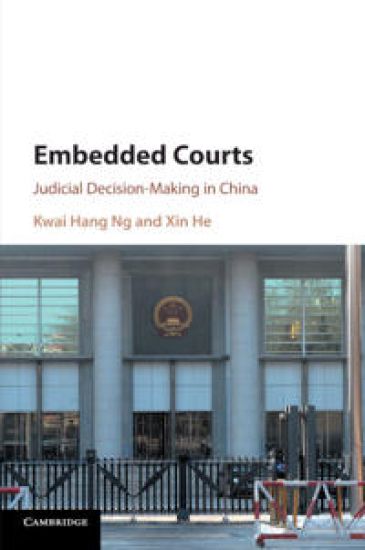
Embedded Courts is laden with tension. Chinese courts are organized as a singular and unified system yet grassroots courts in urban and rural regions differ greatly in the way they use the law and are as diverse as the populations they serve. Based on extensive fieldwork and in-depth interviews, this book offers a penetrating discussion of the operation of Chinese courts. It explains how Chinese judges rule and how the law is not the only script they follow - political, administrative, social and economic factors all influence verdicts. This landmark work will revise our understanding of the role of law in China - one that cannot be easily understood through the standard lens of judicial independence and separation of powers. Ng and He make clear the struggle facing frontline judges as they bridge the gap between a rule-based application of law and an instrumentalist view that prioritizes stability maintenance.
Embedded Courts

Embedded Courts

Kwai Hang Ng; Xin He

Cambridge University Press
2017
sidottu
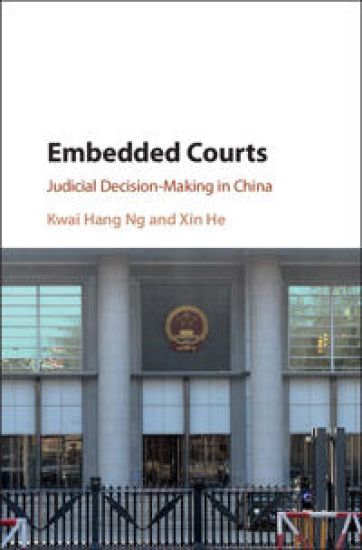
Embedded Courts is laden with tension. Chinese courts are organized as a singular and unified system yet grassroots courts in urban and rural regions differ greatly in the way they use the law and are as diverse as the populations they serve. Based on extensive fieldwork and in-depth interviews, this book offers a penetrating discussion of the operation of Chinese courts. It explains how Chinese judges rule and how the law is not the only script they follow - political, administrative, social and economic factors all influence verdicts. This landmark work will revise our understanding of the role of law in China - one that cannot be easily understood through the standard lens of judicial independence and separation of powers. Ng and He make clear the struggle facing frontline judges as they bridge the gap between a rule-based application of law and an instrumentalist view that prioritizes stability maintenance.
The Common Law in Two Voices

The Common Law in Two Voices

Kwai Hang Ng

Stanford University Press
2009
pokkari
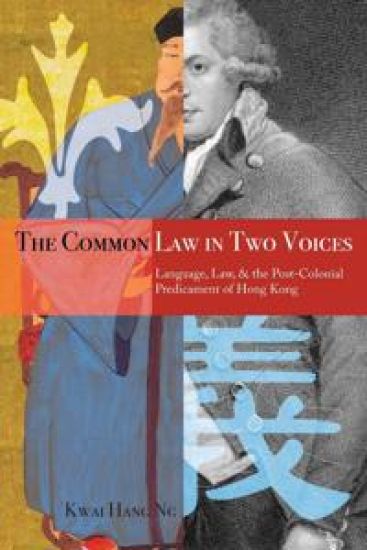
Hong Kong is one of the very few places in the world where the common law can be practiced in a language other than English. Introduced into the courtroom over a decade ago, Cantonese has significantly altered the everyday working of the common law in China's most Westernized city. In The Common Law in Two Voices, Ng explores how English and Cantonese respectively reinforce and undermine the practice of legal formalism. This first-ever ethnographic study of Hong Kong's unique legal system in the midst of social and political transition, this book provides important insights into the social nature of language and the work of institutions. Ng contends that the dilemma of legal bilingualism in Hong Kong is emblematic of the inherent tensions of postcolonial Hong Kong. Through the legal dramas presented in the book, readers will get a fresh look at the former British colony that is now searching for its identity within a powerful China.
The Common Law in Two Voices

The Common Law in Two Voices

Kwai Hang Ng

Stanford University Press
2009
sidottu
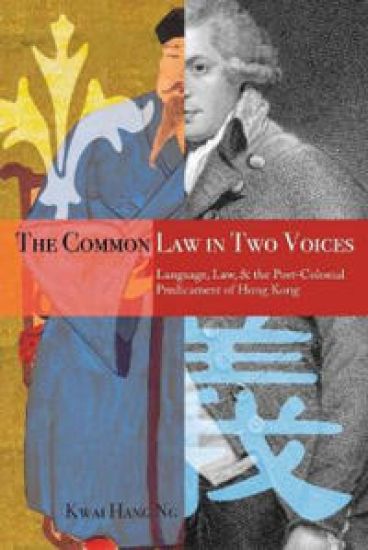
Hong Kong is one of the very few places in the world where the common law can be practiced in a language other than English. Introduced into the courtroom over a decade ago, Cantonese has significantly altered the everyday working of the common law in China's most Westernized city. In The Common Law in Two Voices, Ng explores how English and Cantonese respectively reinforce and undermine the practice of legal formalism. This first-ever ethnographic study of Hong Kong's unique legal system in the midst of social and political transition, this book provides important insights into the social nature of language and the work of institutions. Ng contends that the dilemma of legal bilingualism in Hong Kong is emblematic of the inherent tensions of postcolonial Hong Kong. Through the legal dramas presented in the book, readers will get a fresh look at the former British colony that is now searching for its identity within a powerful China.