
Kirjojen hintavertailu – 12 903 724 kirjaa ja 27 kauppaa

Kirjailija

Kwame Anthony Appiah

Kirjat ja teokset yhdessä paikassa: 22 kirjaa, julkaisuja vuosilta 1994–2025, suosituimpiin kuuluu Cosmopolitanisms. Vertaile teosten hintoja ja tarkista saatavuus suomalaisista kirjakaupoista.

22 kirjaa

Kirjojen julkaisuvuodet: 1994–2025.

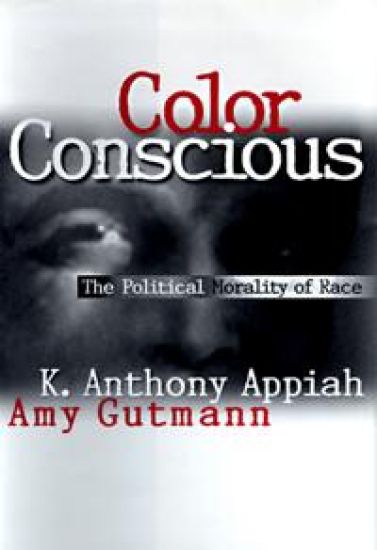
Color Conscious

Color Conscious

Kwame Anthony Appiah; Amy Gutmann

Princeton University Press
1998
pokkari

Halvin toimitettuna 51,50 €

In America today, the problem of achieving racial justice--whether through "color-blind" policies or through affirmative action--provokes more noisy name-calling than fruitful deliberation. In Color Conscious, K. Anthony Appiah and Amy Gutmann, two eminent moral and political philosophers, seek to clear the ground for a discussion of the place of race in politics and in our moral lives. Provocative and insightful, their essays tackle different aspects of the question of racial justice; together they provide a compelling response to our nation's most vexing problem. Appiah begins by establishing the problematic nature of the idea of race. He draws on the scholarly consensus that "race" has no legitimate biological basis, exploring the history of its invention as a social category and showing how the concept has been used to explain differences among groups of people by mistakenly attributing various "essences" to them. Appiah argues that, while people of color may still need to gather together, in the face of racism, under the banner of race, they need also to balance carefully the calls of race against the many other dimensions of individual identity; and he suggests, finally, what this might mean for our political life. Gutmann examines alternative political responses to racial injustice. She argues that American politics cannot be fair to all citizens by being color blind because American society is not color blind. Fairness, not color blindness, is a fundamental principle of justice. Whether policies should be color-conscious, class conscious, or both in particular situations, depends on an open-minded assessment of their fairness. Exploring timely issues of university admissions, corporate hiring, and political representation, Gutmann develops a moral perspective that supports a commitment to constitutional democracy. Appiah and Gutmann write candidly and carefully, presenting many-faceted interpretations of a host of controversial issues. Rather than supplying simple answers to complex questions, they offer to citizens of every color principled starting points for the ongoing national discussions about race.
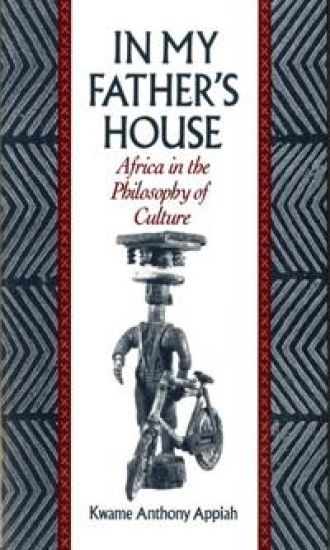
In My Father's House

In My Father's House

Kwame Anthony Appiah

Oxford University Press Inc
1994
nidottu
The beating of Rodney King and the resulting riots in South Central Los Angeles. The violent clash between Hasidim and African-Americans in Crown Heights. The boats of Haitian refugees being turned away from the Land of Opportunity. These are among the many racially-charged images that have burst across our television screens in the last year alone, images that show that for all our complacent beliefs in a melting-pot society, race is as much of a problem as ever in America. In this vastly important, widely-acclaimed volume, Kwame Anthony Appiah, a Ghanaian philosopher who now teaches at Harvard, explores, in his words, "the possibilities and pitfalls of an African identity in the late twentieth century." In the process he sheds new light on what it means to be an African-American, on the many preconceptions that have muddled discussions of race, Africa, and Afrocentrism since the end of the nineteenth century, and, in the end, to move beyond the idea of race. In My Father's House is especially wide-ranging, covering everything from Pan Africanism, to the works of early African-American intellectuals such as Alexander Crummell and W. E. B. Du Bois, to the ways in which African identity influences African literature. In his discussion of the latter subject, Appiah demonstrates how attempts to construct a uniquely African literature have ignored not only the inescapable influences that centuries of contact with the West have imposed, but also the multicultural nature of Africa itself. Emphasizing this last point is Appiah's eloquent title essay which offers a fitting finale to the volume. In a moving first-person account of his father's death and funeral in Ghana, Appiah offers a brilliant metaphor for the tension between Africa's aspirations to modernity and its desire to draw on its ancient cultural roots. During the Los Angeles riots, Rodney King appeared on television to make his now famous plea: "People, can we all get along?" In this beautiful, elegantly written volume, Appiah steers us along a path toward answering a question of the utmost importance to us all.