Kirjojen hintavertailu – 12 903 733 kirjaa ja 27 kauppaa

Kirjailija

Kwame Dawes

Kirjat ja teokset yhdessä paikassa: 48 kirjaa, julkaisuja vuosilta 1995–2026, suosituimpiin kuuluu Sita: New-Generation African Poets: A Chapbook Box Set. Vertaile teosten hintoja ja tarkista saatavuus suomalaisista kirjakaupoista.

48 kirjaa

Kirjojen julkaisuvuodet: 1995–2026.

Twenty

Twenty

Kwame Dawes

Hub City Press
2005
pokkari
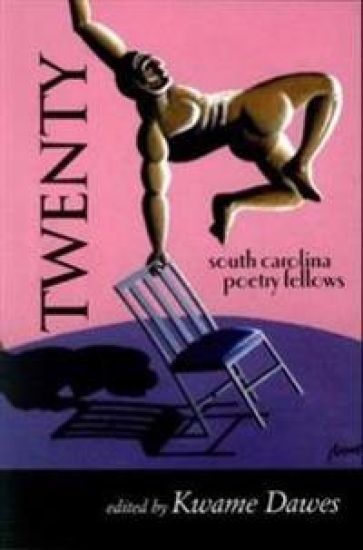
The poets include: Paul Allen, Jan Bailey, Cathy Smith Bowers, Jessica Bundschuh, Stephen Corey, Robert Cumming, Debra Daniel, Carol Ann Davis, Curtis Derrick, Linda Ferguson, Starkey Flythe, Angela Kelly, John Lane, Susan Ludvigson, Terri McCord, John Ower, Ron Rash, Paul Rice, Warren Slesinger, and Kathleen Whitten. Each has won a Poetry Fellowship from the South Carolina Arts Commission during the period 1977-2004. The book's introduction is written by editor Kwame Dawes, poet-in-residence at the University of South Carolina and director of the South Carolina Poetry Initiative, a statewide organization that promotes and celebrates the reading, writing, and performing of poetry across South Carolina.
A Place to Hide

A Place to Hide

Kwame Dawes

Peepal Tree Press Ltd
2003
nidottu
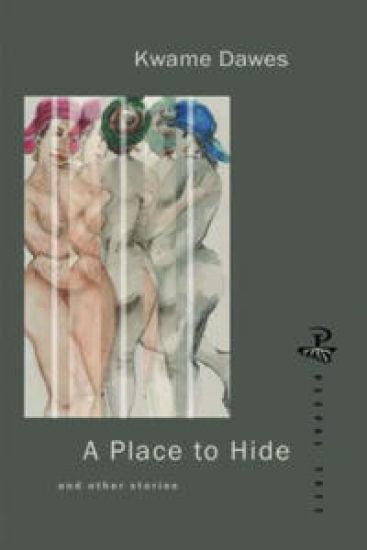
A man lies in a newspaper-lined room dreaming an other life. Bob Marley's spirit flew into him at the moment of the singer's death. A woman detaches herself from her perfunctory husband and finds the erotic foreplay she longs for in journeying round the island. A man climbs Blue Mountain Peak to fly and hear the voice of God. Sonia paints her new friend Joan and hopes that this will be the beginning of a sexual adventure. Dawes's characters are driven by their need for intimate contact with people and with God, and their need to construct personal myths powerful enough to live by. In a host of distinctive and persuasive voices they tell stories that reveal their inner lives and give an incisive portrayal of contemporary Jamaican society that is unsparing in confronting its elements of misogyny and nihilistic violence. Indeed several stories question how this disorder can be meaningfully told without either sensationalism or despair. For Dawes, the answer is found in the creative energies that lie just the other side of chaos. In particular, in the dub vershan episodes, which intercut the stories, there are intense and moving celebrations of moments of reggae creation in the studio and in performance. Dawes has established a growing international reputation as a poet and these are stories that combine a poetic imagination with narrative drive, an acute social awareness and a deep inwardness in the treatment of character. In the penultimate story, 'Marley's Ghost', Dawes's imagination soars to towering myth. Kwame Dawes is the author of over thirty five books, and is widely recognized as one of the Caribbean’s leading writers. He is Glenna Luschei Editor of Prairie Schooner and a Chancellor’s Professor of English at the University of Nebraska. His next book of poetry from Peepal Tree Press will be 'A New Beginning', a cycle of poems written with John Kinsella. He has been elected as a Chancellor of the Academy of American Poets.
Midland

Midland

Kwame Dawes

Ohio University Press
2000
pokkari
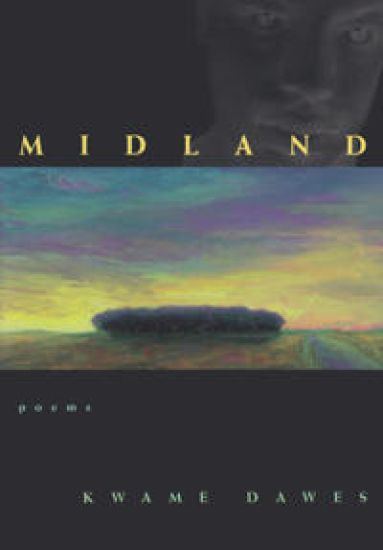
The winning manuscript of the fourth annual Hollis Summers Poetry Prize is also the exciting American debut by a poet who has already established himself as an important international poetic voice. Midland, the seventh collection by Kwame Dawes, draws deeply on the poet's travels and experiences in Africa, the Caribbean, England, and the American South. Marked equally by a lushness of imagery, an urgency of tone, and a muscular rhythm, Midland, in the words of the final judge, Eavan Boland, is "a powerful testament of the complexity, pain, and enrichment of inheritance…It is a compelling meditation on what is given and taken away in the acts of generation and influence. Of a father's example and his oppression. There are different places throughout the book. They come willfully in and out of the poems: Jamaica. London. Africa. America. But all the places become one place in the central theme and undersong here: which is displacement…The achievement of this book is a beautifully crafted voice which follows the painful and vivid theme of homelessness in and out of the mysteries of loss and belonging." Midland is the work of a keen and transcendent intellect, a collection of poems that speaks to the landscape from inside, from an emotional and experiential place of risk and commitment.
Midland

Midland

Kwame Dawes

Ohio University Press
2000
sidottu
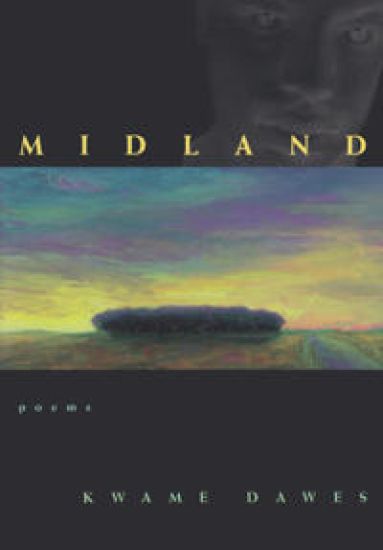
The winning manuscript of the fourth annual Hollis Summers Poetry Prize is also the exciting American debut by a poet who has already established himself as an important international poetic voice. Midland, the seventh collection by Kwame Dawes, draws deeply on the poet's travels and experiences in Africa, the Caribbean, England, and the American South. Marked equally by a lushness of imagery, an urgency of tone, and a muscular rhythm, Midland, in the words of the final judge, Eavan Boland, is "a powerful testament of the complexity, pain, and enrichment of inheritance…It is a compelling meditation on what is given and taken away in the acts of generation and influence. Of a father's example and his oppression. There are different places throughout the book. They come willfully in and out of the poems: Jamaica. London. Africa. America. But all the places become one place in the central theme and undersong here: which is displacement…The achievement of this book is a beautifully crafted voice which follows the painful and vivid theme of homelessness in and out of the mysteries of loss and belonging." Midland is the work of a keen and transcendent intellect, a collection of poems that speaks to the landscape from inside, from an emotional and experiential place of risk and commitment.
Natural Mysticism: Towards a new Reggae Aesthetic

Natural Mysticism: Towards a new Reggae Aesthetic

Kwame Dawes

Peepal Tree Press Ltd
1999
nidottu
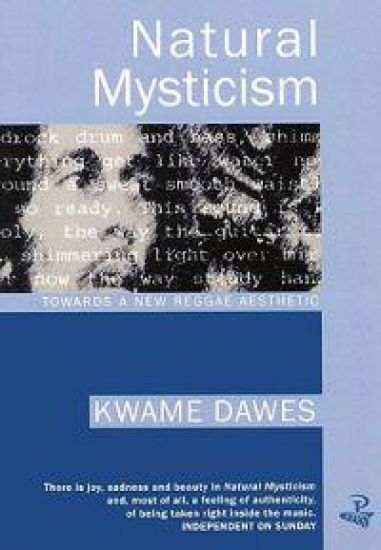
Kwame Dawes speaks for all those for whom reggae is a major part of life. He describes how reggae has been central to his sense of selfhood, his consciousness of place and society in Jamaica, his development as a writer - and why the singer Ken Boothe should be inseparably connected to his discovery of the erotic. Natural Mysticism is also a work of acute cultural analysis. Dawes argues that in the rise of roots reggae in the 1970s, Jamaica produced a form which was both wholly of the region and universal in its concerns. He contrasts this with the mainstream of Caribbean literature which, whilst anticolonial in sentiment was frequently conservative and colonial in form. Dawes finds in reggae's international appeal more than just an encouraging example. In the work of artists such as Don Drummond, Bob Marley, Winston Rodney and Lee 'Scratch' Perry, he finds a complex aesthetic whose inner structure points in a genuinely contemporary and postcolonial direction. He identifies this aesthetic as being both original and eclectic, as feeling free to borrow, but transforming what it takes in a subversive way. He sees it as embracing both the traditional and the postmodern, the former in the complex subordination of the lyric, melodic and rhythmic elements to the collective whole, and the latter in the dubmaster's deconstructive play with presences and absences. Above all, he shows that it is an aesthetic which unites body, emotions and intellect and brings into a single focus the political, the spiritual and the erotic. In constructing this reggae aesthetic, Kwame Dawes both creates a rationale for the development of his own writing and brings a new and original critical method to the discussion of the work of other contemporary Caribbean authors. Natural Mysticism has the rare merit of combining rigorous theoretical argument with a personal narrative which is often wickedly funny. Here is a paradigm shifting work of Caribbean cultural and literary criticism with the added bonus of conveying an infectious enthusiasm for reggae which will drive readers back to their own collections or even to go out and extend them!" Dawes is an ideal grammarian for the reggae aesthetic, his voice the estuary where his energies as a poet, professor and one-time musician are poured. He bears a gift, rarer than it should be in academia, for intellectually processing his subject and still yielding enlivening writing..." Michael Kuelker, The BeatKwame Dawes is widely acknowledged as the foremost Caribbean poet of the post-Walcott generation. He currently holds the position of Distinguished Poet In Residence and Louise Fry Scudder Professor of Liberal Arts at the University of South Carolina.
Martin Carter Selected Poems / Poesías Escogidas

Martin Carter Selected Poems / Poesías Escogidas

David Dabydeen; Kwame Dawes

Peepal Tree Press Ltd
1999
nidottu
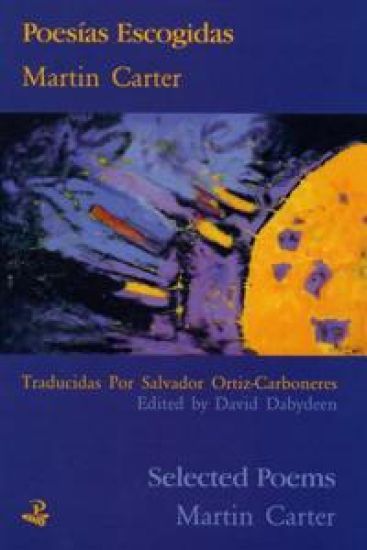
This dual language selection of Martin Carter's poems, edited by David Dabydeen, translated into Spanish by Salvador Ortiz-Carbonares and with an introduction by Gemma Robinson, will establish very clearly that Carter is a major South American poet, in the company of Valejo, Neruda and Paz. "What we have is enough to prove, if proof has been needed... that Martin Carter is, without reservation, one of the finest poets to have emerged in the Caribbean region. And the varied subtlety and strength of his poetry carries him without any doubt into the first rank of world poets. Long after the politics which prompted a number of his poems have been forgotten, and long after the society which he often so scathingly indicted has been changed utterly the poetry will continue to strike a chord among new generations." Ian McDonald The late Martin Carter was without doubt one of the Caribbean's major poets, only less well known than Walcott and Brathwaite because he rarely left his native Guyana. He came to notice first for his Poems of Resistance (1954) written out of his experiences of the anti-colonial struggle which included his imprisonment by the British for his political activities. His work has been a major influence on the current generation of Caribbean poets as John Agard, David Dabydeen, Fred D'Aguiar, Kwame Dawes, Linton Kwesi Johnson and Grace Nichols among others have elsewhere testified. Martin Carter was born in Guyana in 1927. He first came to attention with Poems of Resistance in 1954. He is unquestionably one of the three great West Indian poets of his generation. He died in 1997.
Requiem

Requiem

Kwame Dawes

Peepal Tree Press Ltd
1997
nidottu
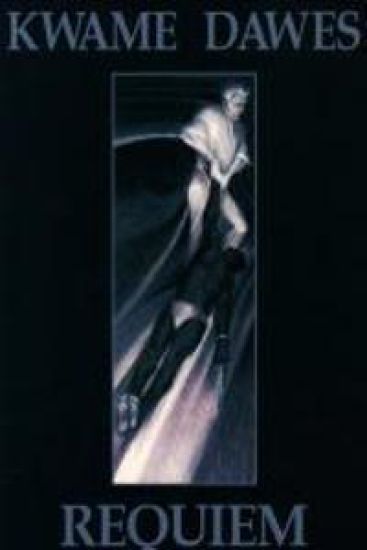
In these 'shrines of remembrance' for the millions of the victims of transatlantic slavery, Kwame Dawes constructs a sequence which laments, rages, mourns, but also celebrates survival. Focusing on individual moments in this holocaust which lasted nearly four hundred years, these poems both cauterize a lingering infection and offer the oil of healing. In these taut lyric pieces, Dawes achieves what might seem impossible: saying something fresh about a subject which, despite attempts at historical amnesia, will not go away. He does it by eschewing sentimentality, rant or playing to the audience, black or white. His poems go to the heart of the historical experience and its contemporary reverberations. This sequence was inspired by the award-winning book, The Middle Passage: White Ships/Black Cargo by the American artist Tom Feelings. Kwame Dawes is widely acknowledged as the foremost Caribbean poet of the post-Walcott generation. He currently holds the position of Distinguished Poet In Residence and Louise Fry Scudder Professor of Liberal Arts at the University of South Carolina.
Resisting the Anomie

Resisting the Anomie

Kwame Dawes

Goose Lane Editions
1995
pokkari
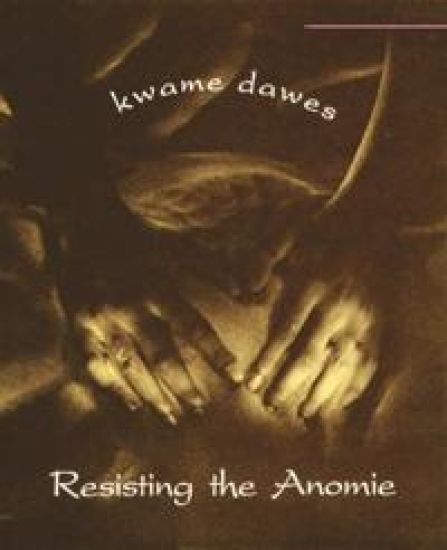
Resisting the Anomie is the second book of poetry by Kwame Dawes, whose collection Progeny of Air, won Britain's prestigious Forward Trust Poetry Prize for Best First Book in the fall of 1994. In Resisting the Anomie, Dawes takes as his subject the anxiety of being far from home, the unease of not belonging, the sense of disconnection from culture and custom. Poems of Jamaica, of Canada, of Haiti; tightly controlled poems, wild and free poems, reggae poems; poems of rejoicing, of faith, love, anger and humour — Resisting the Anomie is a large collection of substantial works by a new and significant writer.