Kirjojen hintavertailu – 12 903 725 kirjaa ja 27 kauppaa

Kirjailija

L'Erma Di Bretschneider

Kirjat ja teokset yhdessä paikassa: 51 kirjaa, julkaisuja vuosilta 1992–2025, suosituimpiin kuuluu Opera Ipogea. Anno XXVI, N.1 / 2024: Journal of Speleology in Artificial Cavities. Vertaile teosten hintoja ja tarkista saatavuus suomalaisista kirjakaupoista.

51 kirjaa

Kirjojen julkaisuvuodet: 1992–2025.

Genova. Pieter Brueghel Il Giovane. Il Restauro Della Crocifissione Di Castelnuovo Magra
Il volume Genova. Pieter Brueghel il Giovane. Il restauro della Crocifissione di Castelnuovo Magra racconta l'intervento di recupero di un capolavoro che ha visto coinvolti tecnici della Soprintendenza Archeologia, belle arti e paesaggio per la citta metropolitana di Genova e la provincia di La Spezia, docenti dell'Universita di Genova e collaboratori esterni specializzati. Un momento esemplare di lavoro e studio condiviso che ha permesso di accendere una nuova luce sulle vicende storico-artistiche della tavola, rendendone possibile una giusta collocazione all'interno della produzione del pittore fiammingo.
Ceramica Sovraddipinta 'di Gnathia': Taranto - Museo Archeologico Nazionale. Fascicolo V
Dalla polis ellenistica tarantina provengono i materiali sovraddipinti analizzati nel presente fascicolo, relativi a quella particolare classe vascolare convenzionalmente identificata come "ceramica di Gnathia" e nota al mondo scientifico prevalentemente attraverso reperti di pregio decontestualizzati. Provenendo quasi esclusivamente da contesti tombali chiusi, i numerosi reperti esaminati, in massima parte inediti, hanno costituito un'importante occasione di studio, consentendo di avanzare proposte di datazione sull'analisi degli elementi in corredo, delle morfologie e delle caratteristiche tecniche delle ceramiche. Nuclei omogenei di reperti sono stati ricondotti a specifiche unita produttive in alcuni casi assimilabili a quelli riconosciuti dall'indagine stilistica, puntualizzando alcune caratteristiche che ampliano la conoscenza del lessico ornamentale utilizzato da queste officine. I vasi presentati costituiscono una campionatura indicativa dei vari tipi vascolari attestati nella necropoli e delle trasformazioni che si determinano nei corredi dalla meta del IV a. C. sino agli inizi del II secolo a. C., mentre il linguaggio sostanzialmente uniforme che li identifica esemplifica la funzione rituale e rappresentativa assegnata dal sistema produttivo locale ai materiali destinati all'ambito funerario, differenziandoli qualitativamente da quelli indirizzati ad altre tipologie di consumo, in una lettura analitica di questa manifattura.
Opera Ipogea. Anno XXVI, N.1 / 2024: Journal of Speleology in Artificial Cavities
Opera Ipogea has been the scientific journal of the National Commission for Artificial Cavities of the Italian Speleological Society ETS since 1999. In almost 25 years of activity (two series, fifty issues, several monographic works and special issues), more than 520 contributions have been published in Opera Ipogea, documenting thousands of man-made works underground throughout the ages. The journal, today with the extended title Journal of Speleology in Artificial Cavities, disseminates the results of the most important study campaigns conducted in artificial cavities around the world; moreover, hosts the proceedings of national and international conferences, round tables, workshops and thematic censuses of artificial underground structures, accrediting itself as the most important international journal in the field. Its scientific committee includes leading national and international experts who, among speleologists, historians, archaeologists, architects, engineers and geologists, boast diverse and long-standing experience in all aspects of human activities in the underground.
Quaderni Di Archeologia Della Libya. N. 23, N.S. III: Proceedings of the Conference Mausolea and Funerary Landscape of Ancient North Africa. Accultura
Il n. 23, n.s. III, di Quaderni di Archeologia della Libya mantiene l'articolazione scelta per la nuova veste della rivista. Anche il prossimo numero avra carattere miscellaneo (n. 24, n.s. IV, 2021), mentre quello successivo (n. 25, n.s. V, 2022), sara dedicato alla pubblicazione degli Atti del Convegno tenutosi a Roma, Istituto di Studi Romani, 26-27 ottobre 2017, dal titolo Mausolea and Funeray Landscape of Ancient North Africa. Acculturation and Regional Identity. Tutti gli articoli, pubblicati in italiano o in inglese, sono introdotti da un abstract in inglese. Grazie all'intensa cooperazione con i colleghi del Dipartimento di Antichita della Libia (DoA), anche il n. 22 e provvisto della traduzione integrale dell'Editoriale e degli abstracts di tutti i contributi in lingua araba e di una controcopertina illustrata. L'Editoriale a cura di Mohamed Faraj Mohamed al-Faloos, illustra l'attivita del DoA da lui diretto per la salvaguardia del patrimonio culturale libico nonostante le difficolta finanziarie e politiche della situazione attuale. La tradizionale sezione di Articoli e note ospita un ventaglio di contributi su temi eterogenei relativi alla Cirenaica (produzioni musive), alla Sirte (architettura e decorazione di una tomba ipogeica), alla Tripolitania (circolazione dei marmi e decorazione architettonica, monumenti funerari, ricognizioni archeologiche), alla storiografia in arabo della conquista islamica della Libia, nonche le memorie di personalita significative legate alla ricerca archeologica in Libia, recentemente scomparse: Enrica Fiandra, Sebastiano Tusa e Ettore Janulardo. La rubrica Archivi e Risorse Digitali per il patrimonio storico e archeologico del Nord Africa, a cura di Luisa Musso, presenta un report preliminare sul progetto di digitalizzazione e di catalogazione dell'Archivio Storico della Missione congiunta italo-libica "Tempio Flavio".
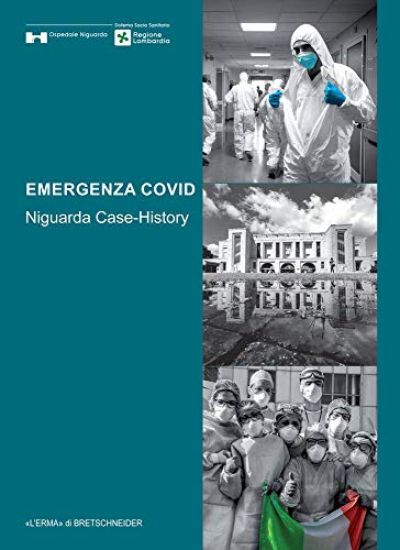
Emergenza Covid: Niguarda Case History: Un'esperienza Italiana Nella Lotta Alla Pandemia Covid-19
From February 22nd, 2020 the Great Metropolitan Hospital Niguarda in Milan started facing the COVID-19 emergency on the front line: an extraordinary experience, hard and difficult, never lived in its 80 years of activity and unprecedented in recent history. The 70 wards and 36 Departments of the Hospital have decided to tell the experience lived between March and June 2020, when Lombardy was at the center of the pandemic storm. These pages collect testimonies, data, care and clinical-organizational experiences: an opportunity for comparison in research and fight against the virus, but also a snapshot of emotional and intense moments that must not be forgotten.
Quaderni Dell'istituto Di Storia Dell'architettura. N.S. 72, 2019

Quaderni Dell'istituto Di Storia Dell'architettura. N.S. 72, 2019

L'Erma Di Bretschneider

L'Erma Di Bretschneider
2020
nidottu
Emanuele Gallotta Larchitettura come spazio per la liturgia: linterno di Santa Maria Maggiore a Ferentino alla fine del Duecento This essay deals with the interior of Santa Maria Maggiore in Ferentino (in the modern province of Frosinone), one of the most important buildings erected in southern Lazio in the Middle Ages. In particular, the set-up of the liturgical space dates back to the last years of the thirteenth century on the basis of the phases of building construction. In spite of the small number of documents, especially medieval ones, their critical interpretation made it possible to understand that Santa Maria Maggiore was a collegiate church entrusted to a secular college of canons (neither monks nor friars), which had nothing to do with the Cistercian Order. Starting from this evaluation, the comparison of archaeological data coming from surveys and direct analysis of the masonry walls with those obtained from documentary and iconographic sources allowed me to formulate reliable hypotheses on the design of the interior space and the arrangement of liturgical furnishings. As in almost all medieval churches, the original appearance of Santa Maria Maggiore was altered after the Council of Trent in the sixteenth century and then by the restorations between the eighteenth and the twentieth centuries. Stefano Cecamore Insediamenti fortificati nella Marsica. Il Castellum Sancti Angeli a Carsoli The research is carried out on the historic centre of Carsoli (AQ) and in particular on the Castellum Sancti Angeli, a fortress in defence of the Marsican Region. The old town portrays an enriched urban structure, resulting in spiritual and residential buildings as well as of defence. The restoration project aims at designing and planning the preservation of the remaining structures by arresting the decay of the existing facilities and securing safety management. The highly historic and abandoned context does not allow any room for hypothetical reconstruction of the missing parts or inserts of new manufactured products, however, it invites to discover areas of the surrounding landscapes through routes, crossings and breaks in green equipped areas leading and suggesting the visitor to see the possibly unseen. Iacopo Benincampi Bernini e San Giovanni in Fonte: considerazioni a margine dellarchitettura del battistero In recent years the complex of buildings that set up the Baptistery of San Giovanni in Laterano was the subject of several researches, which reviewed the chronology of these artefacts on the basis of new stratigraphical investigations. In addition, archival studies clarified the role of the modernisations drawn up in modern times. And thats because it was precisely such transformations that determined the current appearance of the baptistery. On several occasions between the sixteenth and seventeenth centuries these interventions mainly concerned the image of the paleochristian octagonal building, primarily from the inerior perspective. Particularly the wooden ceilings seem to be interesting, especially because they were renewed at the time of Pope Urban VIII Barberini (1623-1644): Domenico Castelli (1582ca-1657) adjusted the lacunar structure over the annular peribulum; Gian Lorenzo Bernini (1598-1680) re-appointed the dome over the baptismal font. Aloisio Antinori Bernini, Borromini, il cantiere di San Pietro e laltare Filomarino di Napoli: una fonte ignorata e un riesame della questione della rottura tra i due artisti The article stems from the examination of a letter belonging to the correspondence, today preserved at the Archives diplomatiques du Ministere des Affaires etrangeres in Paris-La Courneuve, between Cardinal Jules Mazarin and Elpidio Benedetti, his agent in Rome. In the letter, dated August 1660, Benedetti refers to the Filomarino altar in the Church of the Holy Apostles of Naples, indicating Gian Lorenzo Bernini as its author instead of Francesco Borromini. This significant document is not unpublished; however, it appeared in a mere footnote in a volume of historical studies on Mazarin, published in 1981. It therefore went almost unnoticed, and art and architecture historians have never taken it into consideration. In this article, Aloisio Antinori discusses the credibility and the various implications of the surprising attribution of Benedetti, who certainly witnessed the process during which the altar was designed in Rome to be then constructed in Naples, and perhaps took part in it directly as a collaborator of Ascanio Filomarino. The interpretation of the document also offers the author the opportunity to re-examine, through a study of all the available sources, the question of the end of the professional collaboration between Bernini and Borromini, an event that has never been entirely clarified. Maria Clara Ghia In occasione di un centenario. Leonardo Ricci, dai primi progetti del dopoguerra allexploit di casa Balmain To mark the centenary of Leonardo Riccis birth, the article retraces a section of the life and works of the architect of the Florentine school. From the projects developed with his colleagues, especially Leonardo Savioli, in the fruitful yet difficult climate of the years immediately after the Second World War, when the personality of the master Giovanni Michelucci influences and directs the design choices of the young Ricci, to his first autonomous works, the community centre of Agape in Prali and, above all, the significant adventure of the village of Monterinaldi. Then there are the exceptional commissions for the villas built between the Fifties and Sixties, in particular those for Elisabeth Mann, Bruno Rossi, Massimo Severo Giannini, Countess Pleydell Bouverie and Pierre Balmain, up to the last community experience in Riesi and the Sorgane experiment, with which Ricci inaugurates a new stage in his research oriented, from then onwards, towards the theme of macrostructures.

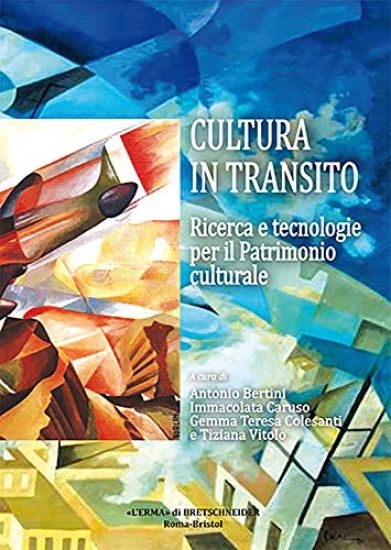
Cultura in Transito: Ricerca E Tecnologie Per Il Patrimonio Culturale

Cultura in Transito: Ricerca E Tecnologie Per Il Patrimonio Culturale

L'Erma Di Bretschneider

L'Erma Di Bretschneider
2020
nidottu
The growing general interest in tangible and intangible cultural heritage has given thrust to countless studies that have recognized not only its significant role for human well-being, but also its social and economic value. These studies support the need of worldwide promotion and spreading practices for the management, protection, use and enhancement of cultural heritage, sharing its principles. Within the wide debate that has emerged on these issues, a fundamental part has been covered by the need to optimize the use of information technologies in order to promote knowledge and appreciation of cultural heritage and territories on which it insists. In the volume some essays have been collected in order to adopt measures to build and develop the best skills of cultural curators in the use of virtual media and methodologies of communication, storytelling and e-learning, involving in this process the different stakeholders, local communities and, above all, the younger generations.