Kirjojen hintavertailu – 12 859 824 kirjaa ja 27 kauppaa
Kirjailija
L Frank Baum
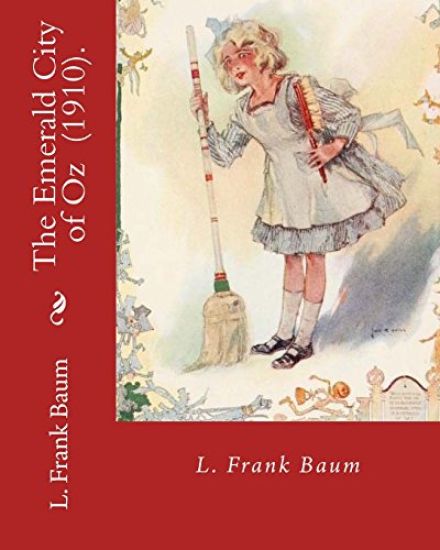
Kirjat ja teokset yhdessä paikassa: 1 698 kirjaa, julkaisuja vuosilta 1900–2026, suosituimpiin kuuluu The Emerald City of Oz (1910), by L. Frank Baum and John R. Neill(illustrated)original version: John Rea Neill (November 12, 1877 - September 19, 1943. Vertaile teosten hintoja ja tarkista saatavuus suomalaisista kirjakaupoista.
Nimi esiintyy myös muodoissa: L. Frank Baum, L.Frank Baum
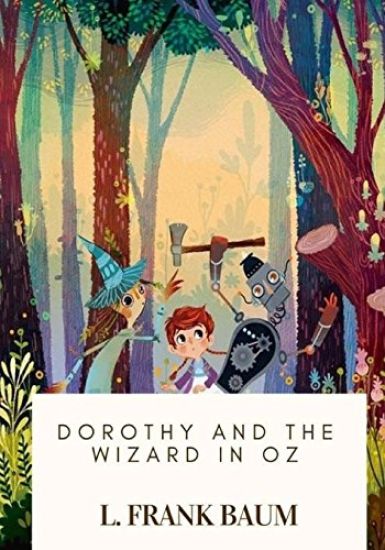
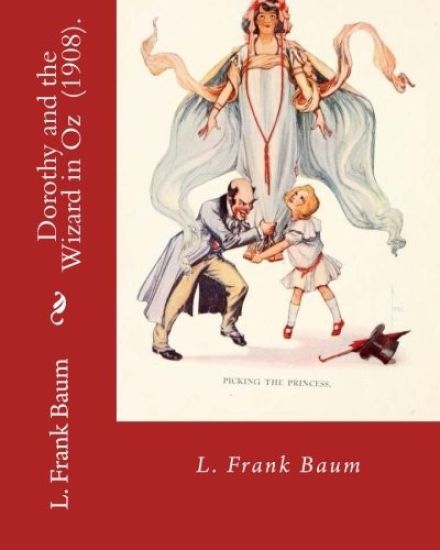
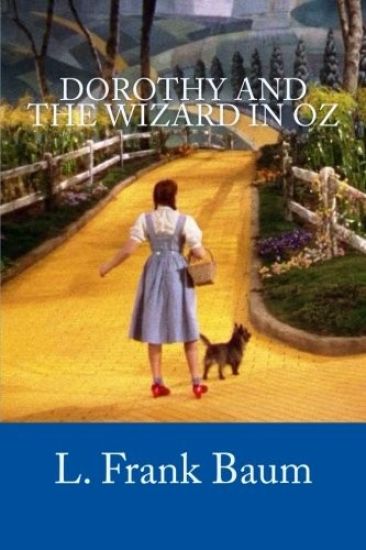
In Dorothy and the Wizard in Oz, Dorothy, along with her cousin, Zeb, her cat, Eureka, and a horse named Jim, returns to the mystical land of Oz after being caught in an earthquake while travelling to meet her Uncle Henry at Hugson' s Ranch. Reunited with the Wizard of Oz in the land of the Mangaboos, Dorothy and her friends set out for Oz, dodging invisible bears and escaping from Gargoyles and Dragonettes along the way. But when Eureka is believed to have eaten one of the Wizard' s nine little piglets, even Oz might not be safe for them
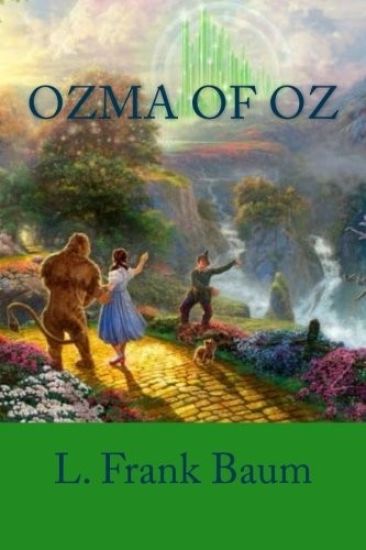
Peace, prosperity, and happiness are the rule in the marvelous Land of Oz, but in a faraway corner of this magical domain dwell two tribes-the Flatheads and the Skeezers-who have declared war on each other. Determined to keep her subjects from fighting, the Ruler of Oz, Princess Ozma, along with her dearest friend, Princess Dorothy Gale (formerly of Kansas), embarks on a quest to restore peace. When the Supreme Dictator of the Flatheads refuses to cooperate with Ozma, she and Dorothy seek out Queen Coo-ee-oh of the Skeezers, hoping she will be more reasonable. But the queen imprisons Ozma and Dorothy in her grand city and then traps them by submerging the whole city under water. Now it is up to Glinda the Good to save the day. She assembles all of Ozma's counsellors-including such beloved Oz friends as the Scarecrow, Tin Woodman, Cowardly Lion, Patchwork Girl, Shaggy Man, Tik-Tok, and Wizard of Oz-and they set out to rescue their friends. Will the magic powers of Glinda and the Wizard combined be enough to free Ozma and Dorothy?
The Surprising Adventures of the Magical Monarch of Mo and His People (copyright registered June 17, 1896) is the first full-length children's fantasy book by L. Frank Baum. Originally published in 1899 as A New Wonderland, Being the First Account Ever Printed of the Beautiful Valley, and the Wonderful Adventures of Its Inhabitants, the book was reissued in 1903 with a new title in order to capitalize upon the alliterative title of Baum's successful The Wonderful Wizard of Oz. The book is only slightly altered-Mo is called Phunniland or Phunnyland, but aside from the last paragraph of the first chapter, they are essentially the same book. It is illustrated by Frank Ver Beck. Mo is much more of a nonsense book than Oz, bringing to mind Lewis Carroll's Alice's Adventures in Wonderland, which is probably what the original title referred to. Each chapter is a different story, unlike Baum's other books, which are full length stories. They do, however have a general throughline, and can be seen as an episodic novel. PLOT: Chapter One has no plot, but rather is a basic description of the Land of Mo, or "The Beautiful Valley." It explains that everyone in Mo is happy, and that the people never need to work, because everything they could desire grows on the trees, including items such as clothes. In A New Wonderland, the author mentions planning to move there himself, but this was omitted from subsequent editions. Chapter Two: The Monarch of Mo goes to fight the Purple Dragon, which has just eaten all of the caramels in the land. The Dragon bites off his head, and the King is forced to go home headless. The King tries to make the best of it, but the Queen complains that she cannot kiss him anymore, so he issues an edict saying that whoever can make him a new head will get to marry one of the princesses. After two failures, a durable head is made out of wood by a wood-chopper. The Purple Dragon finds the wood-chopper and bites his head off, replacing it with the King's head. When the wood-chopper appears in court, he switches heads with the King, so that the King has his own head again and the wood-chopper has a wooden head he made. The King then tries to fulfill his promise, but the princesses refuse to marry a wooden-headed man. The wood-chopper then confronts the Purple Dragon, who tries its head-biting technique again, only to get its teeth stuck in the wooden head, thus letting the wood-chopper get his own head back so he can marry a princess................... Lyman Frank Baum (May 15, 1856 - May 6, 1919), better known as L. Frank Baum, was an American author chiefly famous for his children's books, particularly The Wonderful Wizard of Oz and its sequels. He wrote a total of 14 novels in the Oz series, plus 41 other novels, 83 short stories, over 200 poems, and at least 42 scripts. ..........
Dorothy and her friend, Polychrome, find themselves on a road through some strange places, to the Land of the Winkies, and on to beautiful Emerald City. But why are they there, and how did they get there? Princess Ozma of Oz sent for them, and the Cowardly Lion and the Scarecrow, of course, to take part in her lavish birthday celebration.
The Enchanted Island of Yew: Whereon Prince Marvel Encountered the High Ki of Twi and Other Surprising People is a children's fantasy novel written by L. Frank Baum, The first edition contained eight color plates and many colored-ink illustrations stamped over the text, and was dedicated to Kenneth Gage Baum, the youngest of the author's four sons. Yew is the most traditional of Baum's fantasy lands, with knights and castles as well as fairies. It resembles the countries of Queen Zixi of Ix more than the lands of Oz. The Island of Yew is set at some undisclosed place "in the middle of the sea". (Later commentators have sometimes placed it in Baum's Nonestic Ocean with the landmass that contains the Land of Oz and its associated countries but the book itself does not reference this.) Like Oz, it is divided into four countries associated with the four cardinal directions, plus a fifth central country that dominates the others. In the east of Yew lies the land of Dawna; in the west, "tinted rose and purple by the setting sun", is Auriel. In the south lies the kingdom of Plenta, "where fruits and flowers abounded"; and in the north is Heg, the most stereotypically feudal and medieval of the four. In the center, like the Emerald City in Oz, lies the fifth kingdom of Spor. But while the Emerald City is a powerfully positive place, the centrally-located Spor has just the opposite influence for Yew: Spor is a bandit land, ruled by the mysterious King Terribus, and populated by "giants with huge clubs, and dwarfs who threw flaming darts, and the stern Gray Men of Spor, who were the most frightful of all". The other peoples of Yew are pleased if the denizens of Spor come to rob them only once a year...................... Lyman Frank Baum (May 15, 1856 - May 6, 1919), better known as L. Frank Baum, was an American author chiefly famous for his children's books, particularly The Wonderful Wizard of Oz and its sequels. He wrote a total of 14 novels in the Oz series, plus 41 other novels, 83 short stories, over 200 poems, and at least 42 scripts. He made numerous attempts to bring his works to the stage and the nascent medium of film; the 1939 adaptation of the first Oz book would become a landmark of 20th century cinema. His works anticipated such century-later commonplaces as television, augmented reality, laptop computers (The Master Key), wireless telephones (Tik-Tok of Oz), women in high-risk and action-heavy occupations (Mary Louise in the Country), police corruption and false evidence (Phoebe Daring), and the ubiquity of advertising on clothing (Aunt Jane's Nieces at Work). Childhood and early life: Baum was born in Chittenango, New York in 1856 into a devout Methodist family. He had German, Scots-Irish, and English ancestry, and was the seventh of nine children of Cynthia Ann (n e Stanton) and Benjamin Ward Baum, only five of whom survived into adulthood." Lyman" was the name of his father's brother, but he always disliked it and preferred his middle name "Frank". His father succeeded in many businesses, including barrel-making, oil drilling in Pennsylvania, and real estate. Baum grew up on his parents' expansive estate called Rose Lawn, which he fondly recalled as a sort of paradise. Rose Lawn was located in Mattydale, New York. Frank was a sickly, dreamy child, tutored at home with his siblings. From the age of 12, he spent two miserable years at Peekskill Military Academy but, after being severely disciplined for daydreaming, he had a possibly psychogenic heart attack and was allowed to return home. Baum started writing early in life, possibly prompted by his father buying him a cheap printing press. He had always been close to his younger brother Henry (Harry) Clay Baum, who helped in the production of The Rose Lawn Home Journal. The brothers published several issues of the journal, including advertisements from local businesses, which they would give to family and friends for free...
PLOT: Santa Claus, as a baby, is found in the Forest of Burzee by Ak, the Master Woodsman of the World (a supreme immortal), and placed in the care of the lioness Shiegra; but thereupon adopted by the Wood Nymph, Necile. Upon reaching young adulthood, Claus is introduced by Ak to human society, wherein he sees war, brutality, poverty, child neglect, and child abuse. Because he cannot reside in Burzee as an adult, he settles in the nearby Laughing Valley of Hohaho, where the immortals regularly assist him, and Necile gives him a little cat named Blinky.......... Lyman Frank Baum (May 15, 1856 - May 6, 1919), better known as L. Frank Baum, was an American author chiefly famous for his children's books, particularly The Wonderful Wizard of Oz and its sequels. He wrote a total of 14 novels in the Oz series, plus 41 other novels, 83 short stories, over 200 poems, and at least 42 scripts. He made numerous attempts to bring his works to the stage and the nascent medium of film; the 1939 adaptation of the first Oz book would become a landmark of 20th century cinema. His works anticipated such century-later commonplaces as television, augmented reality, laptop computers (The Master Key), wireless telephones (Tik-Tok of Oz), women in high-risk and action-heavy occupations (Mary Louise in the Country), police corruption and false evidence (Phoebe Daring), and the ubiquity of advertising on clothing (Aunt Jane's Nieces at Work). Childhood and early life: Baum was born in Chittenango, New York in 1856 into a devout Methodist family. He had German, Scots-Irish, and English ancestry, and was the seventh of nine children of Cynthia Ann (n e Stanton) and Benjamin Ward Baum, only five of whom survived into adulthood." Lyman" was the name of his father's brother, but he always disliked it and preferred his middle name "Frank". His father succeeded in many businesses, including barrel-making, oil drilling in Pennsylvania, and real estate. Baum grew up on his parents' expansive estate called Rose Lawn, which he fondly recalled as a sort of paradise. Rose Lawn was located in Mattydale, New York. Frank was a sickly, dreamy child, tutored at home with his siblings. From the age of 12, he spent two miserable years at Peekskill Military Academy but, after being severely disciplined for daydreaming, he had a possibly psychogenic heart attack and was allowed to return home. Baum started writing early in life, possibly prompted by his father buying him a cheap printing press. He had always been close to his younger brother Henry (Harry) Clay Baum, who helped in the production of The Rose Lawn Home Journal. The brothers published several issues of the journal, including advertisements from local businesses, which they would give to family and friends for free. By the age of 17, Baum established a second amateur journal called The Stamp Collector, printed an 11-page pamphlet called Baum's Complete Stamp Dealers' Directory, and started a stamp dealership with friends. At 20, Baum took on the national craze of breeding fancy poultry. He specialized in raising the Hamburg. In March 1880, he established a monthly trade journal, The Poultry Record, and in 1886, when Baum was 30 years old, his first book was published: The Book of the Hamburgs: A Brief Treatise upon the Mating, Rearing, and Management of the Different Varieties of Hamburgs. Baum had a flair for being the spotlight of fun in the household, including during times of financial difficulties. His selling of fireworks made the Fourth of July memorable. His skyrockets, Roman candles, and fireworks filled the sky, while many people around the neighborhood would gather in front of the house to watch the displays. Christmas was even more festive. Baum dressed as Santa Claus for the family. His father would place the Christmas tree behind a curtain in the front parlor so that Baum could talk to everyone while he decorated the tree without people managing to see him...
Rinkitink in Oz: Wherein is Recorded the Perilous Quest of Prince Inga of Pingaree and King Rinkitink in the Magical Isles that Lie Beyond the Borderland of Oz. Plot summary Pingaree is an island in the Nonestic Ocean that surrounds the fairy countries that encircle the Deadly Desert that surrounds the Land of Oz. Many years before this story begins, the armies of Regos and Coregos sought to invade Pingaree, but their advance was repelled by Pingaree's king with the help of three magic pearls given to him by the Mermaids. The Blue Pearl gave the king superhuman strength, the Pink Pearl protected him from any form of harm, and the White Pearl provided words of wisdom that only he could hear. Buoyed by the Pearl's magic powers, the king of Pingaree led his people to victory and the invaders from Regos and Coregos drowned on the return trip. At the beginning of Rinkitink in Oz King Kitticut and Queen Garee, the son and daughter-in-law of the victorious king are introduced. Their son Inga is coming of age to learn the secret of the pearls, and one day Kitticut reveals their secret hiding place to Inga. The next day, a royal visitor arrives at the island: King Rinkitink of Gilgad, a jovial and pleasantly plump fellow on royal holiday, who remains on the island as Kitticut's guest for several weeks. Rinkitink's companion, other than the rowers from Gilgad, is a surly goat named Bilbil who seems to be Rinkitink's opposite in attitude. Invaders from Regos and Coregos come again to Pingaree and seize the king before he can grab the pearls. All of the buildings are torn down, and all of the people are carried into slavery. The only ones remaining on the island are Inga, who was able to inadvertently hide by climbing a tree, Rinkitink, who escaped his pursuers by falling into a well, and Bilbil the goat whom the invaders did not see any value of. Inga realizes the only way he will be able to free his family and people is with the help of the magic pearls, so he comes to the palace floor to retrieve them. To make sure the pearls are not lost, he hides one each in the toes of his shoes and carries the speaking White Pearl with him. The White Pearl guides him to a boat the following morning, which he, Bilbil, and Rinkitink begin to row toward the island of Regos. Regos and Coregos are respectively ruled by a wicked king and queen, King Gos and Queen Cor. These two ruthless tyrants see no reason they cannot capture and enslave Inga and his companions as they did the rest of Pingaree's inhabitants. However, none of King Gos of Regos' forces can lay a hand on Inga, Rinkitink, or Bilbil when they are touching each other due to the Pink Pearl's power. They stride into the royal palace with the strength conferred by the Blue Pearl and force Gos and his evil forces to flee the island to Coregos and then free the king's slaves..... Lyman Frank Baum (May 15, 1856 - May 6, 1919), better known as L. Frank Baum, was an American author chiefly famous for his children's books, particularly The Wonderful Wizard of Oz and its sequels. He wrote a total of 14 novels in the Oz series, plus 41 other novels, 83 short stories, over 200 poems, and at least 42 scripts. ........
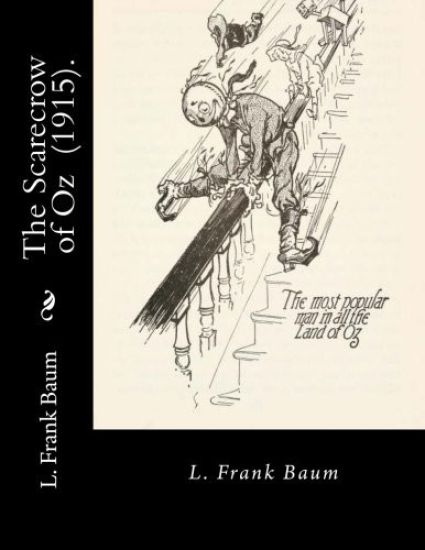
The Scarecrow of Oz is the ninth book set in the Land of Oz written by L. Frank Baum. Published on July 16, 1915, it was Baum's personal favorite of the Oz books and tells of Cap'n Bill and Trot journeying to Oz and, with the help of the Scarecrow, overthrowing the cruel King Krewl of Jinxland. Cap'n Bill and Trot (Mayre Griffiths) had previously appeared in two other novels by Baum, The Sea Fairies and Sky Island. Plot summary Cap'n Bill, a sailor with a wooden peg-leg, and his friend, a little girl named Trot, set out from California on a calm day for a short ride in their row-boat. A freak whirlpool capsizes their boat and pulls them under water, where they are carried by mermaids (referred to but not seen) to a cave. They are soon joined by a flying creature called an Ork. Passing through a dark tunnel out of the cave, the three arrive at an island inhabited by a grim man calling himself Pessim the Observer. Cap'n Bill and Trot reduce their size by eating magic shrinking-berries, and the Ork carries them away from the island to the land of Mo, where they eat another type of magic berries and resume their normal size. They meet the Bumpy Man, who specializes in serving sugar and molasses and has some of their appearance too. After dining on Mo rain (lemonade) and Mo snow (popcorn), they run into Button Bright, the boy from The Road to Oz who has gotten lost again. Cap'n Bill calls down some of the native birds (who, like all birds in fairy countries, can talk back) and offers them the "growing" berries to make them large enough to carry himself, Trot, and Button-Bright to the land of Oz. When they make it across the desert, Button-Bright, Cap'n Bill, and Trot are set down in a field and the Ork leaves them to find his own country, which he got lost from on a routine flight. The place Button-Bright, Cap'n Bill, and Trot have arrived in, Jinxland, is cut off from the rest of Oz by a range of high mountains and a bottomless crevice. The kingdom has had a turbulent recent history. The rightful king of Jinxland, King Kynd, was removed by his prime minister Phearse, who was in turn removed by his prime minister Krewl who now rules over the land. An unpleasant but wealthy citizen named Googly-Goo seeks to marry King Kynd's daughter, Princess Gloria; however, she is in love with Pon, the current gardener's boy, who is the son of the first usurper Phearse. King Krewl and Googly-Goo hire a witch named Blinkie to freeze Gloria's heart so that she will no longer love Pon. Cap'n Bill happens on this plot, and to keep him from interfering, Blinkie turns him into a grasshopper. She then freezes Gloria's heart. Googly-Goo proposes to her, but now that her heart is frozen, she does not love anyone at all, including Googly-Goo, whose proposal she scornfully declines.......... Lyman Frank Baum (May 15, 1856 - May 6, 1919), better known as L. Frank Baum, was an American author chiefly famous for his children's books, particularly The Wonderful Wizard of Oz and its sequels. He wrote a total of 14 novels in the Oz series, plus 41 other novels, 83 short stories, over 200 poems, and at least 42 scripts. He made numerous attempts to bring his works to the stage and the nascent medium of film; the 1939 adaptation of the first Oz book would become a landmark of 20th century cinema. His works anticipated such century-later commonplaces as television, augmented reality, laptop computers (The Master Key), wireless telephones (Tik-Tok of Oz), women in high-risk and action-heavy occupations (Mary Louise in the Country), police corruption and false evidence (Phoebe Daring), and the ubiquity of advertising on clothing (Aunt Jane's Nieces at Work).....
Dorothy Gale is gladly joining her Uncle Henry in California to visit relatives who live at Hugson's Ranch, after their vacation from Australia in Ozma of Oz. Dorothy meets Hugson's nephew who is her second cousin, Zeb of Hugson's Ranch. Dorothy, Eureka (her cat) and Zeb are riding a buggy being pulled by a cab-horse named Jim when a violent earthquake strikes. A crevice opens in the ground beneath them and they fall deep into the Earth. Dorothy, Eureka, Jim, Zeb, and the buggy land in the underground Land of the Mangaboos, a race of vegetable people who grow on vines. The Mangaboos accuse them of causing the earthquake, which has damaged many of their glass buildings. Just as they are about to be sentenced to death by the Mangaboos, a hot air balloon randomly descends, and in the basket is the former Wizard of Oz, whom Dorothy last saw as he floated away into the sky from the Emerald City at the end of the earlier book The Wizard of Oz. The Wizard demonstrates his (humbug) magic powers, first, by "conjuring" nine tiny, mouse-sized piglets (actually taking them from his pocket by sleight-of-hand), and then, by lighting a fire, which is a phenomenon unknown to the Mangaboos. Impressed, the Mangaboo prince gives him a temporary job as court wizard, but the death sentence is only postponed until a new, native Mangaboo wizard grows ripe enough to serve. Eureka asks for permission to eat one of the piglets, but the Wizard angrily refuses to allow this. The Mangaboo people eventually drive the travelers out of their country into a dark tunnel, which leads to another kingdom. They pass through the tunnel into a beautiful green valley. They enter a seemingly empty cottage and are welcomed by invisible people, for they have entered the Valley of Voe, whose inhabitants are able to remain invisible by eating a magic fruit, and use their invisibility to hide from marauding bears. In order to avoid being eaten by the bears, the travelers move on. The companions climb Pyramid Mountain, and meet the Braided Man, a manufacturer of holes, flutters (guaranteed to make any flag flutter on a windless day), and rustles for silk dresses. After exchanging gifts with him, the travelers continue upwards into the Land of the Gargoyles, which are hostile, silent, flying monsters made of wood. The travelers are able, at first, to repel their attack successfully because the Gargoyles are frightened by loud noises. However, the travelers are soon out of breath and unable to make more noise, so the Gargoyles capture them. After recuperating from the fight, the travelers manage to escape, and enter another tunnel....................... Lyman Frank Baum (May 15, 1856 - May 6, 1919), better known as L. Frank Baum, was an American author chiefly famous for his children's books, particularly The Wonderful Wizard of Oz and its sequels. He wrote a total of 14 novels in the Oz series, plus 41 other novels, 83 short stories, over 200 poems, and at least 42 scripts. He made numerous attempts to bring his works to the stage and the nascent medium of film; the 1939 adaptation of the first Oz book would become a landmark of 20th century cinema. His works anticipated such century-later commonplaces as television, augmented reality, laptop computers (The Master Key), wireless telephones (Tik-Tok of Oz), women in high-risk and action-heavy occupations (Mary Louise in the Country), police corruption and false evidence (Phoebe Daring), and the ubiquity of advertising on clothing (Aunt Jane's Nieces at Work)................
The acclaimed author of The Wonderful Wizard of Oz and many other juvenile fantasy books, L. Frank Baum had a lifelong fascination with fables, folklore, mythology, and fairy tales. This volume collects a series of engaging fantasy stories that follow the format of the world's best-loved fairy tales, combining imagination and adventure with valuable moral lessons.
The Emerald City of Oz is the sixth of L. Frank Baum's fourteen Land of Oz books. It was also adapted into a Canadian animated film in 1987. Originally published on July 20, 1910, it is the story of Dorothy Gale and her Uncle Henry and Aunt Em coming to live in Oz permanently. While they are toured through the Quadling Country, the Nome King is assembling allies for an invasion of Oz. This is the first time in the Oz series that Baum made use of double plots for one of the books. Plot summary At the beginning of this story, it is made quite clear that Dorothy Gale (the primary protagonist of many of the previous Oz books), is in the habit of freely speaking of her many adventures in the Land of Oz to her only living relatives, her Aunt Em and Uncle Henry. Neither of them believes a word of her stories, but consider her a dreamer, as her dead mother had been. She is undeterred (unlike her alter ego in the film Return to Oz who is much perturbed by her guardians' doubts.) Later, it is revealed that the destruction of their farmhouse by the tornado back in The Wonderful Wizard of Oz has left Uncle Henry in terrible debt. In order to pay it, he has taken out a mortgage on his farm. If he cannot repay his creditors, they will seize the farm, thus leaving Henry and his family homeless. He is not too afraid for himself, but both he and his wife, Aunt Em, fear very much for their niece's future. Upon learning this, Dorothy quickly arranges with Princess Ozma to let her bring her guardians to Oz where they will be very happier and forever safe. Using the Magic Belt (a tool captured from the jealous Nome King Roquat), Ozma transports them to her throne room. They are given rooms to live in and luxuries to enjoy, including a vast and complex wardrobe. They meet with many of Dorothy's animal friends, including the Cowardly Lion and Billina the Yellow Hen. In the underground Nome Kingdom, the Nome King, Roquat, is plotting to conquer the Land of Oz and recover his magic belt, which Dorothy took from him in Ozma of Oz. After ordering the expulsion of his General (who will not agree to such an attack) and the death of his Colonel (who also refuses), King Roquat holds counsel with a veteran soldier called Guph. Guph believes that against the many magicians of Oz (the reputation of which has grown in the telling), the Nome Army has no chance alone. He therefore sets out personally to recruit allies.......................... Lyman Frank Baum (May 15, 1856 - May 6, 1919), better known as L. Frank Baum, was an American author chiefly famous for his children's books, particularly The Wonderful Wizard of Oz and its sequels. He wrote a total of 14 novels in the Oz series, plus 41 other novels, 83 short stories, over 200 poems, and at least 42 scripts. He made numerous attempts to bring his works to the stage and the nascent medium of film; the 1939 adaptation of the first Oz book would become a landmark of 20th century cinema. His works anticipated such century-later commonplaces as television, augmented reality, laptop computers (The Master Key), wireless telephones (Tik-Tok of Oz), women in high-risk and action-heavy occupations (Mary Louise in the Country), police corruption and false evidence (Phoebe Daring), and the ubiquity of advertising on clothing (Aunt Jane's Nieces at Work)................
El maravilloso mago de Oz es un libro de literatura infantil escrito por Lyman Frank Baum e ilustrado por W. W. Denslow. Fue publicado inicialmente por la George M. Hill Company de Chicago en 1900. Desde entonces, El mago de Oz ha sido uno de los libros m s editados tanto en Estados Unidos como en Europa. Este libro, que narra las aventuras de una muchacha llamada Dorothy Gale en la tierra de Oz, constituye una de las historias m s conocidas de la cultura popular norteamericana y ha sido traducido a muchos idiomas. Gracias al gran xito de El maravilloso mago de Oz, L. Frank Baum escribi trece libros m s sobre la tierra de Oz.
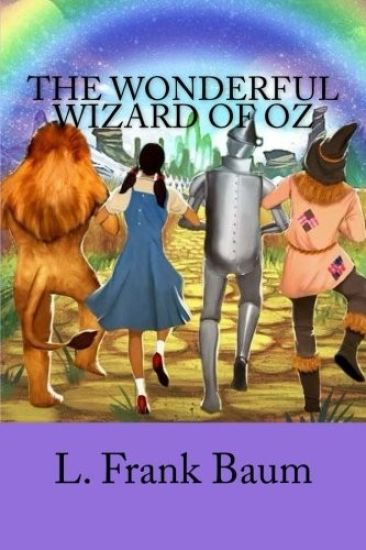
LARGE PRINT EDITION 16 POINT FONT The classic and original story told by L Frank Baum has been adapted into one of children's favourite films and enjoyed by millions. Follow Dorothy as she is whisked away to the land of Oz where she meets all kinds of wonderful, loving and strange characters including the Munchkins, the Scarecrow, the tin Woodman and the cowardly Lion. Enjoy her adventures in this classic tale written by a master story teller in it's original form first published in 1900 with an introduction by the author himself L Frank Baum.
The original and classic fairytale written by the master storyteller L. Frank Baum and first published in 1903. This is the story of the Monarch of Mo, a wonderful fairytale land with a rather bad tempered purple dragon. Fourteen surprising adventures are to be found within these pages. With an introduction by the author himself L. Frank Baum. A children's classic fairytale, perfect for bedtime reading.
First issued in 1904, L. Frank Baum's The Marvelous Land of Oz is the story of the wonderful adventures of the young boy named Tip as he travels throughout the many lands of Oz. Here he meets with our old friends the Scarecrow and Tin Woodman, as well as some new friends like Jack Pumpkinhead, the Wooden Sawhorse, the Highly Magnified Woggle-Bug, and the amazing Gump.