Kirjojen hintavertailu – 12 903 725 kirjaa ja 27 kauppaa

Kirjailija

L. Syd M Johnson

Kirjat ja teokset yhdessä paikassa: 7 kirjaa, julkaisuja vuosilta 2018–2025, suosituimpiin kuuluu Chimpanzee Rights. Vertaile teosten hintoja ja tarkista saatavuus suomalaisista kirjakaupoista.

7 kirjaa

Kirjojen julkaisuvuodet: 2018–2025.

Chimpanzee Rights

Chimpanzee Rights

Kristin Andrews; Gary Comstock; Crozier G.K.D.; Sue Donaldson; Andrew Fenton; Tyler John; L. Syd M Johnson; Robert Jones; Will Kymlicka; Letitia Meynell; Nathan Nobis; David Pena-Guzman; Jeff Sebo

Routledge
2018
nidottu
Since 2013, an organization called the Nonhuman Rights Project has brought before the New York State courts an unusual request—asking for habeas corpus hearings to determine whether Kiko and Tommy, two captive chimpanzees, should be considered legal persons with the fundamental right to bodily liberty. While the courts have agreed that chimpanzees share emotional, behavioural, and cognitive similarities with humans, they have denied that chimpanzees are persons on superficial and sometimes conflicting grounds. Consequently, Kiko and Tommy remain confined as legal "things" with no rights. The major moral and legal question remains unanswered: are chimpanzees mere "things", as the law currently sees them, or can they be "persons" possessing fundamental rights? In Chimpanzee Rights: The Philosophers’ Brief, a group of renowned philosophers considers these questions. Carefully and clearly, they examine the four lines of reasoning the courts have used to deny chimpanzee personhood: species, contract, community, and capacities. None of these, they argue, merits disqualifying chimpanzees from personhood. The authors conclude that when judges face the choice between seeing Kiko and Tommy as things and seeing them as persons—the only options under current law—they should conclude that Kiko and Tommy are persons who should therefore be protected from unlawful confinement "in keeping with the best philosophical standards of rational judgment and ethical standards of justice." Chimpanzee Rights: The Philosophers’ Brief—an extended version of the amicus brief submitted to the New York Court of Appeals in Kiko’s and Tommy’s cases—goes to the heart of fundamental issues concerning animal rights, personhood, and the question of human and nonhuman nature. It is essential reading for anyone interested in these issues.

Chimpanzee Rights

Chimpanzee Rights

Kristin Andrews; Gary Comstock; Crozier G.K.D.; Sue Donaldson; Andrew Fenton; Tyler John; L. Syd M Johnson; Robert Jones; Will Kymlicka; Letitia Meynell; Nathan Nobis; David Pena-Guzman; Jeff Sebo

Routledge
2018
sidottu
Since 2013, an organization called the Nonhuman Rights Project has brought before the New York State courts an unusual request—asking for habeas corpus hearings to determine whether Kiko and Tommy, two captive chimpanzees, should be considered legal persons with the fundamental right to bodily liberty. While the courts have agreed that chimpanzees share emotional, behavioural, and cognitive similarities with humans, they have denied that chimpanzees are persons on superficial and sometimes conflicting grounds. Consequently, Kiko and Tommy remain confined as legal "things" with no rights. The major moral and legal question remains unanswered: are chimpanzees mere "things", as the law currently sees them, or can they be "persons" possessing fundamental rights? In Chimpanzee Rights: The Philosophers’ Brief, a group of renowned philosophers considers these questions. Carefully and clearly, they examine the four lines of reasoning the courts have used to deny chimpanzee personhood: species, contract, community, and capacities. None of these, they argue, merits disqualifying chimpanzees from personhood. The authors conclude that when judges face the choice between seeing Kiko and Tommy as things and seeing them as persons—the only options under current law—they should conclude that Kiko and Tommy are persons who should therefore be protected from unlawful confinement "in keeping with the best philosophical standards of rational judgment and ethical standards of justice." Chimpanzee Rights: The Philosophers’ Brief—an extended version of the amicus brief submitted to the New York Court of Appeals in Kiko’s and Tommy’s cases—goes to the heart of fundamental issues concerning animal rights, personhood, and the question of human and nonhuman nature. It is essential reading for anyone interested in these issues.
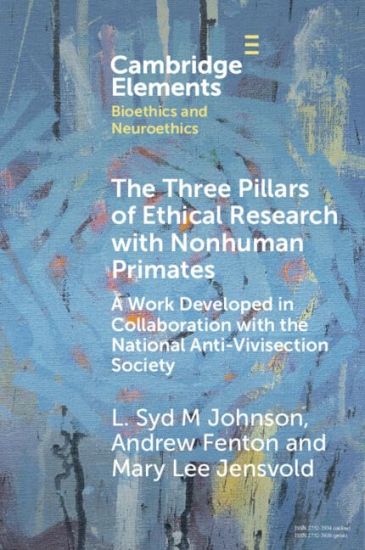
The Three Pillars of Ethical Research with Nonhuman Primates

The Three Pillars of Ethical Research with Nonhuman Primates

L. Syd M Johnson; Andrew Fenton; Mary Lee Jensvold

Cambridge University Press
2025
pokkari
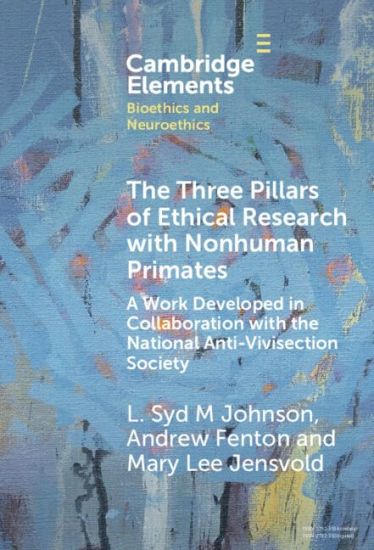
The Three Pillars (Harmonization, Replacement, and Justice) describe an ethical path forward and away from the use of nonhuman primates in harmful research and scientific use. Conducting nonhuman primate research in an ethical way that acknowledges their moral importance requires satisfying more rigorous guidelines and regulations modeled on those that apply to similarly vulnerable human subjects, especially children and incarcerated persons. This Element argues for the moral necessity of harmonizing human and nonhuman primate research ethics, regulations, and guidelines in a way that protects all primates, human and nonhuman. The authors call for the replacement of nonhuman primates in research with human-relevant methods that do not simply shift research onto other nonhuman animals, and challenge publics, governments, and scientific communities worldwide to implement justice in the selection and use of all research subjects. This title is also available as Open Access on Cambridge Core.
The Three Pillars of Ethical Research with Nonhuman Primates

The Three Pillars of Ethical Research with Nonhuman Primates

L. Syd M Johnson; Andrew Fenton; Mary Lee Jensvold

Cambridge University Press
2025
sidottu
The Three Pillars (Harmonization, Replacement, and Justice) describe an ethical path forward and away from the use of nonhuman primates in harmful research and scientific use. Conducting nonhuman primate research in an ethical way that acknowledges their moral importance requires satisfying more rigorous guidelines and regulations modeled on those that apply to similarly vulnerable human subjects, especially children and incarcerated persons. This Element argues for the moral necessity of harmonizing human and nonhuman primate research ethics, regulations, and guidelines in a way that protects all primates, human and nonhuman. The authors call for the replacement of nonhuman primates in research with human-relevant methods that do not simply shift research onto other nonhuman animals, and challenge publics, governments, and scientific communities worldwide to implement justice in the selection and use of all research subjects. This title is also available as Open Access on Cambridge Core.
Philosophical, Medical, and Legal Controversies About Brain Death
This Element considers current legal, ethical, metaphysical, and medical controversies concerning brain death. It examines the implicit metaphysical and moral commitments and dualism implied by neurological criteria for death. When these commitments and worldview are not shared by patients and surrogates, they give rise to distrust in healthcare providers and systems, and to injustice, particularly when medicolegal definitions of death are coercively imposed on those who reject them. Ethical obligations to respect persons and patient autonomy, promote patient-centered care, foster and maintain trust, and respond to the demands of justice provide compelling ethical reasons for recognizing reasonable objections. Each section illustrates how seemingly academic debates about brain death have real, on-the-ground implications for patients and their families.
Philosophical, Medical, and Legal Controversies About Brain Death
This Element considers current legal, ethical, metaphysical, and medical controversies concerning brain death. It examines the implicit metaphysical and moral commitments and dualism implied by neurological criteria for death. When these commitments and worldview are not shared by patients and surrogates, they give rise to distrust in healthcare providers and systems, and to injustice, particularly when medicolegal definitions of death are coercively imposed on those who reject them. Ethical obligations to respect persons and patient autonomy, promote patient-centered care, foster and maintain trust, and respond to the demands of justice provide compelling ethical reasons for recognizing reasonable objections. Each section illustrates how seemingly academic debates about brain death have real, on-the-ground implications for patients and their families.
The Ethics of Uncertainty

The Ethics of Uncertainty

L. Syd M Johnson

OXFORD UNIVERSITY PRESS INC
2022
sidottu
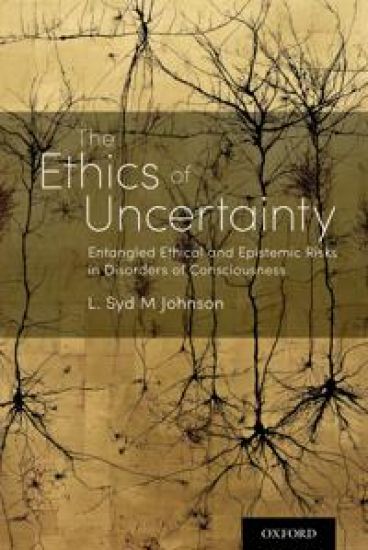
Disorders of Consciousness (DoCs) raise difficult and complex questions about the value of life for persons with impaired consciousness, the rights of persons unable to make medical decisions, and our social, medical, and ethical obligations to patients whose personhood has frequently been challenged and neglected. Recent neuroscientific discoveries have led to enhanced understanding of the heterogeneity of these disorders, and focused renewed attention on the medical and ethical problem of misdiagnosis. This book examines the entanglement of epistemic and ethical uncertainty in DoCs and other medical contexts, and how they interact to create both epistemic and ethical risks. Philosopher and bioethicist L. Syd M Johnson pulls together multiple threads in this work: the ontological mysteries of consciousness, medical uncertainty about unconsciousness, ableist bias, withdrawal of treatment in neurointensive care, and the rarely questioned view that consciousness is essential to personhood and moral status. Johnson challenges longstanding bioethical dogmas about DoC patients, and argues for an ethics of uncertainty for contexts where there is a need for decisive action in the presence of unavoidable uncertainty. The ethics of uncertainty refocuses ethical inquiry concerning persons with DoCs, placing less emphasis on their contested personhood, and more on inductive risk and uncertainty, on respect for autonomy, and especially on epistemic justice. With applications to various decisional contexts where uncertainty and ethical risk interact, this ethical approach enables surrogate decision makers facing fraught and risky choices to fulfill their obligations as moral and epistemic agents.