Kirjailija
L T Meade
Kirjat ja teokset yhdessä paikassa: 570 kirjaa, julkaisuja vuosilta 2004–2026, suosituimpiin kuuluu Polly. Vertaile teosten hintoja ja tarkista saatavuus suomalaisista kirjakaupoista.
Nimi esiintyy myös muodoissa: L. T. Meade, L. T Meade, L.T. Meade, L.T Meade
570 kirjaa
Kirjojen julkaisuvuodet: 2004–2026.




It was on a summer's evening early in the month of August that the little Mummy was once again seen on the platform at Dawlish. She looked now very much like she did when we saw her of yore-slightly broadened, it is true, by the added years, but she still wore somewhat rusty widow's black, and her face still had that half-anxious, half-comical expression, which made people turn to look at her with something between a smile and a sigh. She was commonplace and plain, and yet in one sense she was neither commonplace nor plain. She had a character, and that character had developed during the last few years, and rather for the better.

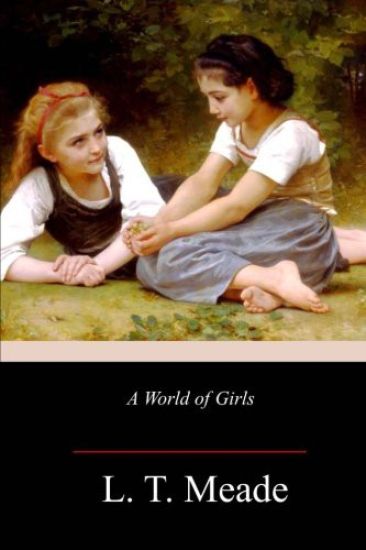
Excerpt from A World of Girls: The Story of a School So you have found me, my precious, my dear est Brave, plucky little Nan, you have got away from Nurse and found me out Come into the study now, darling, and you shall have some break fast. About the Publisher Forgotten Books publishes hundreds of thousands of rare and classic books. Find more at www.forgottenbooks.com This book is a reproduction of an important historical work. Forgotten Books uses state-of-the-art technology to digitally reconstruct the work, preserving the original format whilst repairing imperfections present in the aged copy. In rare cases, an imperfection in the original, such as a blemish or missing page, may be replicated in our edition. We do, however, repair the vast majority of imperfections successfully; any imperfections that remain are intentionally left to preserve the state of such historical works.

A Master of Mysteries
L. T. Meade; Robert Eustace
Createspace Independent Publishing Platform
2018
nidottu
A Master of Mysteries By Robert Eustace, L. T. Meade

This work has been selected by scholars as being culturally important and is part of the knowledge base of civilization as we know it. This work is in the public domain in the United States of America, and possibly other nations. Within the United States, you may freely copy and distribute this work, as no entity (individual or corporate) has a copyright on the body of the work. Scholars believe, and we concur, that this work is important enough to be preserved, reproduced, and made generally available to the public. To ensure a quality reading experience, this work has been proofread and republished using a format that seamlessly blends the original graphical elements with text in an easy-to-read typeface. We appreciate your support of the preservation process, and thank you for being an important part of keeping this knowledge alive and relevant.
The time was the height of the London season for 1875; the height of that gay time when the parks, and streets, and shops are full, when pleasure-promoters are busy keeping up a fresh supply of every form of entertainment, when pleasure-seekers are flocking to the garden parties, and strawberry parties, the operas, and theatres, and all other amusements provided for them; when the world-the world at least of Regent Street, and Piccadilly, of Eaton Square, and all Belgravia-looks so rich and prosperous, so full of life and all that makes life enjoyable.

The Rebel of the School: Large Print By L. T. Meade The school was situated in the suburbs of the popular town of Merrifield, and was known as the Great Shirley School. It had been endowed some hundred years ago by a rich and eccentric individual who bore the name of Charles Shirley, but was now managed by a Board of Governors. By the express order of the founder, the governors were women; and very admirably did they fulfil their trust. There was no recent improvement in education, no better methods, no sanitary requirements which were not introduced into the Great Shirley School. The number of pupils was limited to four hundred, one hundred of which were foundationers and were not required to pay any fees; the remaining three hundred paid small fees in order to be allowed to secure an admirable and up-to-date education under the auspices of the great school. There came a day in early autumn, shortly after the girls had reassembled after their summer vacation, when they streamed out of the building in groups of twenties and thirties and forties. They stood about and talked as girls will. The Great Shirley School, well as it was managed, had perhaps a larger share than many schools of those temptations which make school a world-a world for the training either for good or evil of those who go to it. There were the girls who attended the school in the ordinary way, and there were the girls who were drafted on to the foundation from lower schools. These latter were looked down upon by the least noble and the meanest of their fellow-scholars. There was a slight rain falling, and two or three girls standing in a group raised their umbrellas, but they still stood beside the gates. "She's quite the very prettiest girl I ever saw," cried Alice Tennant; "but of course we can have nothing to do with her. She entered a week ago. She doesn't pay any of the fees; she has no pretence to being a lady. Oh, here she comes Did you ever see such a face?" A slight, shabbily dressed little girl, with her satchel of books slung on her arm, now appeared. She looked to right and left of her as though she were slightly alarmed. Her face was beautiful in the truest sense of the world; it did not at all match with the shabby, faded clothes which she wore. She had large deep-violet eyes, jet-black hair, and a sweet, fresh complexion. Her expression was bewitching, and when she smiled a dimple came in her cheek. We are delighted to publish this classic book as part of our extensive Classic Library collection. Many of the books in our collection have been out of print for decades, and therefore have not been accessible to the general public. The aim of our publishing program is to facilitate rapid access to this vast reservoir of literature, and our view is that this is a significant literary work, which deserves to be brought back into print after many decades. The contents of the vast majority of titles in the Classic Library have been scanned from the original works. To ensure a high quality product, each title has been meticulously hand curated by our staff. Our philosophy has been guided by a desire to provide the reader with a book that is as close as possible to ownership of the original work. We hope that you will enjoy this wonderful classic work, and that for you it becomes an enriching experience.

I have often been asked to tell the story of the Ruby Ring, and I now do so for the sake of my children. It may instruct them a little; it will certainly amuse and interest them. I am nearly thirty now, but when the story of the ring happened, I was between nineteen and twenty. It is not so long ago, therefore, and all the events stand out quite clear and strong in my memory. We lived in the country, about thirty miles away from London. There were plenty of quick trains, even ten years ago, and my father and brothers used to go to town every morning, and return in time for a sort of mixed meal between dinner and supper, at night. My mother and I had rather a dull life; the only event of any moment in the twenty-four hours being the evening meal when the men of the family were at home. I was the only girl, and the youngest of the family. I was not petted nor made much of in any way; ten years ago girls were not fussed over as they are now. My father had none of the advanced ideas with regard to women; he thought the less girls were heard of outside their homes, the better. He was a very good, honourable man, but a great autocrat. What he said and thought was echoed both by my mother and brothers. They all preached to me from morning till night the doctrine of staying quietly at home, of doing nothing, and of waiting until your fortune dropped into your lap.

Mrs. Merriman and Lucy were standing at the white gates of Sunnyside, waiting for the arrival of the girls. Mrs. Merriman had soft brown hair, soft brown eyes to match, and a kindly, gentle face. Lucy was somewhat prim, very neat in her person, with thick fair hair which she wore in two long plaits far below her waist, a face full of intensity and determination, and a slightly set and formal way of speaking. "Aren't you at all excited about their arrival?" said Mrs. Merriman, turning to her daughter as she spoke. "It will make a great change in the house, will it not?" "How many of them are there, mother?" was Lucy's response. "Oh, my dear child, how often I have explained all to you There's Laura Everett, my dear friend Lady Everett's only daughter; then there is Annie Millar, whom I do not know anything about-but she is a friend of Laura's, and that alone is recommendation enough." "Laura Everett, Annie Millar," quoted Lucy in a low tone. "Have you seen either of them, mother?" "No, dear, of course not." "Has father ever seen them?" "No. But my dear friend Lady Everett--" "Oh, mother darling, when have you seen your dear friend?" "Not since we were girls. But it is so nice to think she should trust her daughter to me." "Well, yes, mother, I suppose so. I suppose I must be quite satisfied. Well, that means two-Laura and Annie. How old are they, mother?" "They are both fourteen." "Then the others, mother?" "Rosamund Cunliffe. I did meet her mother a year ago, who told me she was very pretty. I remember that. Then there is Phyllis Flower. Think of any one with such a dear name-Phyllis and Flower The whole name is too sweet I told your father that I knew I should fall in love with Phyllis." "Mother dear, you really mustn't make favorites," said Lucy in a reproving tone.

A Little Mother to the Others By L. T. Meade

The Palace Beautiful A Story for Girls
L. T. Meade
Createspace Independent Publishing Platform
2017
nidottu