Kirjojen hintavertailu – 12 903 725 kirjaa ja 27 kauppaa
Kirjailija
Lambrick George
Kirjat ja teokset yhdessä paikassa: 3 kirjaa, julkaisuja vuosilta 2005–2008, suosituimpiin kuuluu Archaeology of the Wallingford Bypass, 1986-92. Vertaile teosten hintoja ja tarkista saatavuus suomalaisista kirjakaupoista.
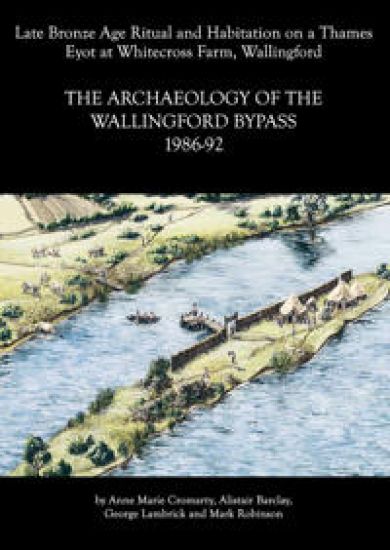
The site at Whitecross Farm, including timber structures located on the edge of the eyot, and a substantial midden and occupation deposit has been securely radiocarbon-dated to the late Bronze Age. The late Bronze Age artefact assemblages are suggestive of a high-status site, with a range of domestic and ritual activities represented. The bank of the Grim's Ditch earthwork was found to have preserved evidence of earlier settlement, dating to the Neolithic and Bronze Age, and a sequence of cultivation, including ard marks and 'cord-rig' cultivation ridges. Pottery and radiocarbon analysis dated the earthwork to the end of the late Iron Age or the early Roman period. A multi-period settlement, consisting of pits, a waterhole, postholes, gullies and field systems, was identified at Bradford's Brook, Cholsey. The main periods represented are late Bronze Age and Romano-British, while a small quantity of Saxon pottery indicates limited Saxon activity. A large pit containing late Bronze Age pottery, a cattle skull, waterlogged wood and plant remains, a complete loomweight and flint flakes has been interpreted as a waterhole. A series of radiocarbon dates were obtained for deposits within this feature. All three sites are discussed individually as well as within their local, regional and national contexts. Chapter 7 provides an overall discussion of later Bronze Age themes that have arisen through the excavation and analysis of these sites.
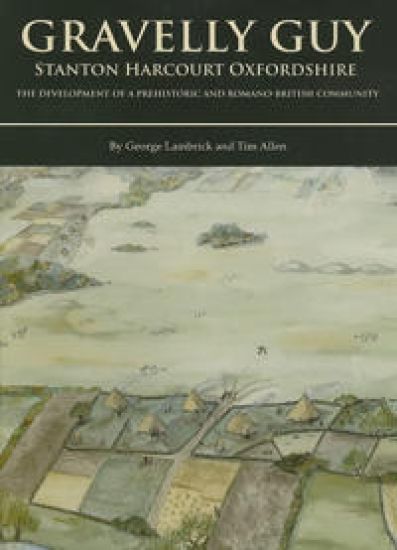
Excavations conducted between 1981 and 1986 in advance of gravel extraction in Gravelly Guy field, Stanton Harcourt, Oxfordshire, revealed archaeological evidence spanning from the Neolithic through to the Saxon period. Neolithic and early Bronze Age activity is represented by pit scatters and a series of ring ditches with associated burials. The Iron Age and early Roman periods witnessed the continuous development of a linear settlement, consisting of a dense area of pits, gullies, circular structures, four-posters and boundary ditches in the mid to late Iron Age phase and a series of rectilinear enclosures and unusual 'ramped hollows' and wells in the late Iron Age/early Roman period. Excavation of a section at the junction of the floodplain and the gravel terrace has also provided information regarding the changing land use and contemporary environment in the vicinity of the site. Gravelly Guy remains one of the most thoroughly excavated sites of this period in the Thames Valley. As well as the vast amount of structural evidence, the considerable quantities of artefacts and environmental information recovered, together with a series of ten radiocarbon dates, have resulted in a detailed study of the site, its position in the landscape and relationship to the contemporary archaeology of the surrounding area.