Kirjojen hintavertailu – 12 859 819 kirjaa ja 27 kauppaa

Kirjailija

Lana F. Rakow

Kirjat ja teokset yhdessä paikassa: 6 kirjaa, julkaisuja vuosilta 2001–2019, suosituimpiin kuuluu The Revolution in Words. Vertaile teosten hintoja ja tarkista saatavuus suomalaisista kirjakaupoista.

6 kirjaa

Kirjojen julkaisuvuodet: 2001–2019.

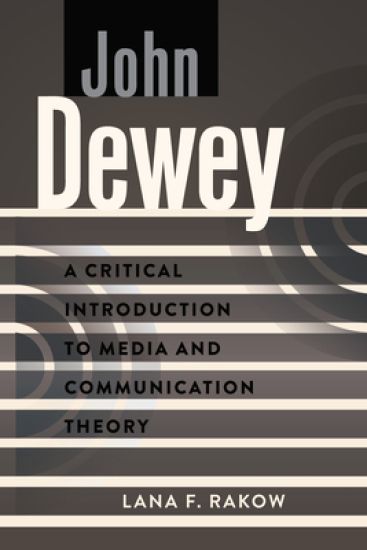
John Dewey

John Dewey

Lana F. Rakow

Peter Lang Publishing Inc
2019
sidottu
John Dewey: A Critical Introduction to Media and Communication Theory reintroduces John Dewey to scholars in communication studies by presenting new material and interpretations from his works, lectures, and correspondence. Dewey has been credited as being one of the giants of American philosophy, a key figure in the development of pragmatism. Going beyond Dewey’s reputation in received histories in communication, this book documents his role beginning at the University of Michigan in 1884 until his death in 1952 in establishing a view of communication as the means by which associated life and adaptation to the environment is possible. Communication enables the production of collective knowledge generated through experience and reproduced across time and space, subject to change and correction as those truths are applied and yield consequences. It is also subject to manipulation and misuse. So integral is communication to his philosophy that Dewey is best seen as having a philosophy with communication, not of it. By reviewing Dewey’s history of work relevant to communication, technology, and culture, previous assumptions by communication scholars are challenged. A fresh history is presented of his relations to key figures and his significance to the development of speech, rhetoric, journalism, mass communication research, and public relations. Because of his concerns about power, participation, identity, and knowledge, his work remains relevant to contemporary scholars. This book is appropriate for advanced undergraduate and graduate courses in theory, history, and philosophy of communication and is relevant to other disciplines with interests in pragmatism, feminist and race theory, technology, and cultural studies.
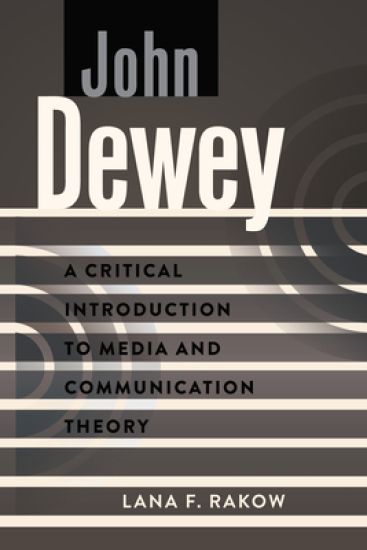
John Dewey

John Dewey

Lana F. Rakow

Peter Lang Publishing Inc
2019
nidottu
John Dewey: A Critical Introduction to Media and Communication Theory reintroduces John Dewey to scholars in communication studies by presenting new material and interpretations from his works, lectures, and correspondence. Dewey has been credited as being one of the giants of American philosophy, a key figure in the development of pragmatism. Going beyond Dewey’s reputation in received histories in communication, this book documents his role beginning at the University of Michigan in 1884 until his death in 1952 in establishing a view of communication as the means by which associated life and adaptation to the environment is possible. Communication enables the production of collective knowledge generated through experience and reproduced across time and space, subject to change and correction as those truths are applied and yield consequences. It is also subject to manipulation and misuse. So integral is communication to his philosophy that Dewey is best seen as having a philosophy with communication, not of it. By reviewing Dewey’s history of work relevant to communication, technology, and culture, previous assumptions by communication scholars are challenged. A fresh history is presented of his relations to key figures and his significance to the development of speech, rhetoric, journalism, mass communication research, and public relations. Because of his concerns about power, participation, identity, and knowledge, his work remains relevant to contemporary scholars. This book is appropriate for advanced undergraduate and graduate courses in theory, history, and philosophy of communication and is relevant to other disciplines with interests in pragmatism, feminist and race theory, technology, and cultural studies.

The Revolution in Words

The Revolution in Words

Cheris Kramarae; Lana F. Rakow

Routledge
2010
nidottu
First published in 1990. The revolution is one of the most radical periodicals of the Western women's movement. Though it only lasted a few years, it drew considerable attention to the courage and eloquence of its editors and contributors. The volume presents a wide range of exerpts from the periodical, evoking the undeminished power of these women's voices
Feminist Communication Theory

Feminist Communication Theory

Lana F. Rakow; Laura A. Wackwitz

SAGE Publications Inc
2004
nidottu
"This is a remarkable book that embraces the challenge of rethinking communication theory. Much more inclusive than most communication volumes, this guidebook offers a rich diversity of voices, along with a conceptual framework for remaking communication theory. Illuminating, innovative, eloquent-and transforming." -Cheris Kramarae, University of Oregon "This is a book not only of and for feminist communication theory, but of and for feminists. After a preface that marks and remarks in creative ways how the personal is political, Rakow and Wackwitz offer a compelling account of the need and potential of feminist theorizing for social and structural transformation. The collection represents a range of experiences, problems, voices, and thus will be useful to scholars, students, and activists." -Linda Steiner, Rutgers University Feminist Communication Theory is a book "of" and "for" feminist communication theorists, providing the potential to help individuals understand the human condition, name personal experiences and engage these experiences through storytelling, and give useful strategies for achieving justice. Lana F. Rakow and Laura A. Wackwitz examine the work of feminist theorists over the past two decades who have challenged traditional communication theory, contributing to the development of feminist communication theory by identifying its important contours, shortcomings, and promise. Arguing that feminist communication theory must address theories of gender, communication, and social change, Rakow and Wackwitz describe feminist communication theory as explanatory, political, polyvocal, and transformative. The book is constructed around the three key concepts of difference, voice, and representation to reflect on how feminist theory reshapes our thinking about gender and communication. Feminist Communication Theory represents a variety of voices from different theoretical, cultural, and geographic perspectives to illustrate the complex challenge of constructing new theoretical positions. Key Features Explores key works and issues of feminist theory relevant to gender and communicationExamines a broad range, well beyond conventional wisdom, of women's perspectives and experiencesProvides tools to develop the theoretical potential of both feminist and communication theory Feminist Communication Theory is designed for undergraduate and graduate courses on feminist communication, gender and communication, communication theory, speech, rhetoric, and mass communication. The book will also be of interest to feminist scholars in a variety of disciplines, as well as students and scholars in Women's Studies and Cultural Studies.
Feminist Communication Theory

Feminist Communication Theory

Lana F. Rakow; Laura A. Wackwitz

SAGE Publications Inc
2004
sidottu
"This is a remarkable book that embraces the challenge of rethinking communication theory. Much more inclusive than most communication volumes, this guidebook offers a rich diversity of voices, along with a conceptual framework for remaking communication theory. Illuminating, innovative, eloquent-and transforming." -Cheris Kramarae, University of Oregon "This is a book not only of and for feminist communication theory, but of and for feminists. After a preface that marks and remarks in creative ways how the personal is political, Rakow and Wackwitz offer a compelling account of the need and potential of feminist theorizing for social and structural transformation. The collection represents a range of experiences, problems, voices, and thus will be useful to scholars, students, and activists." -Linda Steiner, Rutgers University Feminist Communication Theory is a book "of" and "for" feminist communication theorists, providing the potential to help individuals understand the human condition, name personal experiences and engage these experiences through storytelling, and give useful strategies for achieving justice. Lana F. Rakow and Laura A. Wackwitz examine the work of feminist theorists over the past two decades who have challenged traditional communication theory, contributing to the development of feminist communication theory by identifying its important contours, shortcomings, and promise. Arguing that feminist communication theory must address theories of gender, communication, and social change, Rakow and Wackwitz describe feminist communication theory as explanatory, political, polyvocal, and transformative. The book is constructed around the three key concepts of difference, voice, and representation to reflect on how feminist theory reshapes our thinking about gender and communication. Feminist Communication Theory represents a variety of voices from different theoretical, cultural, and geographic perspectives to illustrate the complex challenge of constructing new theoretical positions. Key Features Explores key works and issues of feminist theory relevant to gender and communicationExamines a broad range, well beyond conventional wisdom, of women's perspectives and experiencesProvides tools to develop the theoretical potential of both feminist and communication theory Feminist Communication Theory is designed for undergraduate and graduate courses on feminist communication, gender and communication, communication theory, speech, rhetoric, and mass communication. The book will also be of interest to feminist scholars in a variety of disciplines, as well as students and scholars in Women's Studies and Cultural Studies.
The Revolution in Words

The Revolution in Words

Cheris Kramarae; Lana F. Rakow

Routledge
2001
sidottu
First published in 1990. The Revolution is one of the most radical periodicals of the Western women's movement. Though it only lasted a few years, it drew considerable attention to the courage and eloquence of its editors and contributors. The volume presents a wide range of exerpts from the periodical, evoking the undeminished power of these women's voices.