Kirjailija
Lance Workman
Kirjat ja teokset yhdessä paikassa: 17 kirjaa, julkaisuja vuosilta 2013–2026, suosituimpiin kuuluu Charles Darwin. Vertaile teosten hintoja ja tarkista saatavuus suomalaisista kirjakaupoista.
17 kirjaa
Kirjojen julkaisuvuodet: 2013–2026.

This book examines the history of thought surrounding the relationship between Darwinism and the behavioural sciences. Accessible and thought-provoking, it demonstrates how and why Darwinism remains both illuminating and controversial today.
Psychology of Everyday Life
Gil Greengross; Lance Workman; Nigel Holt

TAYLOR FRANCIS LTD
2026
nidottu
Exploring the psychology of everyday behaviour, this book uses an evolutionary perspective to explain experiences that many people share and can easily relate to. This book focuses on topics that are applicable to what people do and experience in their daily lives. Why do we choose the partners we do? Why do we laugh? Why is play so essential for children? Why are we drawn to stories, music, and sweet food? The book examines such topics as sex and relationships, humour, family dynamics, religion, and media and technology through an evolutionary psychology perspective, looking deep into the ancestral past to uncover the adaptive roots of modern life. In so doing, it reveals how ancient psychological mechanisms continue to shape daily choices, pleasures, fears and relationships. Each chapter can be read as a standalone topic or as part of a bigger exploration to understand why we do what we do. Written in an accessible style and covering common human behaviours and experiences, this is the ideal book for undergraduate students in introductory modules, as well as more specific courses on such topics as Psychology of Sport, Psychology of Humour, and Psychology of Music. It will also appeal to anyone with an interest in psychological science looking to understand themselves and others.
Psychology of Everyday Life
Gil Greengross; Lance Workman; Nigel Holt
TAYLOR FRANCIS LTD
2026
sidottu
Exploring the psychology of everyday behaviour, this book uses an evolutionary perspective to explain experiences that many people share and can easily relate to. This book focuses on topics that are applicable to what people do and experience in their daily lives. Why do we choose the partners we do? Why do we laugh? Why is play so essential for children? Why are we drawn to stories, music, and sweet food? The book examines such topics as sex and relationships, humour, family dynamics, religion, and media and technology through an evolutionary psychology perspective, looking deep into the ancestral past to uncover the adaptive roots of modern life. In so doing, it reveals how ancient psychological mechanisms continue to shape daily choices, pleasures, fears and relationships. Each chapter can be read as a standalone topic or as part of a bigger exploration to understand why we do what we do. Written in an accessible style and covering common human behaviours and experiences, this is the ideal book for undergraduate students in introductory modules, as well as more specific courses on such topics as Psychology of Sport, Psychology of Humour, and Psychology of Music. It will also appeal to anyone with an interest in psychological science looking to understand themselves and others.
The fully revised fifth edition of this highly acclaimed undergraduate textbook provides a thought-provoking introduction to evolutionary psychology, while assuming no prior knowledge of evolutionary theory. The authors continue to carefully guide students towards a level of understanding where they can critically apply evolutionary theory to psychological explanation, providing an engaging and balanced discussion of the field. New material has been added on female homosexuality, artificial intelligence and language, cooking and human brain expansion, Covid-19 and rates of evolutionary change, and the effects of digital media on mental health. This edition also has new and revised boxed case studies, many new figures, extra discussion questions, and additional further reading suggestions. The text is accompanied by online resources including an updated test bank and lecture slides, as well as new answers to the end-of-chapter questions. This is essential reading for students taking undergraduate and graduate courses in evolutionary psychology.
Evolutionary Psychology
Lance Workman; Will Reader
Cambridge University Press
2025
pokkari
Halvin toimitettuna 64,40 €
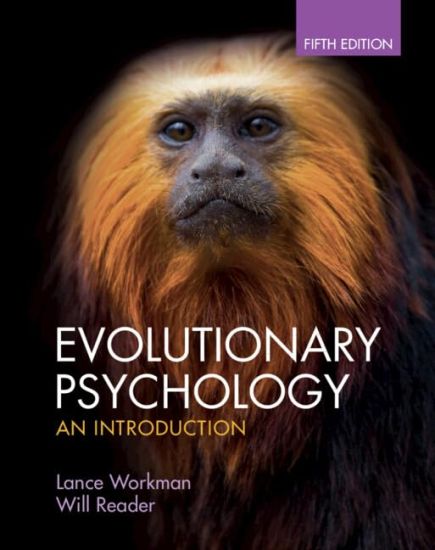
The fully revised fifth edition of this highly acclaimed undergraduate textbook provides a thought-provoking introduction to evolutionary psychology, while assuming no prior knowledge of evolutionary theory. The authors continue to carefully guide students towards a level of understanding where they can critically apply evolutionary theory to psychological explanation, providing an engaging and balanced discussion of the field. New material has been added on female homosexuality, artificial intelligence and language, cooking and human brain expansion, Covid-19 and rates of evolutionary change, and the effects of digital media on mental health. This edition also has new and revised boxed case studies, many new figures, extra discussion questions, and additional further reading suggestions. The text is accompanied by online resources including an updated test bank and lecture slides, as well as new answers to the end-of-chapter questions. This is essential reading for students taking undergraduate and graduate courses in evolutionary psychology.
Evolutionary Psychology
Will Reader; Lance Workman
TAYLOR FRANCIS LTD
2023
nidottu
Halvin toimitettuna 31,20 €
Evolutionary Psychology: The Basics is a jargon-free and accessible introduction to evolutionary psychology, which examines behaviour, thoughts, and emotions in relation to evolutionary theory. Reader and Workman outline how evolutionary thinking can enhance the core areas of psychology: social, developmental, biological, cognitive, and individual differences/abnormal psychology. Covering topics such as genetics and natural selection, mate choice, culture, morality, mental health, and childhood, among others, the book integrates psychology into the biological sciences and explains the different approaches in the field by evaluating current and past evolutionary research and theory. Key studies and theories are explored in an accessible way, with the work of key evolutionary and behavioural scientists from Darwin to Dawkins examined and explained. Including a glossary and further reading, this is the essential introduction to evolutionary psychology for students of psychology and related areas, and academics and researchers, as well as anyone interested in learning more about this fascinating field.
Psychopathy: The Basics is an accessible text that provides a compact introduction to the major findings and debates concerning this complex personality disorder. This book provides an overview of the field and covers a wide range of research findings from genetics to psychosocial developmental explanations. It begins with an exploration of the historical conception of the phenomenon of psychopathy and goes on to discuss its social and cultural accounts. It also delves into biologically based explanations including genetic and evolutionary approaches, along with criminological and entrepreneurial types of psychopathy. Offering a balanced perspective, thisbook addresses the nature-nurture debate in the field and also discusses widely accepted personality traits of psychopaths. Lastly, it also provides a glossary of key terms and suggestions for further reading This book will be an essential read for students of forensic psychology, or criminology. It is also an ideal starting point for those interested in the science of psychopathy and personality disorders.
Cognitive Psychology: The Basics provides a compact introduction to the core topics in the field, discussing the science behind the everyday cognitive phenomena experienced by us all. The book considers laboratory and applied theory and research alongside technological developments to demonstrate how our understanding of the brain’s role in cognition is improving all the time. Alongside coverage of traditional topics in the field, including attention and perception; learning and memory; thinking, problem-solving and decision-making; and language, the book also discusses developments in interrelated areas, such as neuroscience and computational cognitive science. New perspectives, including the contribution of evolutionary psychology to our understanding of cognition are also considered before a thoughtful discussion of future research directions. Using real-world examples throughout, the authors explain in an accessible and student-friendly manner the role our human cognition plays in all aspects of our lives. It is an essential introductory text suitable for all students of Cognitive Psychology and related disciplines. It will also be an ideal read for any reader interested in the role of the brain in human behavior.
Evolutionary Psychology
Lance Workman; Will Reader
Cambridge University Press
2021
pokkari
Halvin toimitettuna 64,60 €
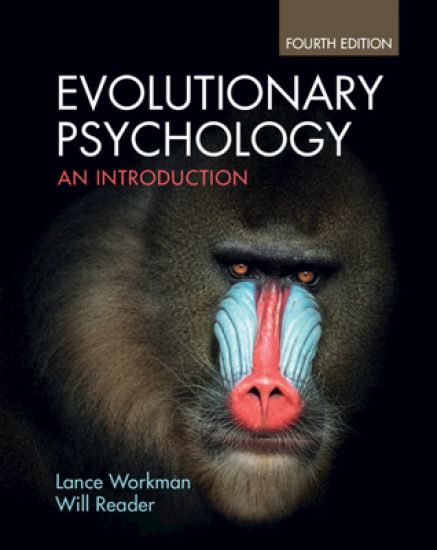
While evolutionary psychology is a fascinating science, it is also often misunderstood. In this highly acclaimed undergraduate textbook, Workman and Reader assume no prior knowledge of evolution and instead carefully guide students towards a level of understanding where they can critically apply evolutionary theory to psychological explanation. The authors provide an engaging and balanced discussion of evolutionary psychology without committing to a specific school of thought, and organise chapters around topics familiar to psychology students. Retaining the successful structure and pedagogy of previous editions, the text has been updated to include the latest advances in the field, with new material added on homosexuality, a consideration of feminist criticism, grandparental investment, and developments in neuroscience and epigenetics. The fourth edition is now in full colour, with new figures and photographs, revised boxed case studies, additional discussion questions, and an updated online test bank.
The Psychology of Human Social Development provides a comprehensive introduction to the essential core topics and exciting new findings in this thriving field of developmental psychology. Following a thematic approach, the book looks at key topics in social development in childhood and adolescence, including personality development and research methods, taking the reader from first principles to an advanced understanding. The book explores socio-emotional development and social learning, as well as the history of thinking, and the evolutionary roots of social development, whilst also providing a clear balance between nature and nurture approaches. Taylor and Workman’s user-friendly writing style accommodates readers with no previous knowledge of the subject area whilst exploring the most up-to-date theories and research from various areas of psychology which have gained relevance to developmental psychology. Featuring student-friendly pedagogy throughout, including end-of-chapter summaries, further reading recommendations and questions for discussion, The Psychology of Human Social Development is essential reading for undergraduates on social development or developmental psychology courses and relevant for related fields such as education, gender studies and nursing.
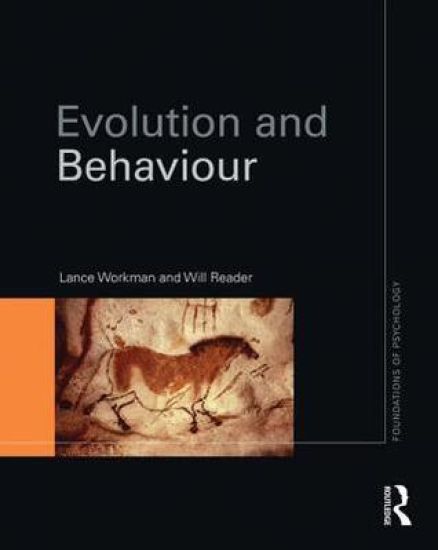
The relationship between how we evolved and how we behave is a controversial and fascinating field of study. From how we choose a mate to how we socialize with other people, the evolutionary process has an enduring legacy on the way we view the world. Evolution and Behavior provides students with a thorough and accessible introduction to this growing discipline. Placing evolutionary psychology in context with the core areas of psychology – developmental, cognitive and social – the book explores some of the most fundamental questions we can ask about ourselves. Taking students through the principles of natural selection, it provides a nuanced understanding of key topics such as: cognitive development and the role of intelligence, memory, emotions and perception, mental health and abnormal psychology, sexual reproduction and family relationships, the development of culture. Addressing a number of controversial debates in the field, each chapter also includes concept boxes, the definition of key terms, chapter summaries and further reading. This is the ideal introductory textbook for anyone interested in evolutionary psychology. It will provide not only an essential overview of this emerging field, but also deepen readers’ appreciation of the core tenets of psychology as a whole.