Kirjailija
Lao Tzu
Kirjat ja teokset yhdessä paikassa: 160 kirjaa, julkaisuja vuosilta 1992–2027, suosituimpiin kuuluu Lao-tzu's Taoteching. Vertaile teosten hintoja ja tarkista saatavuus suomalaisista kirjakaupoista.
Nimi esiintyy myös muodoissa: Lao-Tzu, Lao - Tzu, Lao -Tzu, Lao- Tzu
160 kirjaa
Kirjojen julkaisuvuodet: 1992–2027.
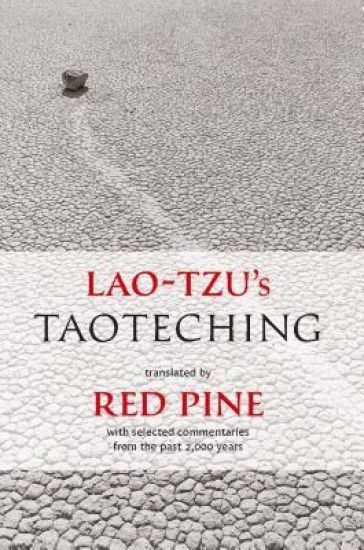
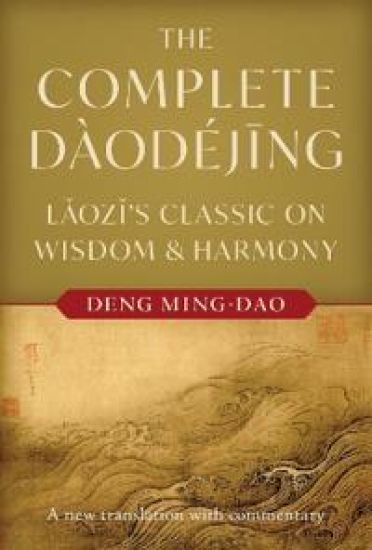
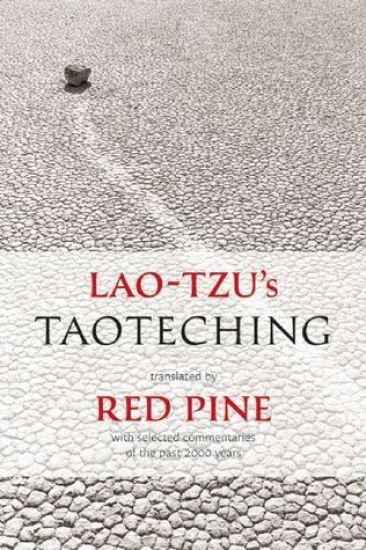
One of the best-selling English-language translations of the Taoteching." A refreshing new translation. . . . Highly recommended."--Library Journal"With its clarity and scholarly range, this version of the Taoteching works as both a readable text and a valuable resource of Taoist interpretation."--Publishers Weekly"Read it in confidence that it comes as close as possible to expressing the Chinese text in English."--Victor Mair, professor of Chinese studies, University of PennsylvaniaLao-tzu's Taoteching is an essential volume of world literature, and Red Pine's nuanced and authoritative English translation--reissued and published with the Chinese text en face--is one of the best-selling versions. Features that set this volume apart from other translations are its commentaries by scores of Taoist scholars, poets, monks, recluses, adepts, and emperors spanning more than two thousand years. "I envisioned this book," Red Pine notes in his introduction, "as a discussion between Lao-tzu and a group of people who have thought deeply about his text." Sages have no mind of their owntheir mind is the mind of the peopleto the good they are goodto the bad they are gooduntil they become goodto the true they are trueto the false they are trueuntil they become true . . . Lao-tzu (ca. 600 BCE) was a Chinese sage who Confucius called "a dragon among men." He served as Keeper of the Royal Archives and authored the Taoteching. Red Pine is one of the world's foremost translators of Chinese literary and religious texts. His books include The Heart Sutra, Poems of the Masters, and a collection of all the known poems by the mountain hermit Han Shan, The Collected Songs of Cold Mountain.
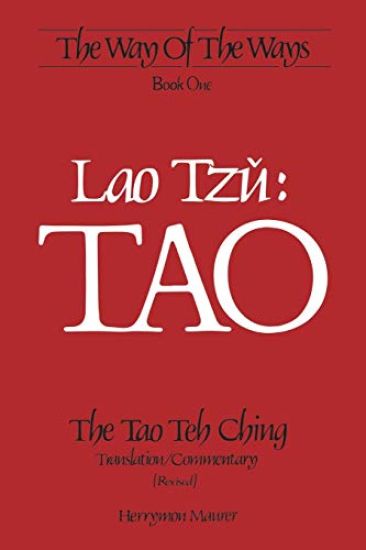
Herrymon Maurer (1914-1998) has created a remarkable new translation of the Tao Teh Ching, inspired by a Quaker understanding of simplicity and religious experience and informed by his immersion in Chinese culture during a 1939-1941 sojourn in rural Sichuan province with his young family. The translation strives to preserve many of the Chinese metaphors as well as the directness of the sacred text and to find English phrases that render, at least to some extent, the beauty and economy of Lao Tzŭ's original. Maurer's masterful commentary helps clarify phrases that may baffle Westerners as he weaves together insights from Christianity, Judaism and Islam to situate the Tao in a context of universal humility and hope. A member of Alcoholics Anonymous, the author was acquainted with the destructive power of self, but had also discovered that the self can learn to live in relationship. First published in 1982, this revised edition of Maurer's translation and expanded commentary on Lao Tzŭ's enduring attempt to proclaim the Way of the Ways is published posthumously by family and friends who share the author's hope that it may be useful to other seekers, as suggested by Chapter 4: Tao is empty Use it And it isn't used up. Deep It seems like The forbear of the ten thousand things. It blunts edges, Unties tangles, Harmonized lights, Unites all dusts. Existent and deep I don't know whose child it is. It looks to be the source.
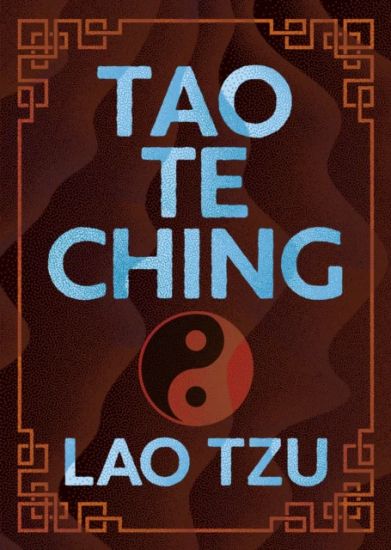
The Tao Te Ching by Lao-tzu is one of the most translated books of world literature. It is here presented in a translation that deliberately avoids any philosophical commentary and renders the text in English in its most simple and straightforward composure. Lao-tzu's writing style shines by its utter simplicity, in its will to be 'ordinary language' and to say what he thinks in the most economical and straightforward manner. Therefore all what is purely ornamental in the diction of the book must be ruthlessly cut away so that as it were the skeleton of the thoughts shines through; while many other translations contain way too much obfuscating complexity in syntax and vocabulary. Even if one follows the newer idea the Tao Te Ching was written by a group of Taoist sages, and not by Lao-tzu, it was not the way of the Taoists to render eloquent speeches and to write academic works. Contrary to hellenistic philosophy, Taoism was in no way dialectic-speculative in its overall expression. Also those ancient sages would have firmly refused to call the book 'holy, ' although the spirit that shines through it is an elevated, noble and religious spirit. Despite the probability that the book has been written by a number of authors, it is today considered as a homogenous philosophical treatise. For this view speaks the thematic consistency, which spans all domains of daily life, and which looks at all human expression with compassion and understanding.
Waterway: A New Translation of the Tao Te Ching, and Introducing the Wu Wei Ching
Lao Tzu; Kuo Hsiang; Crispin Sartwell
Createspace Independent Publishing Platform
2016
nidottu
One of the best-selling English-language translations of the Taoteching." A refreshing new translation. . . . Highly recommended."--Library Journal"With its clarity and scholarly range, this version of the Taoteching works as both a readable text and a valuable resource of Taoist interpretation."--Publishers Weekly"Read it in confidence that it comes as close as possible to expressing the Chinese text in English."--Victor Mair, professor of Chinese studies, University of PennsylvaniaLao-tzu's Taoteching is an essential volume of world literature, and Red Pine's nuanced and authoritative English translation--reissued and published with the Chinese text en face--is one of the best-selling versions. Features that set this volume apart from other translations are its commentaries by scores of Taoist scholars, poets, monks, recluses, adepts, and emperors spanning more than two thousand years. "I envisioned this book," Red Pine notes in his introduction, "as a discussion between Lao-tzu and a group of people who have thought deeply about his text." Sages have no mind of their owntheir mind is the mind of the peopleto the good they are goodto the bad they are gooduntil they become goodto the true they are trueto the false they are trueuntil they become true . . . Lao-tzu (ca. 600 BCE) was a Chinese sage who Confucius called "a dragon among men." He served as Keeper of the Royal Archives and authored the Taoteching. Red Pine is one of the world's foremost translators of Chinese literary and religious texts. His books include The Heart Sutra, Poems of the Masters, and a collection of all the known poems by the mountain hermit Han Shan, The Collected Songs of Cold Mountain.
In 81 brief chapters, Lao-Tzu's Tao Te Ching, or Book of the Way, provides advice that imparts balance and perspective, a serene and generous spirit, and teaches us how to work for the good with the effortless skill that comes from being in accord with the Tao--the basic principle of the universe. Stephen Mitchell's bestselling version has been widely acclaimed as a gift to contemporary culture.
Tao Te Ching: A New English Version
Stephen Mitchell; Lao Tzu
HARPER PERENNIAL
2006
nidottu
Halvin toimitettuna 19,70 €
A new version of the classic "Book of the Way" provides a manual on the art of living, offering eighty concise chapters that offer wisdom and advice on how to achieve balance, perspective, and serenity in every aspect of one's life. Reprint. 35,000 first printing.
Etsitkö jännitystä, uusia näkökulmia tai rentouttavaa lukuelämystä? Tutustu kirjakategorioihimme ja löydä seuraava suosikkikirjasi.
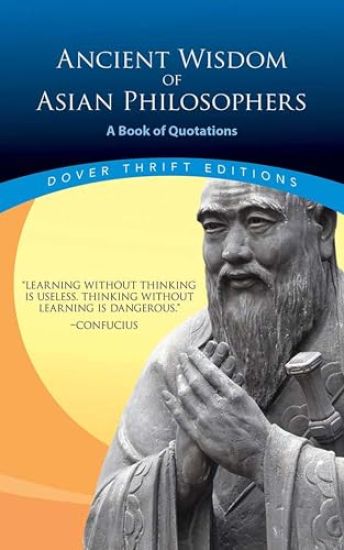
Acting as a bridge between the ancient and the contemporary, this collection of memorable quotes highlights some of the most important teachings of Eastern philosophers, including Confucius, Lao Tzu, and the Buddha. These philosophies transcend time and civilization, revealing essential truths that continue to resonate deeply in modern life. Learn to go with the flow and embrace the natural rhythm of life with Taoism, strengthen your ethics and moral character with Confucianism, and enlighten your mind and spirit with Buddhism. Whether you are seeking clarity for everyday decisions or profound truths for personal growth, this book is a spiritual gateway to meditative reflection and purposeful living.
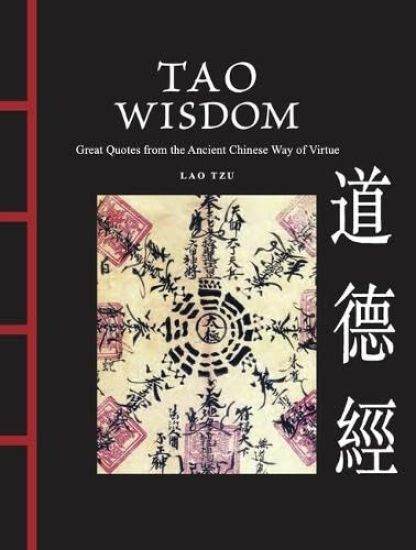
He who boasts of what he will do, succeeds in nothing. – Tao Te Ching No understanding of Chinese civilization is possible without a grasp of Taoism, the philosophy that has shaped not just Chinese spirituality but also art, science and politics. And it was in the Tao Te Ching, written around 300BC, that the fundamental beliefs of Taoism were first gathered by the sage Laozi. This short book went on to influence Chinese philosophy, religion and politics for thousands of years afterwards. Beautifully produced in traditional Chinese binding, Tao Wisdom offers more than 80 succinct quotes from key Taoist figures, with advice on how to live a simple, peaceful and harmonious life, and how to rid oneself of desires and free society of institutions that promote greed.