
Kirjojen hintavertailu – 12 903 724 kirjaa ja 27 kauppaa

Kirjailija

Laobing Zhang

Kirjat ja teokset yhdessä paikassa: 2 kirjaa, julkaisuja vuodelta 2018, suosituimpiin kuuluu Game Theory for Managing Security in Chemical Industrial Areas. Vertaile teosten hintoja ja tarkista saatavuus suomalaisista kirjakaupoista.

2 kirjaa

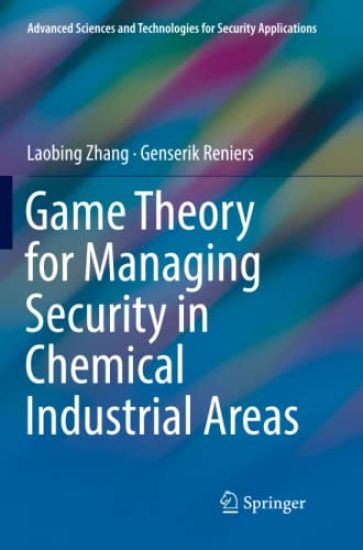
Game Theory for Managing Security in Chemical Industrial Areas

Game Theory for Managing Security in Chemical Industrial Areas

Laobing Zhang; Genserik Reniers

Springer Nature Switzerland AG
2018
nidottu
This book systematically studies how game theory can be used to improve security in chemical industrial areas, capturing the intelligent interactions between security managers and potential adversaries. The recent unfortunate terrorist attacks on critical infrastructures show that adversaries are intelligent and strategic. Game theoretic models have been extensively used in some domains to model these strategic adversaries. However, there is a lack of such advanced models to be employed by chemical security managers. In this book, game theoretic models for protecting chemical plants as well as clusters are proposed. Different equilibrium concepts are explored, with user-friendly explanation of how to reflect them to realistic cases. Based on efficient analysis of the properties of security issues in chemical plants/clusters, models in this book are capable to support resources allocations, cost-effectiveness analysis, cooperation incentives and alike.
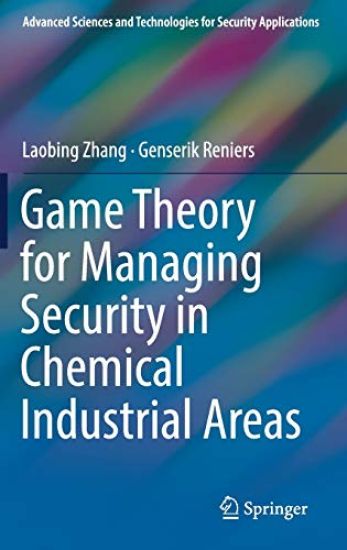
Game Theory for Managing Security in Chemical Industrial Areas

Game Theory for Managing Security in Chemical Industrial Areas

Laobing Zhang; Genserik Reniers

Springer International Publishing AG
2018
sidottu
This book systematically studies how game theory can be used to improve security in chemical industrial areas, capturing the intelligent interactions between security managers and potential adversaries. The recent unfortunate terrorist attacks on critical infrastructures show that adversaries are intelligent and strategic. Game theoretic models have been extensively used in some domains to model these strategic adversaries. However, there is a lack of such advanced models to be employed by chemical security managers. In this book, game theoretic models for protecting chemical plants as well as clusters are proposed. Different equilibrium concepts are explored, with user-friendly explanation of how to reflect them to realistic cases. Based on efficient analysis of the properties of security issues in chemical plants/clusters, models in this book are capable to support resources allocations, cost-effectiveness analysis, cooperation incentives and alike.